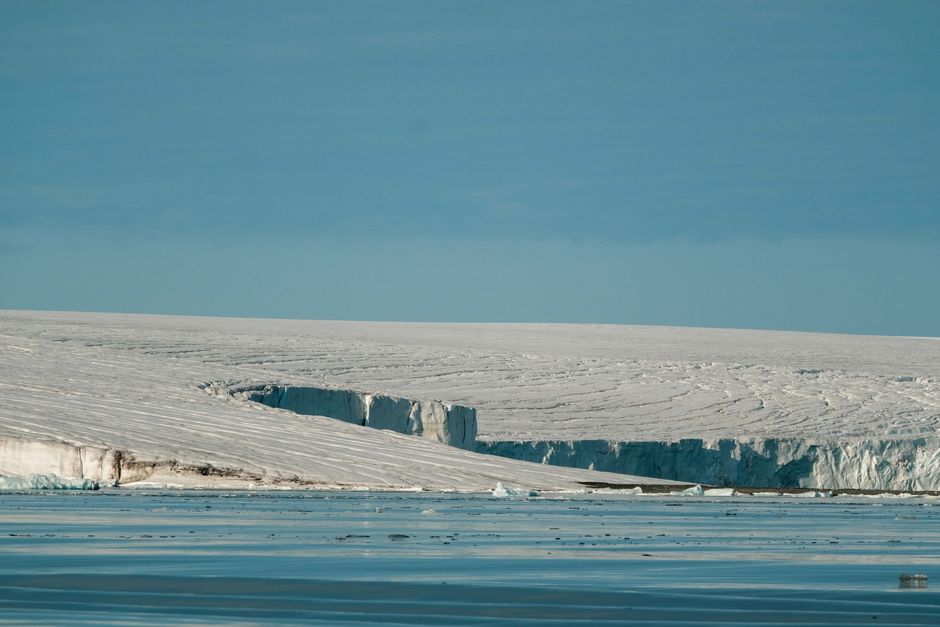
Australian scientists have found that invasive grasses are spreading across parts of Antarctica in response to human-induced climate change — a development that carries a chilling implication: the prospect of wildfire in one of the planet's most remote and pristine regions.
The research, led by Monash University PhD student Noemie Sheppard and supervised by Monash ecologist Professor Melodie McGeoch, reveals that invasive grasses are now competing with native vegetation across the Antarctic region. The findings point to an environment under mounting pressure from rapidly shifting conditions.
Fire in Antarctica — no longer unthinkable
Not long ago, the idea of Antarctica burning would have sounded like science fiction. Today, it is a live possibility. The research findings "raise the prospect of a dramatically and rapidly changing Antarctic region, and in particular this prospect of fire", Professor McGeoch said.
Fires have already occurred in the sub-Antarctic. In January 2025, a wildfire tore through 55 per cent of Amsterdam Island, part of the French Southern and Antarctic Lands. A separate blaze also struck Bird Island in the sub-Antarctic in 2024. These events, once unimaginable in a region defined by ice and cold, are now part of the documented record.
Every island is changing differently
The picture, however, is not a simple one of a uniformly "greening" Antarctica. Sheppard, who led the research, emphasised that conditions vary dramatically from island to island across the region.
"Every single island is undergoing its own mini-climate change," she said. "Some are drying, some are wetting, some are increasing in temperature, so all the grasses across these islands are undergoing different changes."
This complexity means there is no single narrative — but the common thread is a natural world straining under the stress of rapid change, more extreme weather, and increasing heat. Sheep farms at the South Pole remain firmly in the realm of fantasy; the real concern is the ecological disruption already underway.
A broader climate picture that demands action
The spread of Antarctic grasses is one piece of a larger and increasingly urgent puzzle. It sits alongside other recent climate markers: a severe European heatwave that left thousands dead, and a powerful El Niño event expected to push global temperatures even higher in the months ahead.
Experts caution against resignation in the face of these compounding signals. Multinational efforts to cut emissions and adapt to climate impacts continue, though progress is widely considered too slow. Gains in renewable energy have at times been undone by sudden policy reversals in various parts of the world.
Australia's own record is mixed. As a major exporter of fossil fuels, the country contributes to the global crisis. Yet domestically, there have been meaningful strides. Since 2005 — the baseline year under the Kyoto Protocol — Australia has reduced its total carbon pollution by close to 30 per cent, even as the population has grown, car numbers have increased, and average net wealth per person has more than doubled. It is evidence that cutting emissions need not come at the cost of economic wellbeing.
Despite this, Australia is at risk of veering off its net-zero trajectory, and the coming years are seen as critical.
Australia's chance to lead on the world stage
Later this year, Australia will co-lead the next round of international climate talks alongside Turkiye — a significant opportunity to galvanise global action. Advocates say the talks must ensure that the voices of nations most vulnerable to climate change, including Pacific island communities already facing existential threats from rising seas, are heard by decision-makers.
With Antarctica itself now showing visible signs of transformation, the urgency of that conversation has never been clearer. The spreading grass on icy sub-Antarctic islands is not merely an ecological curiosity — it is a warning written into the landscape itself.


