US Secretary of State Marco Rubio touched down in Iceland this week for talks on economic and security collaboration in Reykjavik, the latest sign that Washington is scrambling to assert its influence over a rapidly transforming Arctic region — one that Russia and China have been quietly positioning themselves to dominate for years.
The Iceland visit follows a security agreement signed last month between the United States, Denmark and Greenland on the sidelines of the United Nations General Assembly. The deal — which includes plans for two new American military bases on Greenland — caps months of pointed pressure from President Donald Trump, who had repeatedly floated the idea of buying or even annexing the Danish territory.
A Region Transformed by Climate Change
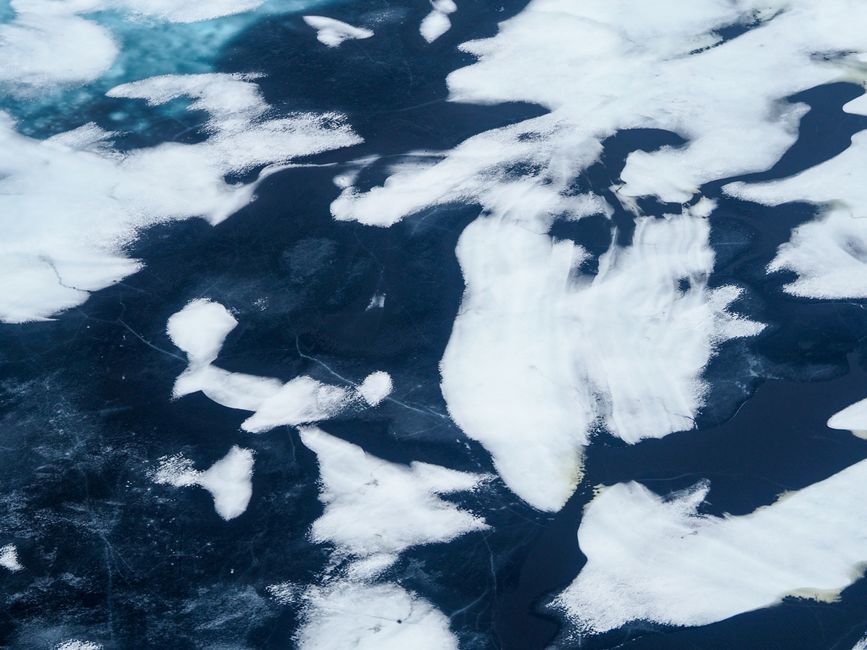
The scramble for Arctic influence is being driven by one of the most dramatic environmental transformations on the planet. The Arctic is warming four times faster than the global average, the result of a feedback loop in which melting sea ice exposes darker ocean water that absorbs more solar heat, accelerating further melting.
Since satellite records began in 1979, late-summer Arctic sea ice has contracted by more than 50 per cent of its surface area and roughly 75 per cent of its total volume. Some climate models suggest the Arctic could see its first entirely ice-free day as early as 2027, with ice-free months potentially becoming routine by 2050.
What was once an impenetrable frozen wilderness is becoming, in effect, a new ocean — one with enormous commercial and strategic value.
The Stakes: Oil, Gas, Rare Earths and Shipping Routes
A landmark United States Geological Survey assessment estimated the Arctic holds approximately 13 per cent of the world's remaining undiscovered oil and 30 per cent of its undiscovered natural gas. The region is also believed to contain some of the largest untapped deposits of rare earth elements on Earth — materials that are critical to modern technology, defence systems and clean energy infrastructure.
Beyond raw resources, the prospect of new Arctic shipping lanes is reshaping global trade calculations. Moving cargo across northern sea routes would cut distances significantly compared with existing pathways, reducing costs and transit times. It could also ease congestion in heavily trafficked waterways such as the South China Sea.
Russia and China Move First
Russia, which controls more than half of the Arctic coastline, has long treated the High North as a strategic priority. Moscow has been systematically rebuilding and reopening military installations along its northern border that date back to the Soviet era, positioning itself to dominate the region as conditions change.
China, meanwhile, declared itself a "near-Arctic state" in 2018 — a designation that has no formal geographic basis but signals Beijing's intent. It has since deepened its partnership with Russia in the region, invested in Arctic shipping capabilities, and publicly promoted the concept of a "Polar Silk Road" that would link Chinese trade to European markets via northern routes.
What It Means for Australia
The shifting Arctic dynamic carries implications well beyond the northern hemisphere. Elizabeth Buchanan, a senior fellow at the Australian Strategic Policy Institute, has warned that as global trade migrates northward, the strategic importance of the Indo-Pacific could diminish — with serious consequences for Australia.
"Moving global trade north of course makes commercial sense in terms of shorter distances and so lower costs and quicker service," Buchanan said. "But it also removes congestion from the South China Sea, for example."
She cautioned that if major sea powers redirect their attention toward Arctic routes, Australia could find itself increasingly exposed and isolated. "Whether this then makes the Southeast Asian region less strategically important is indeed something to consider," she said.
For decades, thick sea ice and a punishing operational environment acted as a natural brake on Arctic development. As those barriers recede, what was once a frozen no man's land is becoming the world's newest arena of great-power competition — and the race to shape it is already well underway.


