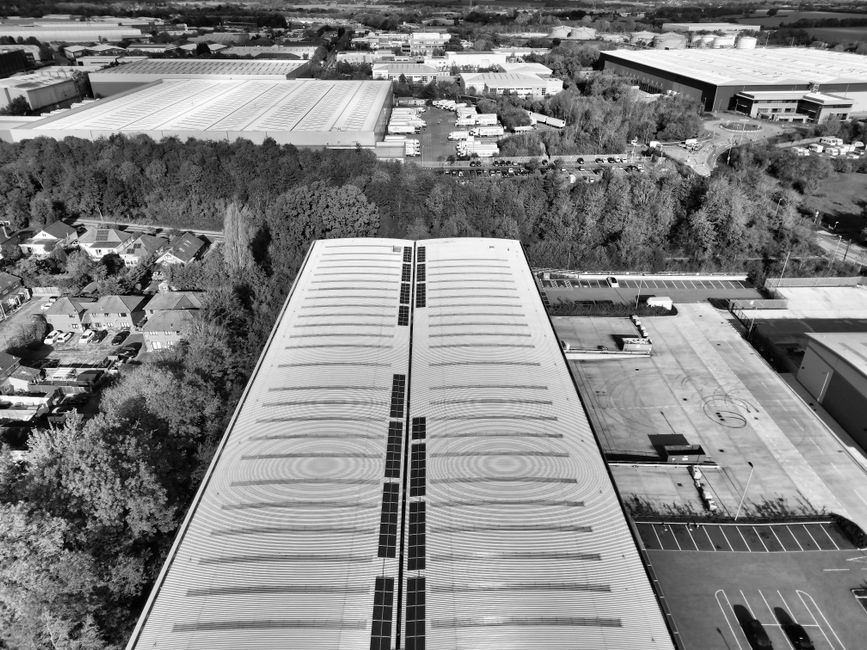
The Albanese government is set to expand Australia's rooftop solar rebate scheme to cover large commercial and industrial buildings — including factories, warehouses and farming sheds — in a bid to unlock what Energy Minister Chris Bowen describes as the "missing middle" of the nation's renewable energy ambitions.
Bowen will announce the policy shift in a National Press Club address, revealing that the existing rebate scheme — previously capped at systems of up to 100 kilowatts — will be extended to cover installations of up to 1 megawatt. The expanded incentives are expected to commence in October.
A tale of two rooftops: homes leading, businesses lagging
Australia already holds a world-leading position in residential solar adoption. When measured against other nations — as detailed in comparative data on Solar power by country — Australian households punch well above their weight, with 22 gigawatts of solar capacity installed on residential properties. Yet businesses have managed only around 5.6 gigawatts combined.
Bowen will highlight the stark visual contrast in his speech, noting that passengers flying into Australian cities can easily spot solar panels blanketing suburban rooftops, yet the vast majority of warehouse and factory roofs remain empty or only partially covered.
"The missing middle is mid-scale solar. Factories, warehouses, farming sheds and large industrial premises — big empty roof space ripe for solar generation," Bowen is expected to say, according to a draft of the address.
Estimates suggest that commercial rooftop space across Australia could support more than 80 gigawatts of solar generation — a staggering figure that the Smart Energy Council's head of policy, Robert Potter, has compared to the output of ten coal-fired power plants.
What the expanded rebate means for businesses
The government estimates the new incentive will reduce the upfront cost of installing a medium-scale commercial solar system by approximately 20 per cent. As an illustrative example, Bowen will point to a retailer installing a 250-kilowatt system, which could save around $68,000 on installation costs upfront, while also generating roughly 345 megawatt hours of electricity annually — potentially cutting power bills by $50,000 each year.
Potter welcomed the move, noting that for smaller businesses, the certainty of an upfront incentive is often what determines whether a solar project is financially viable. "For a small or medium business, the difference between an upfront, certain incentive and a progressively priced one can be the difference between a project stacking up and one that doesn't," he said.
Energy Networks Australia's acting chief executive, Dominic Adams, said network providers welcomed the expansion and pointed to ongoing efforts to make connection processes faster and more consistent for customers.
Grid connection delays in the crosshairs
Beyond the financial incentive, Bowen will also direct the Australian Energy Market Commission to examine a rule change that would require network operators — the companies responsible for poles and wires — to approve and connect commercial and industrial solar systems more quickly.
The minister will acknowledge that connection delays have become so burdensome that many businesses simply abandon their solar plans altogether. "Many of the delays I have heard about are unacceptable and simply make it so hard for businesses to install solar that they just give up," he is expected to say.
A report released by the Smart Energy Council this week identified cost and grid connection difficulty as the two primary barriers stopping businesses from investing in rooftop solar.
Pressure mounts on 2030 renewables target
The commercial solar push comes as the Albanese government faces mounting pressure in its drive to achieve 82 per cent renewable energy in the national grid by 2030. Large-scale renewable projects and their associated transmission infrastructure have encountered growing opposition from the Coalition and some community groups, making the untapped potential of commercial rooftops an increasingly attractive — and politically palatable — alternative avenue for new generation capacity.


