One of Australia's most respected pandemic experts is calling on the federal government to increase its investment in global health preparedness, warning that no nation — including Australia — is genuinely ready for the next major outbreak. The warning comes as a deadly Ebola outbreak in the Democratic Republic of Congo continues to escalate, with nearly 1,600 people infected and more than 500 dead.
Jane Halton, chair of the Coalition for Epidemic Preparedness Innovations (CEPI), says the unfolding crisis in Central Africa should act as a wake-up call for governments worldwide — and that the window to act is now, not once a pandemic has already taken hold.
'No country can say confidently that we are prepared'
Halton, a widely respected figure in Australian and international health policy, said the Ebola outbreak underscores a fundamental weakness in how governments approach infectious disease: waiting until an emergency is already unfolding before investing in defences.
"Frontline defences are actually being ready before something like this happens," she said. "It's about doing the work beforehand to have vaccines ready, to actually have manufacturing ready, and to be sure that our regulators can move really quickly so we don't all wait while people go through bureaucratic hoops."
Despite the hard lessons delivered by COVID-19, Halton said the global community has not done enough to translate those lessons into durable preparedness. Her assessment was blunt: "No country can say confidently that we are prepared."
CEPI was established in 2017 in the aftermath of the West African Ebola epidemic, with the specific mission of accelerating vaccine development against emerging infectious diseases before they spiral into full-scale pandemics. Halton leads the organisation's work at the highest level.
Experimental treatments and urgent trials in the Congo
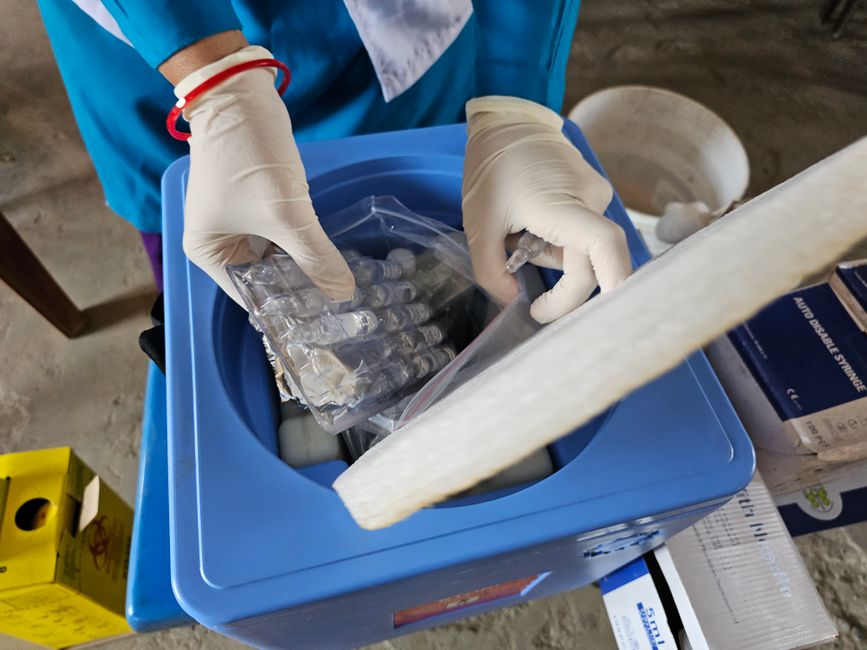
On the ground in the Democratic Republic of Congo, doctors have begun enrolling patients into urgent clinical trials as experimental Ebola treatments arrive in the affected region. Researchers are testing multiple therapies simultaneously in a bid to identify the most effective option as quickly as possible.
One senior health official overseeing the response described the immediate goal as determining "which medicine, which molecule, will be the most effective" — a process that, in past outbreaks, has taken far longer than any public health authority would like.
The speed of that process, Halton argues, is directly tied to how much preparatory work has been done before an outbreak begins. She noted that the global response is improving with each successive emergency: "Every time we respond to one of these situations we get faster," she said. "If there's another pandemic, and we know it's not a question sadly of if — it's when — it actually means the response to that pandemic will be much faster than we had last time."
Australia called on to renew its CEPI commitment
The United States has announced a further US$50 million in funding for CEPI's vaccine development pipeline. Halton is now hoping Australia will follow suit, pointing to the country's previous contribution of $100 million to the organisation's last funding round as a sign of what meaningful commitment looks like.
She framed the case for investment not only in public health terms but in the language of everyday life — the desire to keep schools open, maintain livelihoods and protect time with family and friends. "We want to be ready. We want to be quick. We want to save lives and mostly we want our lives to continue as we want them, going to work, going to school, having time with family and friends," she said.
AI-engineered pathogens: the threat no one wants to discuss
Beyond naturally occurring viruses, Halton issued a stark warning about an emerging and deeply uncomfortable threat: the potential for artificial intelligence to be used in the design and engineering of dangerous pathogens.
While influenza remains one of the most credible pandemic threats on current modelling, Halton said global health agencies must also brace for something far more deliberate. "We have to be prepared that the next time one of these outbreaks occurs it might have been AI-designed, engineered and then of course made," she said.
"It's an uncomfortable truth that people will use the science in that way but we have to be ready."
The comments reflect growing unease in biosecurity and public health circles about the dual-use risks of rapidly advancing biotechnology — a challenge that existing regulatory frameworks were not designed to address.
With global attention currently captured by major international events, health experts warn there is a real danger that pandemic preparedness slips down the political agenda at precisely the moment sustained investment is most needed. Halton's message is clear: the cost of under-preparing now will dwarf any amount spent on readiness today.


