An Australian astronomer has played a key role in what could be one of the most significant breakthroughs in quantum physics in decades — the first-ever detection of a phenomenon called vacuum birefringence, a theory that has eluded scientists since Nobel Prize winner Werner Heisenberg first proposed it nearly 90 years ago. The findings, published in the international journal Nature, suggest that seemingly empty space can bend and polarise light — and that our best theories of physics still hold up under the most extreme conditions in the universe.
A 'Cosmic Cold Case' Finally Has a Lead
Heisenberg, the German quantum physicist, theorised in 1936 alongside his student Hans Euler that a true vacuum is not actually empty. Instead, it teems with virtual particles that flicker in and out of existence and can alter the path of light passing through a powerful enough magnetic field. Proving the theory has long been considered a "cold case" in physics — tantalisingly possible but practically out of reach, given that the magnetic fields required simply do not exist on Earth.
For decades, researchers attempted to chase down the effect using powerful lasers, particle accelerators, and near-light-speed particle collisions — all without success. The key, it turns out, was looking not to a laboratory, but deep into space.
A Rare Magnetar and Cutting-Edge Telescopes
Dr Marcus Lower, an astronomer at Swinburne University of Technology, was part of the international team that analysed a rare type of neutron star known as a magnetar — specifically one catalogued as 1E1547. Magnetars possess magnetic fields so extraordinarily powerful that they can make the vacuum birefringence effect detectable, something no human-built instrument has ever been able to replicate.
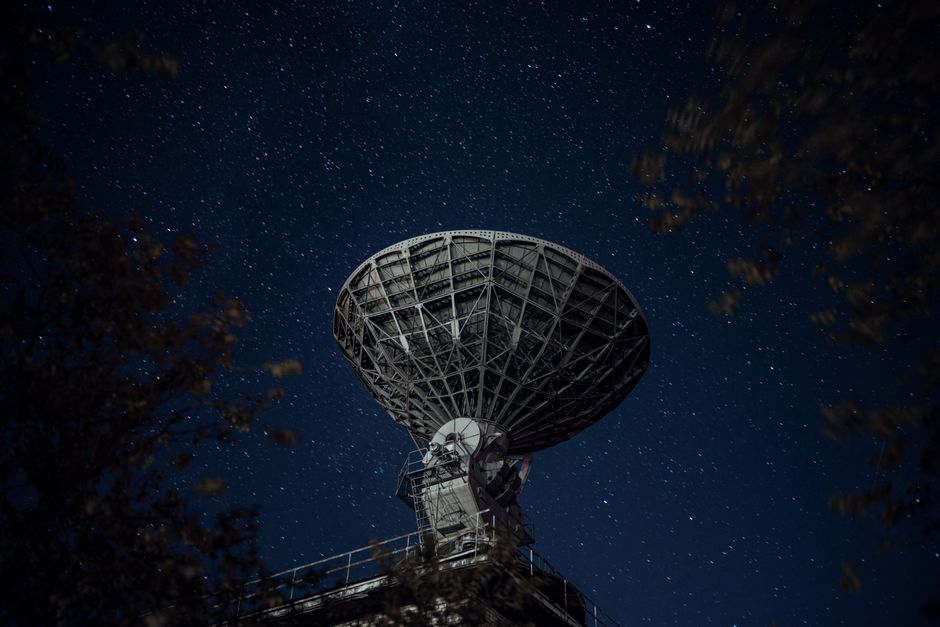
To observe the magnetar, the team combined data from three separate instruments: NASA's Imaging X-ray Polarimetry Explorer, NASA's NICER telescope aboard the International Space Station, and CSIRO's Murriyang radio telescope near Parkes in rural New South Wales — the iconic dish made famous by the Australian film The Dish. The results were then processed using Swinburne's supercomputer, Ngarrgu Tindebeek.
The analysis revealed what the team believes could be the first confirmed detection of vacuum birefringence around a magnetar's magnetic field — a finding that researchers describe as opening a "new cosmic window" in quantum physics.
Scientists Were Not Expecting to Find It
Despite the magnitude of the discovery, Dr Lower said the team approached the result with considerable caution. "People have been trying to look for this using really powerful lasers or big particle accelerators and colliding particles at almost the speed of light to try and measure these tiny little fluctuations," he said. "The kinds of magnetic fields that you need just don't exist on Earth."
The study itself was years in the making. The researchers initially had their proposal for access to NASA's instruments rejected before a revised submission was eventually approved. Even the technology required to detect the effect around magnetars has only existed for roughly the past six years, Dr Lower noted.
"We have observed quite a few magnetars that have these extremely powerful magnetic fields that should produce this vacuum birefringence effect," he said. "It's only in the last six or so years that we've actually had a telescope capable of detecting this effect."
What It Could Mean for Our Understanding of the Universe
The implications of the finding extend well beyond confirming a long-standing theory. Dr Lower said the results show that the fundamental frameworks of quantum electrodynamics continue to hold up even in the most extreme magnetic environments found anywhere in the universe.
"It's a bit of a relief because it means that our theories still work and there's nothing broken with physics," he said. "From there, we could start to learn new things about the fundamental nature of the universe."
The findings are not yet fully confirmed, with further data analysis and computer simulations still needed. But if validated, the detection of vacuum birefringence would mark a landmark moment — closing a cold case that has been open since Heisenberg himself first dared to imagine that empty space was anything but.


