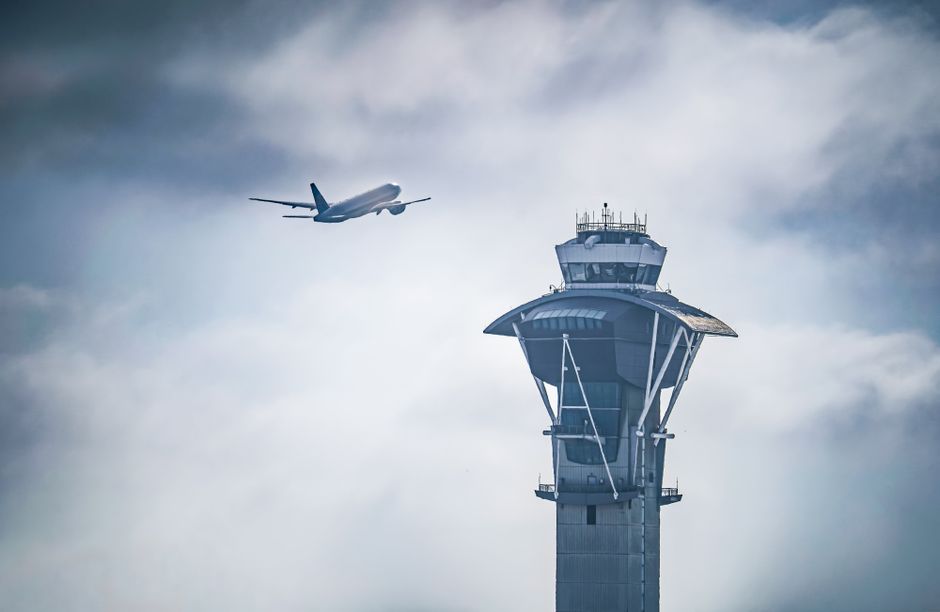
Australia's air traffic control system is under serious strain, with controllers warning of chronic staff shortages, punishing overtime rosters and growing fatigue risks — concerns that have intensified following a series of near-miss incidents at Sydney Airport. A senior industry figure is now speaking out, arguing the problems have been years in the making and could take up to five years to fully resolve.
Controllers Sounding the Alarm Over Staffing and Fatigue
Scott Nugent, an eight-year veteran air traffic controller who currently works in Sydney airspace and serves as president of the Civil Air association representing controllers, says staffing pressure is at the core of the challenges facing Australia's aviation system.
"Air traffic controllers are critical. They're absolutely critical assets to the system that we have. And without them, things start to fall apart," Nugent said.
He says some controllers are being rostered for 10 consecutive days of work, followed by just one day off, before returning for another 10-day stretch. When asked directly whether fatigue under those conditions can lead to mistakes, his answer was unambiguous.
The overtime figures Nugent cites are striking. He says some individual controllers are working as many as 800 hours of overtime per year — a figure he describes as both unreasonable and unsafe.
"There is no world where any worker should be expected to work 800 hours of overtime per year," he said. "Some people do. Some individuals are, yes. And that's not right and it's not safe."
Nugent places responsibility for the situation squarely with Airservices Australia management, saying decisions made over many years have left the country struggling to maintain an adequate workforce of qualified controllers.
COVID Retirements Left a Lasting Gap in the Workforce
One of the most consequential decisions, according to Nugent, came during the COVID-19 pandemic, when approximately 140 air traffic controllers aged between 56 and 65 were encouraged to take early retirement. That cohort represented around 15 per cent of Australia's entire air traffic control workforce.
"We let 15 per cent of Australia's air traffic control workforce go and we've struggled to replace them," Nugent said.
He believes the departure of those experienced controllers has had a lasting and significant effect on the system's capacity. Training new controllers is a lengthy process, and the pipeline has not kept pace with demand. Nugent estimates it could take months or years before staffing is stable enough to prevent the kind of service disruptions that have recently drawn public attention — and potentially as long as five years before the broader shortage is genuinely resolved.
Western Sydney Airport Adds New Pressures — and New Technology
The staffing challenge is arriving at a particularly complex moment for Australian aviation. The new Western Sydney International Airport is preparing to begin passenger services, bringing additional demands to already stretched airspace over the city's west.
The airport is also introducing technology that has not previously been deployed at a major passenger airport in Australia: a digital air traffic control tower. Rather than controllers working from a conventional tower structure at the airport itself, a system of cameras and sensors provides views of the airfield from a remote tower centre located approximately 17 kilometres away at Eastern Creek.
Nugent acknowledges the technology represents uncharted territory for Australian aviation.
"That's a new technology. It's the first time in Australia that that has been used," he said. "It's certainly not the same as a traditional physical tower."
As passenger flights begin using the new airport, the complexity of managing the region's airspace will only increase — placing further demands on a workforce that, by the industry's own account, is already stretched dangerously thin.
Two airport employees have already been stood down following an incident in which two planes came close to colliding on the tarmac at Sydney Airport. With scrutiny of the aviation system intensifying, the people directing aircraft through Australian skies are making clear they want decision-makers to act before the pressures reach a breaking point.


