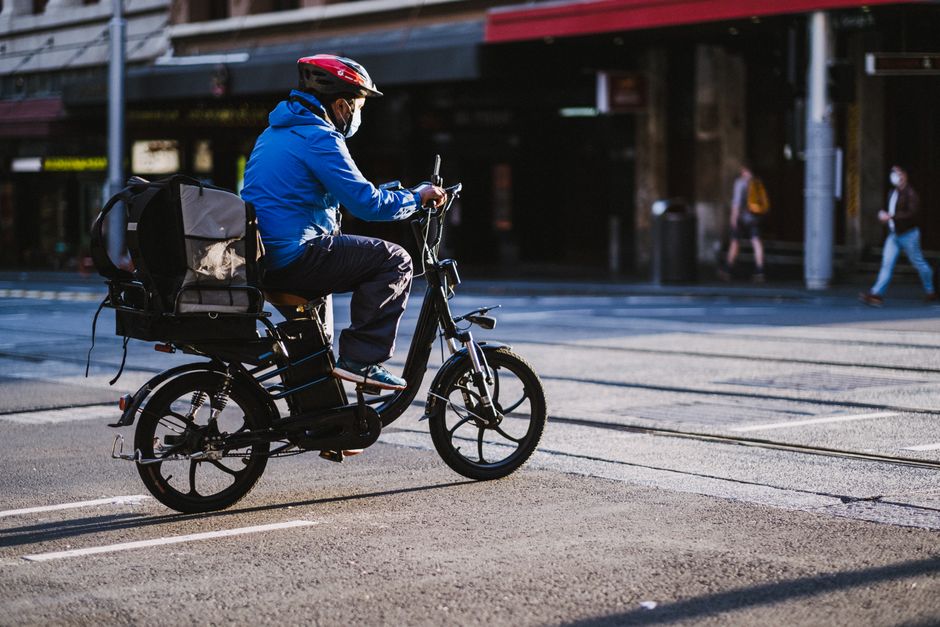
The federal government has directed Australia's consumer watchdog to develop a nationwide safety standard for e-bikes, e-scooters and e-skateboards, in what officials are calling the first nationally consistent crackdown on high-powered electric micromobility devices. The Australian Competition and Consumer Commission (ACCC) was formally instructed on Thursday to draft the new rules, which will cap the speed and motor output of devices that can be sold or imported across the country.
What the new e-bike standards will require
The proposed standard is based on the international benchmark known as EN 15194, an existing framework that Australia's state transport ministers agreed last year to adopt as the primary reference point for e-bikes. Under that framework, e-bikes must operate primarily through pedal assistance, their motors must be capped at 250 watts of output, and power must disengage automatically once the bike reaches 25km/h.
The new rules will also apply to e-scooters and e-skateboards, broadening the standard beyond bicycles to cover the wider category of electric micromobility devices. Crucially, the standard is aimed at what can be sold or imported in Australia — targeting the supply chain rather than just riders on the road.
Assistant Competition Minister Andrew Leigh described the reform as drawing "a firm line against high-powered, high-speed devices linked to serious injuries and deaths, including children." Speaking on Thursday morning, he said the standard would ensure "people can't be riding those super-fast bikes, high-powered bikes or bikes that are easily modified."
"Nationally consistent standards will provide clearer expectations for manufacturers, retailers and consumers alike," Leigh said.
Why the crackdown is happening now — and why some say it's overdue
The push for uniform national rules comes after years of escalating injury statistics and a patchwork of state-level enforcement that critics say has allowed non-compliant devices to flood the market.
In New South Wales alone, 226 e-bike-related injuries were recorded in 2024. That figure had already reached 233 in just the first seven months of 2025, including four deaths. In Queensland, more than 6,000 emergency department presentations were linked to e-mobility devices between 2022 and 2025.
The proposal was first raised at a meeting of federal, state and territory consumer affairs ministers held in Darwin in July, but Thursday's announcement marks the first time a coordinated national framework has been formally set in motion.
Harold Scruby, chief executive of the Pedestrian Council of Australia, welcomed the announcement while stressing it had been a long time coming. "It is too late," he said. "Technology is always 10 years ahead of the law… but we saw it coming."
Scruby also warned that new standards alone would not be sufficient without real consequences for non-compliant retailers. "We've really got to clamp down on these cowboys who are selling these things to young children," he said, calling for meaningful enforcement action against businesses that fail to meet compliance requirements.
What states have already been doing — and where the gaps are
Both Queensland and New South Wales have been running their own enforcement operations in recent months, but those efforts have highlighted just how uneven the current regulatory landscape is.
Queensland Police launched Operation Yankee Surety on 1 July, seizing 249 illegal bikes in its first month and issuing 991 traffic infringement notices to riders. In NSW, police and transport officers were granted powers in June to seize non-compliant e-bikes, with confiscated devices to be pulverised by Transport for NSW.
Despite these efforts, the lack of a national standard has meant that retailers can exploit jurisdictional inconsistencies to sell devices that would be considered non-compliant under stricter state rules. Minister Leigh acknowledged the challenge directly, saying the federal government is "addressing both sides" — both what can be sold and how it is regulated on the road.
"There's work underway through transport ministers," he said. "This is about what can be sold."
What it means for consumers and the industry going forward
E-bikes have grown rapidly in popularity across Australian cities, promoted as an environmentally friendly and cost-effective alternative to car travel in congested urban areas. Shared e-bike schemes have expanded significantly, but their rise has coincided with a measurable increase in serious incidents.
For consumers, the changes are expected to make it easier to identify compliant products and harder to unknowingly purchase a device that poses a danger. For manufacturers and retailers, the new standard signals that the era of inconsistent state-by-state rules — and the loopholes they created — is coming to an end.
The ACCC is now tasked with translating the policy direction into enforceable consumer product standards. While a final timeline for implementation has not yet been confirmed, the government has indicated it is moving with urgency given the mounting toll of injuries.
As Leigh put it: "E-bikes are a great addition to our transport network… but we've got these high-powered e-bikes that are causing accidents and even deaths on our roads. We need to crack down on those."


