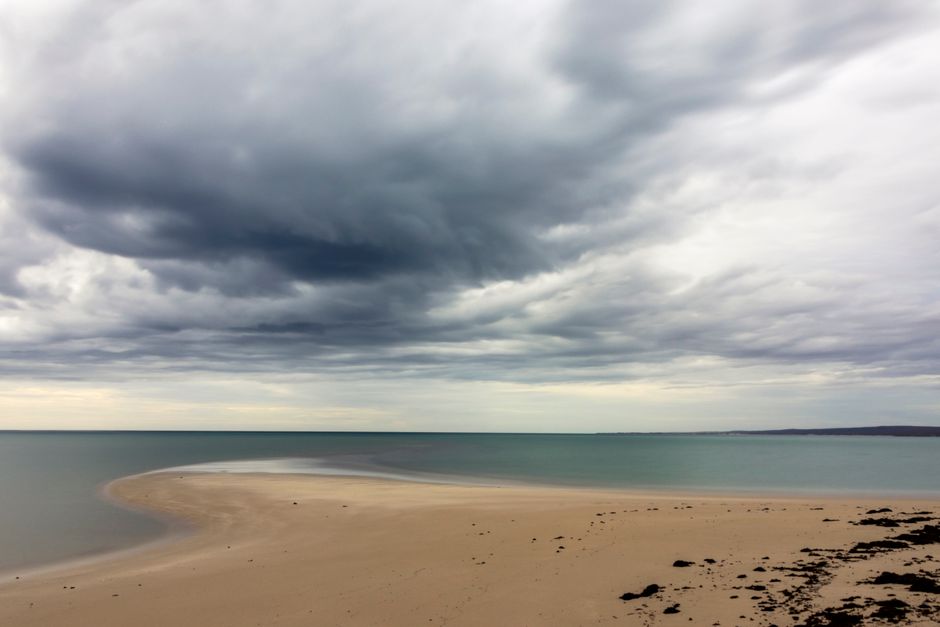
A proposal to build a major industrial port just 10 kilometres south of Exmouth has drawn fierce opposition from conservationists, who say the project is fundamentally at odds with Western Australian government plans to establish the region as a new marine park. Public comment on the Gascoyne Gateway Marine Complex proposal opened this week through the state's Environmental Protection Authority, reigniting a campaign that has been running since the project was first announced in 2020.
What the Gascoyne Gateway proposal involves
The proposed marine complex would see a port structure jutting nearly a kilometre into the Exmouth Gulf, supported by the dredging of more than one million cubic metres of seafloor. The facility would service large vessels including fuel tankers, cargo ships, cruise liners and other heavy shipping into the region.
Critically, the proposed shipping lanes would pass through a known humpback whale resting and nursing ground — a detail conservation groups say makes the project entirely unacceptable. The port site also sits adjacent to Qualing Pool, a rare freshwater oasis that the state government has already earmarked as a class A nature reserve and which the EPA has previously called for an even higher level of environmental protection.
Conservationists say the port 'beggars belief'
Australian Marine Conservation Society chief executive and Protect Ningaloo director Paul Gamblin said the proposal was "completely incompatible with the environmentally fragile Exmouth Gulf, and would change this marine wonder forever."
"An industrial port proposal, jutting nearly a kilometre into Exmouth Gulf and dredging of more than a million cubic metres of the seafloor in one of the world's most important whale nursing grounds beggars belief," he said.
Gamblin said both state and federal governments had indicated commitment to protecting the gulf, and it was time they made that position clear by backing conservation and low-impact economic activity over industrialisation.
Since 2020, more than 20,000 emails have been sent to current and former WA environment ministers urging rejection of the proposal, according to Protect Ningaloo.
Cape Conservation Group chair Denise Fitch said the region was already under enormous pressure. "We've recently experienced unprecedented coral bleaching and seagrass damage from marine heatwaves, and further destruction from Cyclone Narelle," she said. "Now is not the moment to be adding industrial stressors to this fragile ecosystem."
A region rich in protected species and global heritage
The Exmouth Gulf is home to a wide range of threatened and listed marine species, including dugongs, turtles, manta rays, sea snakes and dolphins, alongside corals, seagrass meadows and sponge gardens. While neighbouring Ningaloo was designated a UNESCO World Heritage Area in 2011, the boundaries of that listing do not extend to include the Exmouth Gulf itself — a gap conservationists say leaves the area exposed.
Two other industrial proposals within the gulf — a subsea oil and gas pipeline project and a proposed industrial salt operation — have both since been withdrawn, further fuelling community expectations that this proposal should meet the same fate.
EPA opens public comment on a 6,000-page document
EPA Chair Darren Walsh described the opening of the public review as a significant step, noting the proponent had amended the proposal twice since the scoping stage. He acknowledged the scale of documentation involved, with the environmental review and appendices totalling more than 6,000 pages.
"It has been some time since the last opportunity for public feedback on this project," Walsh said, advising submitters to focus on the key areas of concern rather than attempting to scrutinise every element of the sprawling document.
With public submissions now open, conservation groups are urging Australians to engage with the EPA process and push back against what they describe as a project that would permanently industrialise one of the country's most ecologically significant coastal environments.


