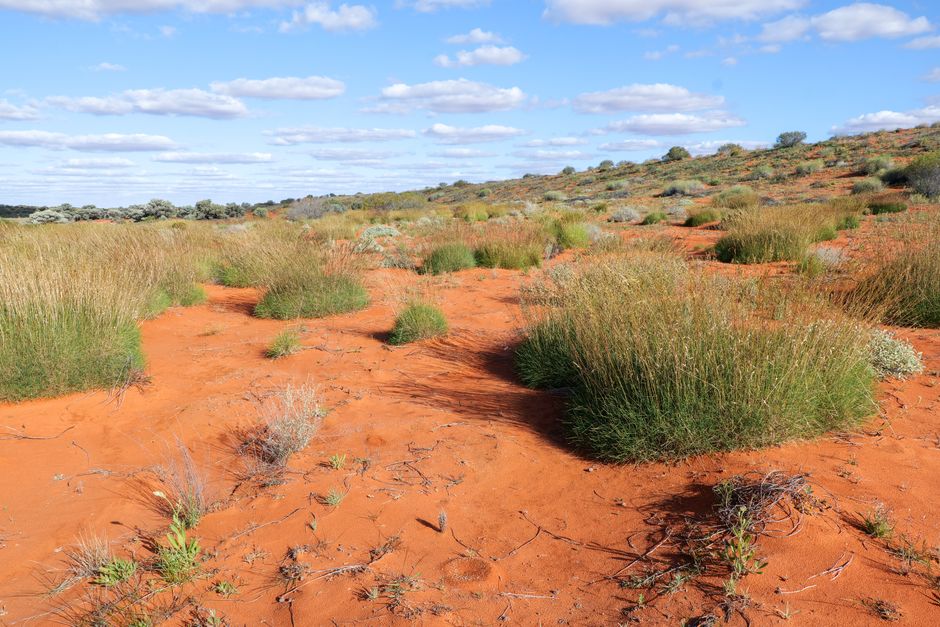
Satellite images capturing Australia's iconic Red Centre blanketed in an unusual sea of green have captivated audiences around the world — but for those living and working in Alice Springs, the spectacular transformation carries a stark warning about one of the country's most pressing environmental challenges: the unchecked spread of buffel grass, an invasive species that is reshaping the arid heart of the continent.
A Record Wet Season Exposes the Scale of the Buffel Grass Problem
Earlier this year, NASA's Terra satellite captured extraordinary images of Central Australia following an exceptional period of rainfall. February 2026 delivered an average of 239 millimetres of rain to the region — the Northern Territory's third-wettest February on record, according to the Bureau of Meteorology. Unseasonable rainfall has continued into mid-May, when a cold weather band brought further wet conditions to the territory's south.
The region is world-famous for its red iron-rich soils, sweeping rock formations and landmarks including Uluru — but the rains triggered an explosion of vegetation growth across Central Australia. Much of that growth, environmentalists say, is buffel grass, which is now estimated to make up around 80 per cent of ground cover in the area surrounding Alice Springs.
The Arid Lands Environment Centre has described Alice Springs as "ground zero" for the spread of buffel grass across Central Australia, with advocates pushing for the plant to be listed as a weed of national significance. Pastoralists, however, are urging that any such designation acknowledge the grass's longstanding importance to the cattle industry — setting up a fractious national debate over the species' future.
A 'Tinderbox' Threatening Iconic Landscapes
Alex Vaughn, policy advocacy coordinator at the Arid Lands Environment Centre, says the vivid green transformation seen from space is far from a positive sign. He describes it as "the canary in the coal mine."
"The green buffel grass growth cures and dries into a tinderbox before it goes up in flames and creates blackened landscapes," Vaughn says. He warns the threat extends across a vast range of environments — from the Victorian Mallee to Kati Thanda-Lake Eyre and Uluru-Kata Tjuta.
Beyond the fire risk, environmentalists point to buffel grass crowding out native plant species, including some not yet formally documented by science. The consequences, they argue, are irreversible if action is not taken urgently. Australia's First Nations communities and Traditional Owners are among those calling loudest for a coordinated national response.
Tourism and Livelihoods Under Threat
The human cost of the buffel grass crisis is being felt acutely by those who have built their lives around Central Australia's landscapes. Anna Dakin, a former UK resident who relocated to the region more than a decade ago after falling in love with its desert scenery, now runs her own tour guiding business near Alice Springs.
Her eight-hectare property just outside of town has been "absolutely overrun" by buffel grass, disrupting her daily operations and delaying plans to open an on-site campsite for visitors. During the recent heavy rains, Dakin says she spent up to 10 hours a week mowing the grass — a losing battle against its relentless spread.
She worries deeply about what the transformation means for tourism, noting that visitors come to Central Australia specifically for its unique and striking desert landscapes. The situation has been compounded by cost-of-living pressures reducing visitor numbers, as well as the end of a direct Melbourne to Alice Springs flight service.
"When I start to talk about buffel grass to groups, I personally feel quite embarrassed at the lack of management that we do in the Northern Territory," Dakin says. "There are plants that have not been documented by science yet, and the buffel grass is outcompeting those plants."
What Happens Next
The push to list buffel grass as a weed of national significance is gaining momentum, backed by environmentalists and Traditional Owners who say the window for effective intervention is narrowing. The debate now centres on whether Australia can find a management approach that addresses the ecological devastation while still recognising the economic realities facing the cattle industry — a balance that, so far, has proven elusive.


