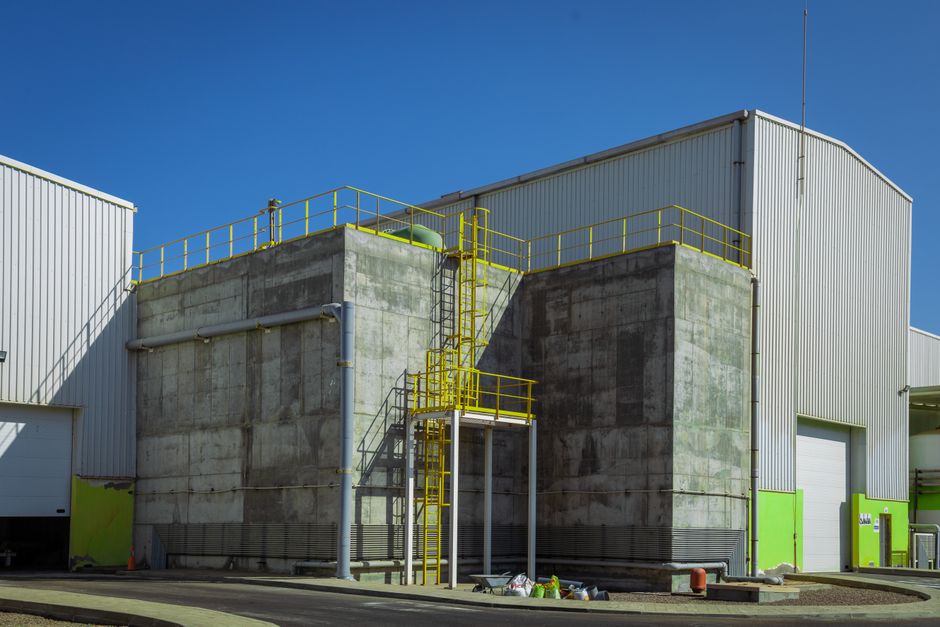
A high-security explosives facility in Central Queensland that has operated quietly for more than a century has received government approval to significantly expand its operations, driven by surging demand from Australia's mining sector. The Bajool Explosives Reserve, located approximately 30 kilometres south of Rockhampton, will begin initial construction work on expanded infrastructure early next year, with full operational capacity expected by 2030.
What Is the Bajool Explosives Reserve?
Established in 1913, the Bajool Explosives Reserve is one of four state government-owned explosives facilities in Queensland, alongside sites near Cairns, Brisbane and Townsville. The reserve is used to store, manufacture and dispose of explosives — primarily for the mining industry — and has long been shrouded in secrecy given the sensitive nature of its operations and its proximity to Port Alma, near Rockhampton, which is Australia's highest-volume licensed explosives port.
Among the materials held at the facility are large quantities of ammonium nitrate, which can be processed into ammonium nitrate emulsion and dispatched to mines across the country. The facility also houses large incinerators used to safely destroy seized illegal fireworks, expired ammunition and flares. Exact stockpile quantities and specific security arrangements have not been disclosed, citing commercial-in-confidence and security grounds.
Rob White, explosives director at Resources Safety and Health Queensland (RSHQ), described the reserve's national significance in striking terms.
"It's quite an important reserve for not just Queensland, but for the rest of Australia as well," he said. "That's why we call it the 'Bajool in the Crown'. It's the gateway down to New South Wales and across to Western Australia as well."
A History Stretching Back Over a Century
The Bajool site was first gazetted for explosives purposes in the late 1800s, with its first magazine — a structure designed to safely store or detonate explosives — constructed in 1913. In its earliest years, the reserve primarily serviced the gold mine at Mount Morgan, roughly 60 kilometres away, and the Blair Athol coal mine, more than 400 kilometres to the north-west.
"Bajool has played an important part moving forward in history for the mining industry," Mr White said.
Historical records show horses pulling wagons loaded with explosives through the reserve as recently as 1956, with transportation between Bajool and Port Alma continuing into the 1980s.
The Expansion: Scale and Drivers
The current expansion builds on significant growth already underway. In 2022, the reserve's footprint more than tripled — growing from 300 hectares to more than 900 — with new land to the north of the site earmarked for additional infrastructure. This represents the first major expansion since the facility was established.
More recently, the reserve received formal state government approval to increase its operational output. Mr White said the decision was a direct response to capacity constraints driven by industry demand.
"We realised a number of years ago that we were running at capacity," he said. "We can now bring industry in very shortly to then [see] at least a prospective site for manufacture and storage of ammonium nitrate."
Initial works on the expanded section are scheduled to commence early next year, with the facility expected to be fully operational at its new scale by 2030.
Safety and Security Remain Central
Despite the scale of the expansion, authorities have been careful to emphasise that safety and regulatory oversight remain the facility's top priorities. The reserve operates under heavy regulation, and officials say the community should have confidence in how the site is managed.
"It's about safe and secure explosives [that are] heavily regulated and secure to the community," Mr White said.
With Australia's mining industry continuing to expand, the Bajool Explosives Reserve appears set to play an increasingly central role in supplying the nation's resource sector for decades to come.


