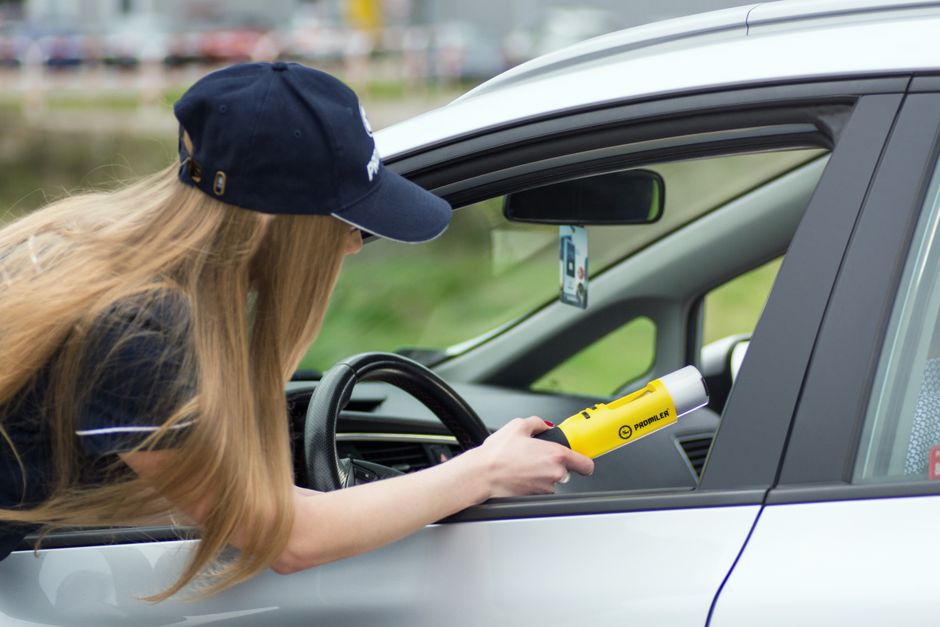
Police officers in the small southern Western Australian town of Manjimup are taking an unusual approach to road safety this September — rewarding drivers who blow zero on a breath test with a $20 voucher. The initiative, timed to coincide with football finals and the lead-up to school holidays, sees officers handing out 100 vouchers during routine traffic stops throughout the month.
How the $20 blow zero reward works
Manjimup sits roughly 290 kilometres south of Perth, and its local police have partnered with the community road safety committee to trial the positive-reinforcement scheme. Rather than focusing solely on penalising bad behaviour, officers will identify drivers who are doing everything right — obeying the law and returning a zero blood-alcohol reading — and hand them a voucher on the spot.
Officer-in-charge Sergeant Tyler Winter said the timing was deliberate, given the increased traffic that comes with the football finals season and approaching school holidays.
"If they are doing the right thing, if they are not breaking any laws, and they blow zero, then we may give them one of the $20 vouchers," Sergeant Winter said.
He said the idea had come from the local road safety committee, which floated the concept of reinforcing positive driver behaviour rather than relying purely on deterrence. The $2,000 worth of vouchers was funded by drug and alcohol support service Holyoake, which sits on that committee.
Expert says it's more about community rapport than curbing drink driving
A criminologist from the Australian Catholic University described the scheme as genuinely novel, but offered a measured assessment of what it might achieve. While supportive of the initiative, Dr Matthew Morgan suggested the vouchers were likely to do more for the relationship between police and the public than for drink-driving rates specifically.
"It's definitely a PR exercise on behalf of police. I definitely think it's a good way of building interest with the community," Dr Morgan said.
He did, however, point to research suggesting that immediate feedback can influence driver behaviour. He cited roadside electronic speed displays — the kind that show a smiley or frowning face depending on a driver's speed — as a proven small-scale example of instant feedback reducing road rule violations.
"That instant feedback stimulates our reward systems in the brain, and it actually has been proven to limit speeding on our roads," he said.
But he remained cautious about whether the prospect of a $20 reward would be enough to change someone's decision to drink before driving to the football.
Program to be measured, with hopes it becomes annual
Holyoake team leader Jo Woodruff said the organisation would ask police to collect data so the program's impact could be properly assessed. She described this September as a baseline run, with the organisation hoping to repeat and build on it in future years.
"This effectively is our first run, so it is going to be our baseline, with the hope that we would do this in subsequent years and see some improvements," she said.
A WA Police spokesperson confirmed the force supports a range of local Blow Zero initiatives across the state, noting that Moora — a Wheatbelt town around 170 kilometres north of Perth — had previously trialled a similar voucher-based incentive for safe drivers. The spokesperson clarified these are locally driven programs, not statewide enforcement initiatives, and are not subject to formal state-level performance reporting.
With police around Australia increasingly looking at community engagement strategies, the Manjimup experiment will be watched with interest — even if, for now, its success remains to be seen on the road.


