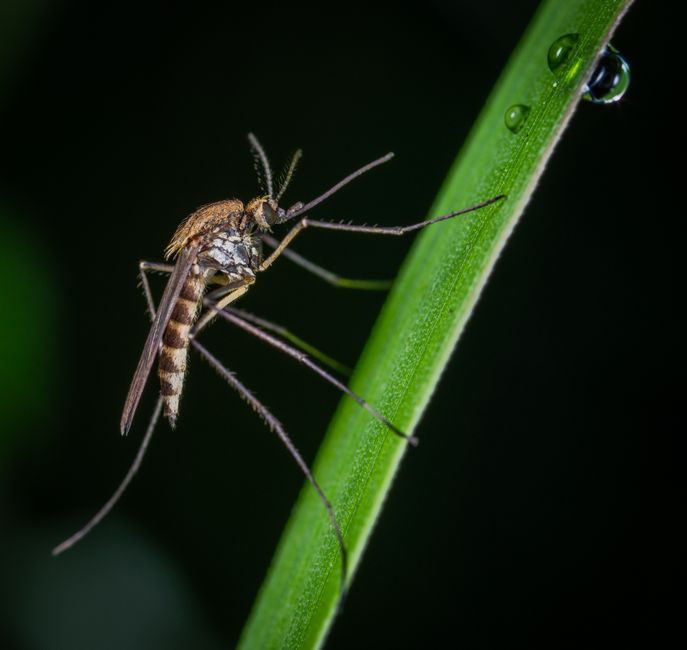
Australians heading to Bali, Thailand and other popular holiday destinations now have a new weapon against one of the region's most common travel-related illnesses, with the dengue fever vaccine Qdenga available in Australia and offering protection against all four types of the virus.
Dengue is a viral illness spread by mosquitoes, causing fever, severe headaches, body aches, nausea and rash. There is no specific treatment, and while most people recover within one to two weeks, fatigue can linger for weeks or months. In some cases, the illness becomes severe enough to require hospitalisation, and in rare instances it can be fatal.
Why dengue is a genuine risk for Australian travellers
More than 1,900 dengue cases were reported in Australia in 2025, the vast majority in people who had returned from overseas travel. Between 2012 and 2022, Indonesia, Thailand and India were the countries where Australian travellers most commonly contracted the virus. Destinations such as Bali experience frequent outbreaks, and the risk is not static: case numbers can rise sharply from year to year, and a warming climate is creating increasingly favourable conditions for the mosquitoes that spread the disease.
Within Australia, mosquitoes capable of spreading dengue are found in tropical parts of central and far north Queensland, but local outbreaks are now rare. A public health program involving the release of mosquitoes infected with a bacterium that blocks viral transmission has proven highly effective at suppressing local spread. For most Australians, the real danger lies abroad.
The biology of dengue adds another layer of complexity. There are four distinct types of the virus, and while infection with one type grants future immunity to that strain, a person can still be infected by the remaining three. A second infection involving a different type can sometimes produce more severe illness than the first, partly because antibodies from the initial infection can inadvertently help the new virus enter cells more easily. Frequent travellers and people living in endemic regions face a higher cumulative risk of encountering multiple virus types over time.
How the Qdenga vaccine works and what the evidence shows
Qdenga uses weakened dengue viruses to train the immune system to recognise and fight all four types of the virus. It is administered as two doses, three months apart. Millions of doses have been given worldwide, and monitoring has not detected any increased risk of severe dengue following vaccination.
In a large clinical study involving children and teenagers in dengue-endemic countries, the vaccine prevented roughly 80 per cent of dengue illness and more than 95 per cent of hospitalisations in the first year. Protection against hospitalisation remained high for more than four years after vaccination.
The development of Qdenga comes against the backdrop of an earlier dengue vaccine, Dengvaxia, which was found to increase the risk of severe dengue in children who had never been previously infected and then contracted the disease after vaccination. That experience prompted rigorous safety scrutiny of all subsequent dengue vaccines, and Qdenga has been closely assessed as a result.
Like all vaccines, Qdenga does carry some side effects. Studies conducted in Europe found that around half of travellers who received the vaccine experienced reactions, most commonly pain or redness at the injection site, headache and fatigue. These are generally mild and temporary.
What travellers should consider before their trip
Until now, preventing dengue has relied almost entirely on avoiding mosquito bites, through repellents, protective clothing and mosquito nets. Qdenga provides an additional layer of defence, though deciding whether to get vaccinated is not always straightforward and will depend on individual travel plans, destinations and health history.
Travellers planning visits to high-risk areas, including parts of Bali, Thailand and India, are encouraged to speak with a travel medicine specialist well ahead of their departure date, given that the two-dose course spans three months. Staying informed about local outbreak conditions and combining vaccination with ongoing bite-prevention measures remains the most comprehensive approach to managing dengue risk.


