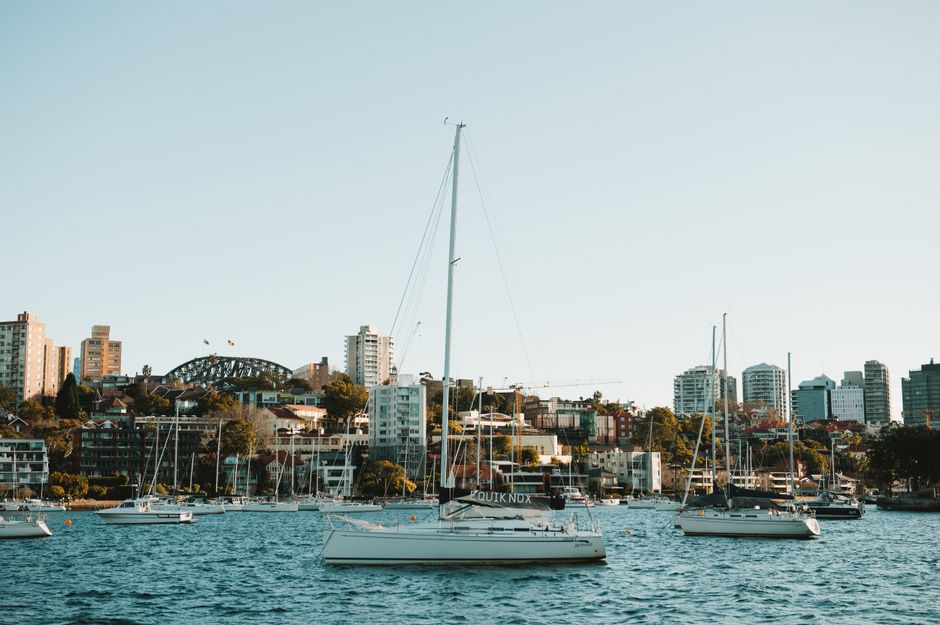
The NSW Government has unveiled a sweeping rezoning proposal for Sydney's eastern suburbs that would allow apartment towers as tall as 34 storeys around Edgecliff station and 32 storeys near a future Woollahra station, creating up to 9,400 new homes across 168 hectares of predominantly low-density residential land. Premier Chris Minns announced the plans, citing Productivity Commission advice that identified the corridor between Oxford Street and Darling Point Road as among the best-placed locations in the entire state for new housing.
What the Woollahra and Edgecliff Rezoning Plan Actually Involves
Under the state government's proposal, building heights would range from three to 34 storeys, with the tallest towers concentrated immediately adjacent to the two transport hubs. Around 40 per cent of the new dwellings would be sited within 200 metres of train stations, and the homes are projected to be delivered over the next two decades.
The plan also includes a new public plaza, upgraded open space and parks, improved walking and cycling connections, and a renovated Edgecliff centre. The new Woollahra Train station is expected to open by 2029, providing the public transport backbone the rezoning depends upon.
On affordability, the proposal mandates that 3 per cent of new housing be allocated as affordable rental accommodation in perpetuity. Only two select sites within the precinct would carry a higher 15 per cent affordable housing component. Given the current median unit price in Woollahra sits at approximately $1.43 million, questions are already being raised about how many essential workers — teachers, nurses, paramedics and police — the scheme could realistically house.
Minns was candid about the plan's limitations, acknowledging directly that it was "not a proposal to solve Sydney's affordable housing problems" but argued the city needed more dwellings across the board to ease broader supply pressures. The rezoning is one part of a broader Labor strategy that includes fast-tracking construction around train stations state-wide and legislating increased density.
Developer Levies and the Cost Debate
A significant flashpoint in the proposal is a requirement for developers to contribute to the cost of upgrading Woollahra station. The levy is expected to sit at around $15,000 per new home or unit, helping to fund a station upgrade estimated to cost between $150 million and $200 million. Those charges come on top of existing taxes and levies already applied to the construction sector.
Industry figures have warned the additional costs will ultimately flow through to buyers, compounding affordability concerns in an area already well beyond the reach of average earners. Shadow Planning Minister Chris Rath described Sydney's construction sector as "already one of the most highly taxed sectors in all of Australia", expressing scepticism about the new impost. The opposition has indicated general support for higher density near transport, but labelled the station levy a "tax on developers" that could undermine the plan's goals.
These cost pressures intersect with Australia's broader housing affordability crisis, which has been driven in part by sustained population growth and chronic undersupply. The eastern suburbs have not been immune — the area has long undergone significant gentrification, pushing lower and middle-income households further from the city centre over decades.
Council Pushback and Local Concerns
The proposal has run headlong into fierce local resistance. Woollahra Council has characterised the government's plans as a "disaster", arguing that rezoning streets currently lined with predominantly two-storey homes and low-density unit blocks to accommodate 30-plus-storey towers is disproportionate and premature.
The council has put forward an alternative plan that would deliver around 3,600 new homes — less than half the state government's target. Woollahra Mayor Sarah Dixson argued the council's approach was evidence-based and could deliver meaningful housing growth alongside appropriate supporting infrastructure, including schools, community facilities and outdoor spaces.
Residents have echoed those concerns, with locals raising alarm over traffic congestion — citing already-strained roads in the area — and expressing worry about the scale and pace of change in a neighbourhood many consider architecturally and culturally significant. While some acknowledged the need to grow and adapt, others described the government's ambitions as "absolutely unnecessary" at the proposed scale.
Political Dimensions and What Comes Next
The announcement has attracted scrutiny not just for its planning implications but for its political framing. Minns positioned the eastern suburbs rezoning as a matter of fairness, arguing it was inequitable to burden western Sydney communities with the lion's share of new housing while affluent, well-connected suburbs closer to the CBD remained largely untouched. He conceded, however, that the rezoning was unlikely to meaningfully combat the affordable housing crisis in isolation.
Critics have noted the political calculus at play: the targeted area falls squarely within Liberal-held territory, making it relatively low-risk for a Labor government to propose large-scale change there. Whether the plans survive the community consultation process intact remains an open question, with housing affordability and debt pressures continuing to dominate the national conversation.
What is clear is that Sydney's housing supply challenge is not going away. With home construction rates in the early 2000s falling to levels not seen since the Great Depression, and rents and mortgage stress still biting hard, pressure on governments to act is intense — even if the communities asked to absorb that action push back hard.


