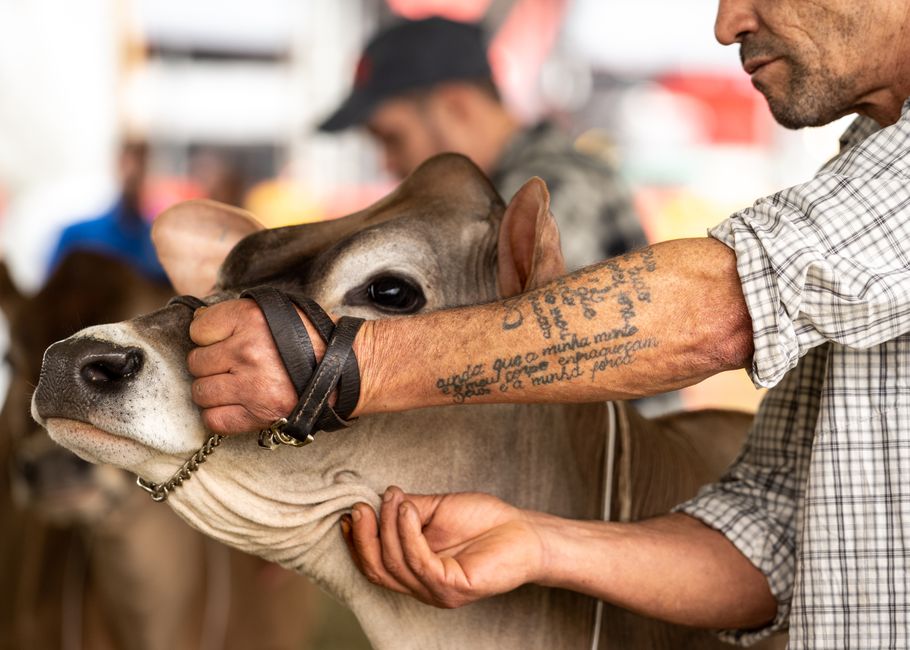
Long before the showbag stalls open and the rides spin up, a quiet transformation takes place at the Brisbane Showgrounds. Dozens of Queensland cattle farming families descend on the site up to a week early, setting up a makeshift rooftop village atop an ordinary three-storey car park — one of the Ekka's best-kept secrets.
The Royal Queensland Show, known to generations of Queenslanders simply as the Ekka, draws competitors and exhibitors from across the state each year, and for many of them the trip is far more than a day out. It is a temporary relocation, complete with dongas, tents, mobile amenity blocks and a working kitchen crammed into a few square metres of borrowed space.
A temporary city on top of a car park
The rooftop of the multi-storey car park at the Brisbane Showgrounds is transformed each year into a functional village. Rows of portable accommodation units — known as dongas — spring up alongside tents and shared facilities, housing the exhibitors who have travelled from regional Queensland to compete.
Below, on the levels normally filled with parked cars, prized livestock take over the bays in neat rows. Every floor of the concrete structure houses animals: cattle on most levels, with goats, poultry and pigeons filling others. Along one side of the building, a conveyor belt carries fresh hay and bedding down to the animals and hauls manure back up after exhibitors have cleaned out the stalls — a practical solution to the logistical challenge of running a working farm inside a city car park.
The vehicle ramps, meanwhile, serve double duty as wash-down bays, with their natural slope allowing water and dirt to drain away as animals are groomed for competition.
"It really is the country coming to the city every 12 months," said Karla Cannon, a cattle farmer from Marburg who has been making the trip to the Ekka since she was about ten years old.
The Cannon family's story: resilience on the road to the ring
Karla and her husband Anthony Cannon are among the families who move into the rooftop accommodation for the duration of the show, this year joined by their 13-year-old daughter Ella. For Anthony, it marks a significant personal milestone — just two years ago, he was airlifted to the Royal Brisbane and Women's Hospital after a serious vehicle collision left him with a broken neck and multiple other injuries.
"I didn't know if I'd walk again," he said.
The hospital is visible from the top of the car park, with rescue helicopters regularly passing overhead — a constant, if sobering, reminder of the journey he never wanted to take. Today, Anthony is back on his feet and alongside Ella as she prepares cattle from the family's stud for competition.
The family's operation is called Chelna Square Meaters — a name built from the first letters of their three children's names: Chase, Ella and Nash. All three are involved in the breeding and showing of cattle, with Ella already earning recognition as an award-winning breeder and handler in her own right.
Life in a 3x3 donga: comfort is what you bring
The living arrangements are modest. Each donga measures roughly three metres by three metres and comes equipped with an air conditioner and a bunk bed — nothing more. Exhibitors are permitted to sleep three people per unit but must supply their own third sleeping surface, meaning Anthony's stretcher is squeezed into whatever floor space remains.
The adjacent donga serves as the family's makeshift kitchen. A fridge-freezer stocked with pre-cooked meals sits alongside a camping table supporting a microwave and an air fryer, providing meals throughout the week until friends join later in the show's run.
"We pretty much bring whatever we need to be comfortable," Karla said.
For families like the Cannons, the annual move has become a well-rehearsed routine — part of a tradition that stretches back generations and remains central to Queensland's agricultural identity. The State Library of Queensland holds extensive records documenting the show's history as a cornerstone of rural life in the state.
A living piece of Queensland's agricultural heritage
The Ekka has long served as a meeting point between city and country, and the hidden village on top of the car park is perhaps the purest expression of that relationship. While visitors stream through the gates each day to enjoy the entertainment and exhibits, the families camped above them have been quietly living and working on-site for days, tending to animals and preparing for competition.
This year marks the 150th Royal Queensland Show, a landmark anniversary that lends extra weight to the traditions on display — from the prized livestock in the concrete bays below to the families keeping watch from their dongas above, looking out over the Brisbane skyline as the city slowly wakes around them.
For North Queensland readers keeping an eye on other unusual happenings in the state, our earlier coverage of suspected space junk washing up on a North Queensland beach remains one of the more remarkable stories of the year.


