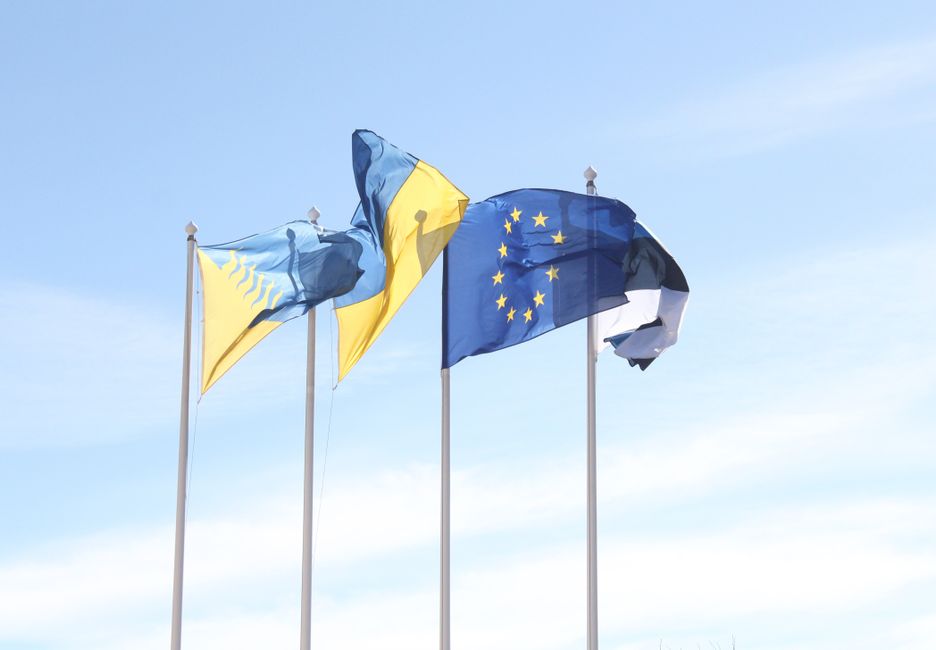
European Commission President Ursula von der Leyen has announced that the European Union is opening the door to Canada becoming its first-ever associate member — a category that does not currently exist in the bloc's founding treaties — in a move that represents one of the most significant shifts in EU foreign policy in recent memory.
Von der Leyen made the announcement during her annual State of the European Union address to the European Parliament in Strasbourg, inviting Canadian Prime Minister Mark Carney to attend in person and address the parliament himself on Thursday.
A New Category of Partnership
The proposed associate membership status has no existing basis in EU treaty law, making the proposal structurally novel for a bloc that has historically resisted creating flexible or tiered categories of membership. The announcement is all the more striking given that EU member states were notably unenthusiastic when Germany floated a similar associate membership concept for Ukraine in May — a proposal framed as a potential stepping stone toward full accession. For background on the complexities of that relationship, see Ukraine–European Union relations.
"I said we must urgently reimagine our partnerships. So, I would like to work with you on opening the door for Canada to be the first associate member of the EU," von der Leyen told the parliament.
She framed the partnership in broad strategic terms, outlining cooperation across manufacturing, artificial intelligence, critical minerals, energy, defence industries and Arctic affairs.
"We will work on intelligent manufacturing. We will create a tech alliance. We will integrate defence industrial bases. We will make the Arctic a flagship joint project," she said.
Shared Values Drive the Push
Von der Leyen was emphatic that the proposal reflects deep alignment between Europe and Canada on democratic values and global challenges, not merely economic convenience.
"We see the world with the same eyes: from AI to climate change, from the Arctic to geopolitics. And we have stood together: on Ukraine, on defence, on raw materials and on supply chains. But above all ... Europe and Canada believe in democracy," she said.
She also took care to describe the emerging partnership as "not against anyone else" — widely interpreted as an effort to avoid provoking US President Donald Trump at a moment of heightened transatlantic tension.
"Partnerships are a strategic choice for Europe. But they also respond to the fracture in the international rules-based system," von der Leyen added.
Canada–US Tensions as a Backdrop
Carney's visit to Strasbourg comes in the wake of a historic deterioration in Canada–United States relations. Trade negotiations between Ottawa and Washington collapsed last month, triggering a series of retaliatory tariff measures on both sides. The breakdown has accelerated Canada's push to deepen ties with other global partners, Europe chief among them.
For more on the escalating trade dispute, see our earlier coverage of how the Canada–US trade war escalated as retaliatory tariffs took effect.
Notably, Carney himself had earlier this week described what Canada was seeking as a "unique alliance" with the EU — explicitly stopping short of calling it membership of any kind. Von der Leyen's use of the term "associate member" therefore appears to go beyond what Ottawa had publicly sought, giving Thursday's address by Carney added significance as the two sides align their language.
What Comes Next
The practical path to formalising associate membership remains unclear, given its absence from existing EU treaty frameworks. Both sides have signalled intent to work collaboratively across multiple sectors, but the institutional mechanics of such an arrangement will need to be negotiated and, potentially, ratified by EU member states — a process that could face resistance from those wary of further expanding the bloc's commitments beyond its borders.
Carney's address to the European Parliament on Thursday is expected to shed further light on how Canada envisions the terms of this proposed new relationship.


