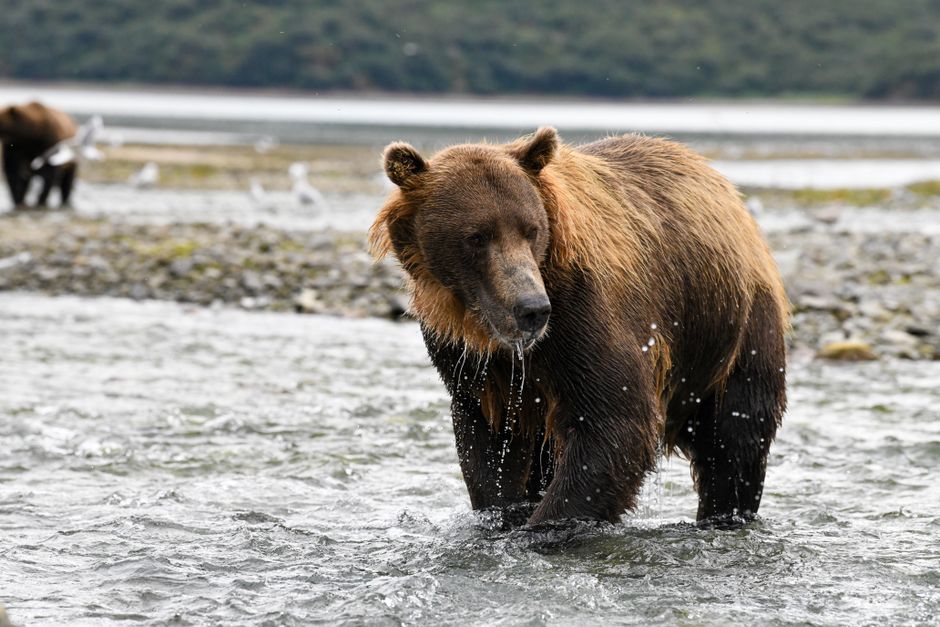
A gentle giant known for his easygoing temperament has taken out the coveted title of Fat Bear Week 2026. Backpack — officially designated Bear 89 — has been crowned the heftiest bear at Alaska's Katmai National Park and Preserve, securing victory with more than 100,000 public votes in the annual online competition, narrowly edging out Bear 910 with just over 50 per cent of the final poll.
Who is Backpack, Fat Bear Week's 2026 champion?
Backpack's story is one steeped in Katmai history. He is the son of Holly, a former Fat Bear Week champion herself, who first introduced him to the Brooks River as a first-year cub back in 2006. His distinctive name comes from a habit he developed as a youngster — clambering onto his mother's back whenever the pair crossed the river.
What sets Backpack apart from many of his large male counterparts is his disposition. "Unlike many large adult male bears, Backpack hasn't shown much aggression toward his competitors," his contestant profile notes. Fans celebrated his win on social media, pointing to both his impressive lineage and his reputation as a peaceable presence among the park's roughly 2,200 brown bears.
In this year's bracket, Backpack first defeated Bucky — who had already knocked out reigning 2025 champion Chunk (Bear 32) in the opening round. Chunk claimed his 2025 title at an estimated 545 kilograms, a benchmark that underscores just how formidable these animals become before winter sets in.
What is Fat Bear Week and why does it matter?
Now in its 12th year, Fat Bear Week was established in 2014 as an interactive, public-facing way to educate people about brown bears — the coastal cousins of grizzlies. The contest is run by a nonprofit organisation and celebrates the extraordinary survival instincts of the bears that inhabit Katmai National Park and Preserve, a vast wilderness on the Alaska Peninsula that stretches south-west toward the Aleutian Islands.
The premise is straightforward: bears that bulk up the most before winter are bears best equipped to survive it. Each year, the public votes online to determine which bear looks the most impressively rotund before heading into hibernation. Voters can watch the animals in real time via livestream cameras trained on the Brooks River before casting their judgement.
"Fat bears are successful bears," the organising nonprofit states plainly on its website — and the science backs that up. During winter hibernation, brown bears neither eat nor drink, and can shed as much as one-third of their body weight over those months. The fat reserves accumulated beforehand are quite literally a matter of life and death.
How the bears fatten up
The Brooks River is central to the whole spectacle. From late June each year, salmon return to the river in abundance, and the bears converge to gorge themselves. This seasonal feast gives them the opportunity to pack on the fat reserves that will carry them through the long Alaskan winter.
The park is home to approximately 2,200 brown bears, and Fat Bear Week shines a spotlight on this remarkable population and the ecosystem that sustains them. For many followers around the world, the competition has become an annual ritual — a rare moment of wholesome, wildlife-focused community engagement that draws hundreds of thousands of participants.
Backpack's victory resonates online
The announcement of Backpack's win was met with widespread enthusiasm online, with fans on Instagram celebrating his victory and highlighting his royal bear lineage. As both the son of a champion and a champion in his own right, Backpack has cemented his place in Fat Bear Week folklore.
With voting concluded and the title officially declared on Wednesday AEST, Alaska's Brooks River can now settle into the quieter rhythms of late season — while Backpack prepares, like all successful bears, for the long sleep ahead.


