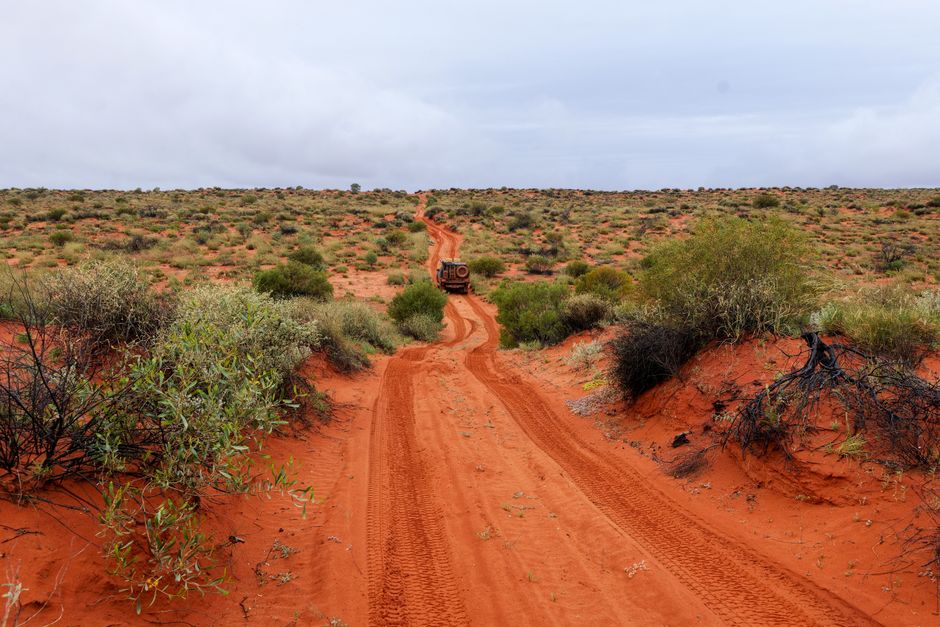
A year after she was pulled, malnourished and frostbitten, from the Western Australian wilderness, German backpacker Carolina Wilga is speaking openly about the 11 nights she spent lost and alone in the outback — an ordeal that included hallucinations, two suicide attempts, and a moment she genuinely believed she had already died and entered hell.
Wilga, now 27, was 26 when she made a fateful drive from Perth to Beacon that ended with her van abandoned against a roadside fence in remote WA. She has since written a memoir about the experience and sat down for her first in-depth interview since her rescue, describing the full arc of what she endured with a composure and even occasional humour that belies how close to death she came.
A Terrifying Moment of Panic Sets Off the Ordeal
Wilga explains that her nightmare began with a single irrational decision on an isolated outback road. Approaching headlights triggered an overwhelming sense of danger, and on instinct she wrenched her steering wheel, driving her Mitsubishi Delica van into a fence. What followed was a sequence of events that would leave her stranded without food, water, or footwear in one of Australia's most unforgiving environments.
She recalls waking in the night to what felt like an alarm — a signal in her mind that compelled her to leave the relative shelter of her vehicle. "It was terribly cold, like freezing cold, but I was still hallucinating," she says. "The stars were falling down from the sky." She is emphatic that what she experienced felt entirely real at the time, even as she acknowledges how it must sound to others.
By the third night, she had completely lost her bearings and had no idea how far she was from her van or any road. Without food or water, her thoughts narrowed to two things: her thirst, and the possibility that she would die out there and her family would never find her body. "That was the moment I fully broke down because that's the worst thing for me," she says.
Freezing Nights, Suicide Attempts and a Promise to Her Mother
While the outback sun was punishing, Wilga says it is the freezing nights that remain most vivid in her memory — so traumatic they act as clear markers within an otherwise fragmented recollection. Facing the prospect of another such night, she made the first of two suicide attempts during her time in the wilderness.
"I just wanted to make it faster because for me, it was clear I'm going to die — but the way I'm dying is super painful and I just wanted to make a cut there to not experience it any longer," she says, speaking with a directness that suggests she has worked hard to come to terms with what she did.
What kept her alive, she says, was a combination of her body's own survival instinct and an unshakeable bond with her family. She made a silent promise to her mother. "I made my mum a promise that I will walk until I die, that I will not give up, I want to live," she recalls.
On the eleventh night, the psychological toll had reached its lowest point. She had formed a theory — one she held with genuine conviction at the time — that she had already died and was experiencing hell.
A Chance Rescue and Life a Year On
Her survival ultimately came down to a chance encounter. Tarnia Henley from Bimbijy Station found her, a rescue Wilga describes as almost impossible to believe even now. The aerial photographs of her abandoned van, widely circulated at the time, had led many to fear the worst.
Today, Carolina Wilga is physically unrecognisable from the gaunt figure helped onto a WA Police jet. No visible scars remain, though her full memory of the 11 days has never entirely returned. She is animated, warm, and at times funny — a testament to the recovery she has made in the year since.
"Sometimes it feels super surreal," she says simply.
If Carolina Wilga's story has moved you or you have your own extraordinary survival experience to share, we'd like to hear from you.


