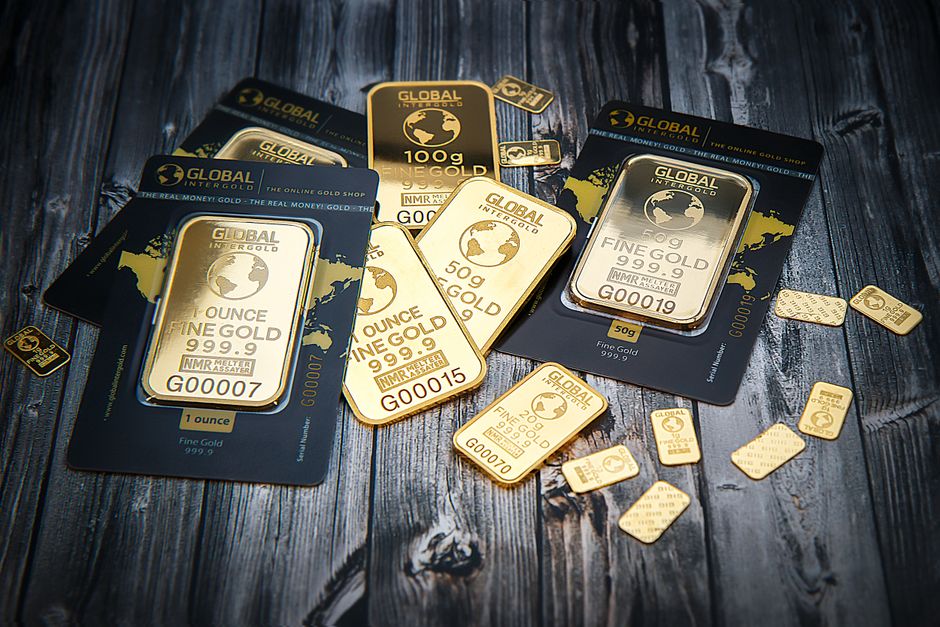
The gold price has staged a sharp and sudden comeback, climbing more than 8 per cent in just over a week to trade above $US4,400 an ounce — and while that might sound like good news for investors holding the precious metal, analysts warn the rally is less a cause for celebration than a signal of serious economic turbulence ahead.
From Record Highs to a Sharp Reversal — and Back Again
It has been a volatile few months for the gold market. Earlier this year, the price hit record levels, surging above $US5,300 an ounce — equivalent to around $7,500 in Australian dollars — just ahead of the outbreak of hostilities in the Middle East at the end of February. That peak was short-lived. America and Israel's military campaign against Iran sent oil prices soaring and reignited inflation fears, which paradoxically worked against gold. The price slid steadily, falling below $US4,000 an ounce as recently as last month.
Now the metal is surging again, driven by a fresh set of catalysts that point to renewed anxiety about the global economic outlook. The US Federal Reserve's decision to hold its policy interest rate steady at its most recent meeting has been a key trigger. Compounding that, the Fed's new chair, Kevin Warsh, has so far failed to reassure markets that he will operate independently from political pressure — specifically, concerns that he may act in line with the preferences of the Trump administration rather than in the interests of monetary stability.
Weak US jobs data released last week has further fuelled the rally by dampening expectations of an interest rate rise in September. Inflation figures due this week could complicate the picture further, though analysts note that even elevated inflation is not necessarily a threat to gold prices — in fact, it often works in the metal's favour.
Why the Gold Price and Interest Rates Move in Opposite Directions
Understanding gold's appeal requires understanding its quirks. Unlike shares or bonds, gold generates no income. It carries holding and opportunity costs. That means when interest rates fall — reducing the returns available from other assets — gold becomes comparatively more attractive, and its price tends to rise.
The current rally echoes the dynamics of last year's gold rush, which was ignited when then-Fed chair Jerome Powell signalled the beginning of an interest rate easing cycle in a speech at the annual economic gathering in Jackson Hole, Wyoming. The Fed subsequently delivered three rate cuts, and gold took off. Markets interpreted the Fed's apparent pivot — from fighting inflation to protecting economic growth — as a green light for the metal.
Those rate moves also sparked broader discussion about what economists call the "debasement trade" and "fiscal dominance" — the fear that government debt has grown so large, and debt-servicing costs so burdensome, that central banks will ultimately have no choice but to inflate their way out of the fiscal trap. For investors worried about that scenario, gold is the obvious refuge.
America's Debt Problem Is Adding Fuel to the Fire
The fiscal backdrop adds considerable weight to those fears. US gross federal government debt is fast approaching $US40 trillion, representing roughly 124 per cent of GDP. Under the second Trump administration, nearly $US4 trillion has been added to that total in just over 18 months, with the country's debt-to-GDP deficit ratio blowing out from approximately 5.8 per cent to around 6.5 per cent of GDP this financial year, according to projections from the Congressional Budget Office.
The federal government's annual net interest bill is now approaching $US1 trillion — a figure that recently exceeded the entire Defence Department budget, even before the Pentagon requested a record $US1.5 trillion in funding for the next financial year.
The United States is not alone in carrying an unsustainable debt load. Most Western governments emerged from the COVID era with heavily stretched balance sheets. But America sits at the centre of the global financial system, and its Treasury securities have long served as the world's premier "safe haven" asset — the alternative to gold itself. If investors begin to fear that America's fiscal position is corrupting its monetary policy, gold becomes not just one option among many but arguably the only credible shelter.
Stagflation Risk Looms — and Gold Tends to Win Either Way
Perhaps most alarming is the scenario now being discussed with increasing seriousness: stagflation — a combination of weakening economic growth and sustained or rising inflation. It is a particularly difficult environment for policymakers, but it is historically positive for gold, which benefits both from its inflation-hedging properties and its status as a safe-haven asset in times of economic stress.
Trump's ongoing trade wars have added another layer of uncertainty to global markets, further complicating the outlook for growth and prices alike. With so many forces converging — a politically pressured central bank, a debt-laden government, weak jobs data, and geopolitical instability — the gold market's renewed glitter may be less a sign of opportunity than a reflection of how much uncertainty investors believe lies ahead.
For those staying ahead of fast-moving financial markets, the gold price has emerged as one of the clearest real-time gauges of investor confidence — or the lack of it — in the stability of the global economic order.


