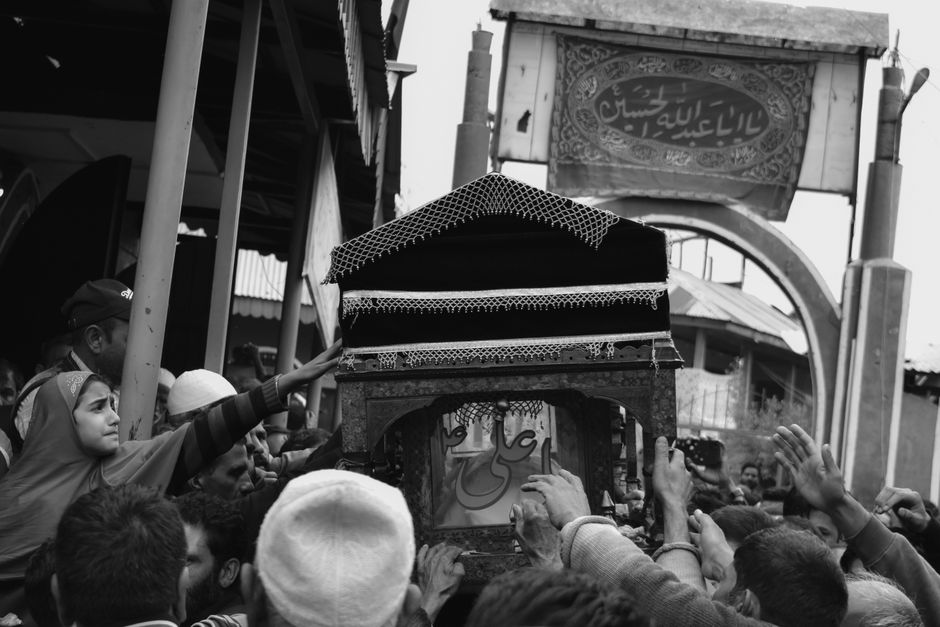
What was pitched as a swift, air power-driven regime change in Iran has instead delivered a powerful demonstration of the Islamic Republic's durability — with millions flooding the streets of Tehran, Qom and Mashhad in what became one of the most consequential funeral processions in modern history, following the assassination of Iran's Supreme Leader in a joint US-Israeli military campaign.
The killing of the Supreme Leader, along with a significant number of senior military and Islamic Revolutionary Guard Corps officers, was intended to destabilise the Iranian system from the top down. According to reports, Benjamin Netanyahu had pitched the operation to US President Donald Trump with the expectation that Iranians would pour into the streets in celebration once the country's supreme leadership was eliminated. The scenes that followed were the opposite of that vision.
A funeral that became a show of strength
Rather than collapsing under the pressure of simultaneous strikes from two of the world's most powerful air forces, Iran's theocratic system moved swiftly through a succession process that surprised outside observers with its resilience. The multi-city funeral procession — spanning not only major Iranian cities but also the holy Iraqi cities of Najaf and Karbala — drew literally millions of mourners and was understood to be a highly orchestrated demonstration of institutional continuity by the Iranian establishment.
The scale of the public response served a clear political purpose: to signal that the Islamic Republic's unique system of government had withstood an extraordinary external assault. Iran managed to replace senior leadership at multiple levels while simultaneously continuing to prosecute a defensive military campaign — a feat that, whatever one thinks of the regime, underscored the system's operational depth.
Trump's calculus shifts as the conflict loses purpose
Once it became clear that a rapid victory would not materialise, and as the conflict began to ripple through the global economy without a clear strategic endpoint, President Trump moved toward a negotiated settlement. A Memorandum of Understanding was signed in June, bringing a ceasefire — at least nominally. But the agreement has proved fragile, with multiple reported breaches in recent weeks as both sides continue to exchange strikes when each believes circumstances justify it.
The situation has been described as neither peace nor war. Both Washington and Tehran entered the ceasefire believing themselves to be the de facto winners, and both are now seeking to interpret the Memorandum in ways that advance their own positions. It is understood that this inherent tension makes the arrangement unsustainable over the long term.
Iran's leverage and the weakened Axis of Resistance
Iran's strategic position heading into the conflict was already weakened. The Hamas attacks of October 2023 and the subsequent regional fallout had significantly degraded the so-called Axis of Resistance — the network of proxy forces that historically formed the backbone of Iran's regional leverage. Hezbollah retains the capacity to tie down Israeli ground forces and strike northern Israel with rockets, but this offers limited utility as a national defence asset against the kind of sustained, high-intensity air campaign that was brought to bear.
It is thought that this degraded proxy network was one of the key factors that made Netanyahu unusually confident when pitching the operation to Trump — with US military resources available, Israeli air assets could shift focus toward Lebanon without materially weakening the campaign against Iran itself.
What comes next
Tehran has absorbed a hard lesson familiar to smaller powers that survive conflict with a much stronger opponent: not losing is itself a form of victory, and the real contest begins at the negotiating table. Iran understands the value of whatever leverage it still holds, and it will seek to exploit the ambiguity of the current Memorandum to its advantage.
For now, the ceasefire holds — tenuously. But with neither side willing to make concessions that could be read as an admission of weakness, the region remains on a knife's edge. The assassination that was meant to end the Islamic Republic has, for the moment, only hardened it.


