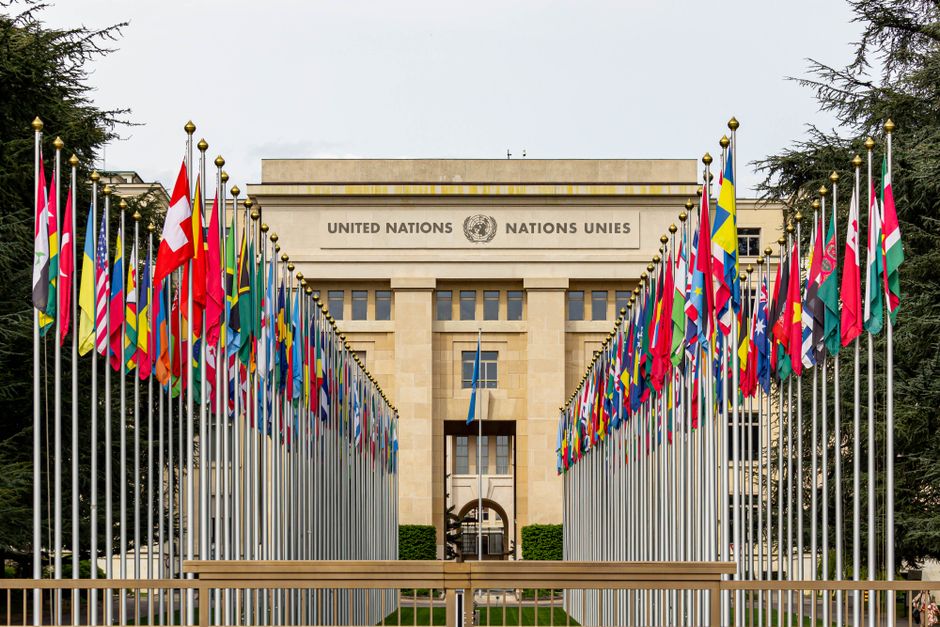
Iranian President Masoud Pezeshkian delivered a defiant address to the United Nations General Assembly on Wednesday, declaring Iran would never capitulate to the United States while simultaneously insisting his country remained committed to diplomacy and negotiations to end the ongoing conflict between the two nations.
The speech came one day after US President Donald Trump addressed the same 193-member body, and the American delegation made its position clear before Pezeshkian had uttered a single word — walking out at the very start of his remarks. The US mission did not immediately respond to requests for comment on the walkout.
Defiance and diplomacy: Pezeshkian's core message
Speaking to world leaders gathered in New York, Pezeshkian struck a dual tone — one of unbending national pride and a measured openness to dialogue. "We will never bow our head or bend at the knee," he declared, while also making clear that Iran was "ready for dialogue and diplomacy and negotiations without accepting the language of force."
He directed his message squarely at Trump, saying the US president and those he described as seeking to bully Iran must understand that force alone would yield no resolution. "Yes they did hit us but we did not bend the knee," he added.
Pezeshkian characterised Iran's actions throughout the conflict as purely defensive, firmly rejecting the label of aggressor. "We have only defended ourselves. We are not terrorists," he told the assembly. "Our innocent people have been the targets of cowardly attacks and aggressions imposed upon our country. And we defended ourselves with utmost strength. America and Israel attacked us."
Civilian casualties and the toll of war
The Iranian president used his platform to highlight what he described as US attacks on civilian infrastructure in the early stages of the war, specifically citing strikes on a girls' school and a sports complex in Iran's south. He held up photographs of the late Supreme Leader Ali Khamenei alongside images representing the more than 150 school children he said were killed in the opening days of the conflict.
Pezeshkian accused the United States of terrorism, saying his nation's people had been made "victims of terrorism" by American actions. He condemned what he described as "cowardly attacks" on civilian targets, framing Iran's military response as an act of self-defence rather than provocation.
The Strait of Hormuz and the cost of conflict
Pezeshkian also raised the question of access to the Strait of Hormuz, the critical waterway through which roughly a fifth of the world's oil and liquefied natural gas had flowed before the war erupted. He argued it was untenable for the international community to benefit from the strait while Iran was denied free passage.
"The permanent deployment of hostile fleets and the expansion of the war will not lead to peace," he warned, signalling Iran's frustration at what it sees as foreign military encroachment on a waterway vital to its own economy and sovereignty.
Trump's ultimatum and behind-the-scenes talks
The duelling speeches underscored the sharp divide between Washington and Tehran, even as both sides appeared to leave a door open. In his address on Tuesday, Trump argued his campaign against Iran had prevented the country from acquiring a nuclear weapon, and he warned he retained the capacity to "annihilate the Islamic Republic" if no deal was reached.
Despite the inflammatory rhetoric, Trump confirmed that his senior envoys — Steve Witkoff and Jared Kushner — had held approximately three hours of talks with Iranian officials on the sidelines of the General Assembly gathering. "It was a very good meeting," Trump told reporters, though he offered little detail on what was discussed or agreed upon.
US Secretary of State Marco Rubio also indicated on Tuesday that Trump was open to a direct meeting with Pezeshkian during the New York gathering, a development that would mark a significant diplomatic moment given the current state of hostilities between the two countries.


