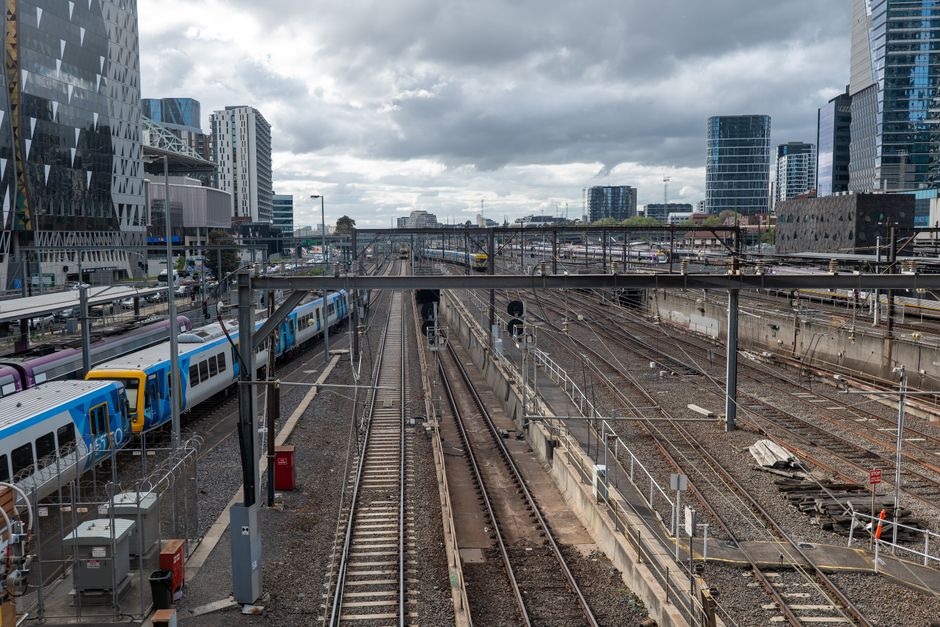
Victoria's long-awaited Melbourne Airport Rail link has taken a significant step forward, with the Victorian Premier and the Prime Minister jointly committing on Wednesday to progress stage two of the project — a 7.4-kilometre rail extension that will include a brand-new station at Keilor East and a bridge spanning the Maribyrnong River.
Victorian Premier Ben Carroll and Prime Minister Anthony Albanese stood together to announce that site investigations and procurement for the next phase would begin within weeks, with major construction scheduled to commence in 2028. The announcement marks a concrete milestone for a project that has been debated, delayed, and derailed for more than six decades.
What Stage Two of the Melbourne Airport Rail Link Will Deliver
The second stage of the project will extend the rail line 7.4 kilometres from Albion to the edge of the airport precinct, passing through a new station at Keilor East — located in Premier Carroll's own marginal electorate. A 500-metre rail bridge will be constructed to carry trains across the Maribyrnong River as part of the works.
"A new Keilor East station will give locals direct access to the city via the metro tunnel," Carroll said at the announcement.
The Keilor East station alone is projected to serve an estimated 5,200 passengers travelling to the city each day, while the broader airport rail line is expected to carry as many as 6,600 passengers and airport workers every hour once fully operational.
The total cost of the combined federal and state commitment stands at $12 billion, with the completed link anticipated to be ready by 2031 — one year after the first stage of the project is expected to open.
"We're building Victoria's future, unlocking capacity to run more trains, more often and ensuring we have a train line to Melbourne Airport," Prime Minister Albanese said.
Stage One and the Sunshine Superhub
While stage two grabs the headlines today, work on stage one is already underway. Construction began at Sunshine in February and involves what the government has previously described as the most complex engineering challenge of the entire project.
The $4.1 billion first phase will untangle six kilometres of existing track between West Footscray and Albion, replacing it with a six-platform superhub at Sunshine station. This superhub will serve as the gateway connecting Melbourne's existing rail network to the new airport extension via stage two.
Stage one is earmarked for completion in 2030, setting the foundation for the broader network to be operational the following year.
A Project Plagued by Decades of Delays
The announcement is a landmark moment for a proposal that has been on the drawing board since the 1960s, cycling through waves of political enthusiasm, funding disputes, and outright cancellations across successive governments.
The most recent setback came in 2023, when construction was paused after the project became caught up in a lengthy federal infrastructure review. Once that review cleared the way for the project to proceed, a fresh dispute emerged between Melbourne Airport and the state government over whether the planned terminal station at Tullamarine should be built underground or at ground level.
A mediator, Neil Scales, was brought in to resolve the standoff. His finding was definitive: the underground station option should be taken off the table entirely. Melbourne Airport ultimately accepted that outcome, allowing planning to move forward.
Despite that resolution, the final stage of the project — which includes an above-ground station within the airport precinct itself — still does not have a confirmed completion date, leaving the full end-to-end journey from the city to the terminal without a firm timeline.
What Comes Next
With site investigations and procurement set to begin in the coming weeks, attention will now turn to whether the 2028 construction start date holds firm. The project's history of stalls and political complications means scrutiny of each milestone will be intense.
For residents of Keilor East and the surrounding western suburbs, the new station promises to be a transformative piece of local infrastructure, offering direct metro tunnel access to the CBD for the first time. For Melbourne more broadly, it represents the closest the city has come to realising an airport rail connection that comparable cities around the world have offered their residents for generations.
Both governments will be under pressure to demonstrate that this commitment translates into steel in the ground — and ultimately, trains running to the terminal — before the decade is out.


