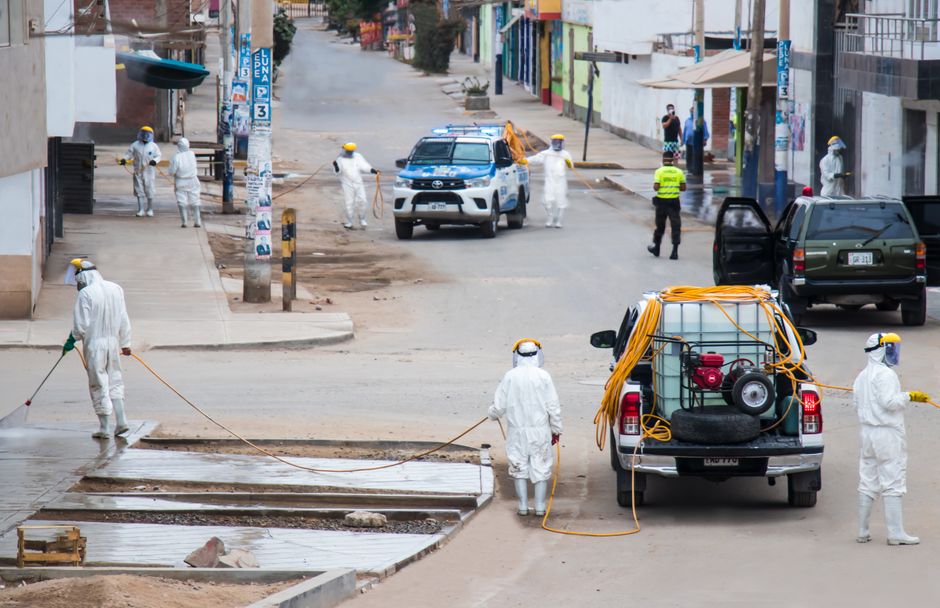
Nigeria has confirmed its first case of Ebola in Nigeria, with the country's health ministry announcing on Tuesday that an infected woman had arrived by plane from Uganda and received treatment at a private hospital near the capital, Abuja. The patient is now in isolation and has tested positive for the Bundibugyo strain of the virus, the predominant variant driving an escalating outbreak across Africa.
A Rapidly Expanding Outbreak
The current Ebola outbreak, which began in mid-May in the Democratic Republic of Congo, has now spread to four countries carrying cases of the Bundibugyo variant. The Africa Centers for Disease Control's director general, Dr Jean Kaseya, described the situation as "an extremely serious threat", noting a fatality rate of close to 50 per cent.
"This Bundibugyo Ebola outbreak has already become the most geographically extensive in history, affecting several countries spread across three regions of Africa," Dr Kaseya said.
Kenya recently confirmed its first Ebola case and has since recorded nine infections and one death. Uganda, which shares a border with both Congo and Kenya, has logged 20 confirmed cases in total, all traced back to a single patient from Congo, with two deaths recorded.
In Congo itself, where the outbreak originated, health authorities have recorded 9,552 cases and 4,602 deaths, making it the epicentre of what is being described as the world's fastest-growing Ebola outbreak.
Why the Bundibugyo Strain Is So Difficult to Contain
The Bundibugyo variant presents a particular challenge for health authorities because there is currently no approved vaccine and no targeted treatment available for it. This distinguishes it from other Ebola strains, such as the Zaire strain, for which vaccines have been developed and deployed in past outbreaks.
The strain's combination of high transmissibility across borders and the absence of medical countermeasures has contributed to health officials' concerns that response efforts are struggling to keep pace with the outbreak's spread.
Nigeria Puts Health System on High Alert
Nigeria's government has urged all public and private health facilities across the country to maintain the highest level of vigilance. As Africa's most populous nation, with approximately 220 million people, Nigeria's confirmation of a case adds significant urgency to regional containment efforts.
Authorities have not yet detailed any additional suspected cases within Nigeria, but the situation is being closely monitored given the country's dense urban population and major international transport links, including the flight route through which the confirmed patient entered the country.
The international health community is also tracking the broader threat posed by infectious disease spread, as disease outbreaks continue to challenge health systems globally. Regional health bodies are urging neighbouring countries to strengthen surveillance at borders and airports as the situation continues to evolve.


