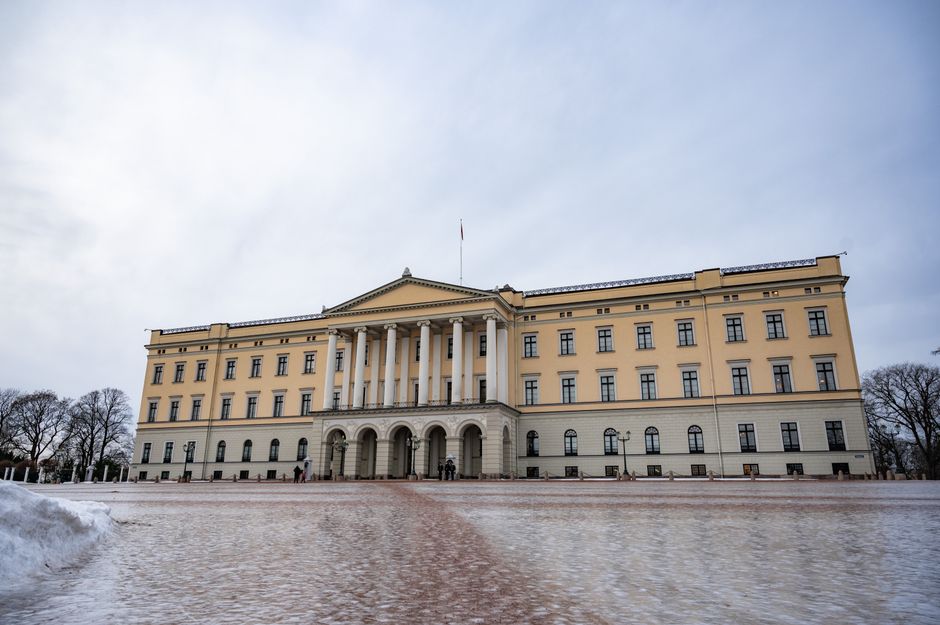
Norway came to a standstill on Wednesday as tens of thousands of mourners lined the streets of Oslo and an extraordinary gathering of European monarchs, heads of state and senior royals paid their final respects to King Harald V — a beloved monarch remembered for his warmth, humility and deep connection to ordinary Norwegians.
Harald, who died on 28 August aged 89, had reigned for 35 years and was Europe's oldest serving monarch at the time of his death. He was widely known as the "grandfather of the nation" — a title that spoke not to age alone, but to the affection Norwegians felt for a king who never sought to distance himself from the people he served.
A procession fit for a king — but marked by human touches
The day began with a 21-gun salute echoing across the capital as Harald's coffin, draped in the red Norwegian royal standard, was carried in procession from the Royal Palace to Oslo Cathedral. The cortege's passage was further punctuated by cannon fire from the nearby Akershus Fortress. Police estimated that around 48,000 people lined the streets, many standing silently behind barriers as the coffin passed, with some mourners wearing traditional regional costumes.
Walking behind the coffin was Harald's son, King Haakon VIII, who automatically acceded to the throne upon his father's death and last week took an oath of allegiance to Norway's constitution before parliament. Harald's widow, Queen Sonja, aged 89, travelled to the cathedral by car alongside Haakon's wife, Queen Mette-Marit, who is recovering from a lung transplant she underwent in June.
The downtown area was closed to vehicles, electric scooters and bicycles for the occasion, and police had asked attendees not to bring umbrellas or sharp objects. Across Norway's 5.6 million-strong population, scores of churches, libraries, cultural centres and city halls opened their doors and set up large screens so that citizens across the country could watch the proceedings together.
A remarkable gathering of world figures
The funeral drew an exceptional roster of international dignitaries. Walking in the procession were the reigning monarchs of Sweden, Denmark, Spain, the Netherlands, Belgium, Luxembourg, Monaco and Jordan. Britain's Prince William and Japan's Crown Prince Akishino also took part on foot, alongside political leaders from more than 20 countries.
Among the most prominent political figures present was Ukrainian President Volodymyr Zelenskyy, who had held talks with Norway's prime minister about the war with Russia the evening before. When Zelenskyy emerged from the cathedral after the service, the waiting crowds greeted him with applause. The presidents of Germany and Finland, France's prime minister and a senior US State Department official also attended, with Washington represented by the Under Secretary of State for Political Affairs.
As the funeral service formally commenced inside Oslo Cathedral, the entire nation observed a minute of silence.
'He wasn't afraid to meet people in his rubber boots'
Norway's parliamentary speaker, Masud Gharahkhani, delivered a tribute that captured the essence of Harald's appeal. "King Harald was close to the people," he said, recalling the late king's willingness to engage with Norwegians from all walks of life without pretension. "He wasn't afraid to meet people in his rubber boots," Gharahkhani told mourners.
He also quoted Harald's own words from his 2008 New Year's address, in which the king had said: "I wish we would stop using the term 'the weakest in society.' In reality, some of these people are among the strongest of us all."
"He lived up to his motto: He gave his all for Norway," Gharahkhani concluded.
Ordinary Norwegians gathered along the procession route echoed those sentiments. "He was like the beloved grandfather of a family, who embraced all his children and grandchildren, regardless of their appearance or beliefs," said student Arthur Fosheim. "He truly embodied that spirit of inclusion and a multicultural Norway."
Others described the day as one for the history books. "He was very popular. I think everyone liked him, so it was a moment for history," said Arve Stallvik, a 56-year-old businessman who had come out to watch the procession.
A reign defined by modernisation — and a refusal to step aside
Harald's 35-year reign was notable not only for its length but for the way in which he quietly modernised the Norwegian royal house, bringing the monarchy closer to the people while maintaining its dignity and constitutional role. Unlike a number of other European monarchs in recent years, Harald refused to abdicate despite advancing age and health challenges — a decision that reflected both his sense of duty and his personal commitment to the role.
In the weeks before Wednesday's funeral, hundreds of thousands of Norwegians had already paid informal tribute by laying flowers, lighting candles and placing flags outside the Royal Palace during a 13-day period of national mourning — a spontaneous outpouring that underscored just how deeply Harald had been woven into the fabric of Norwegian life.
Following the funeral service at Oslo Cathedral, Harald's coffin was taken to the royal mausoleum in the crypt at Akershus Castle, where the new king, along with the monarchs of Sweden and Denmark, rendered a final salute as his father was laid to rest.


