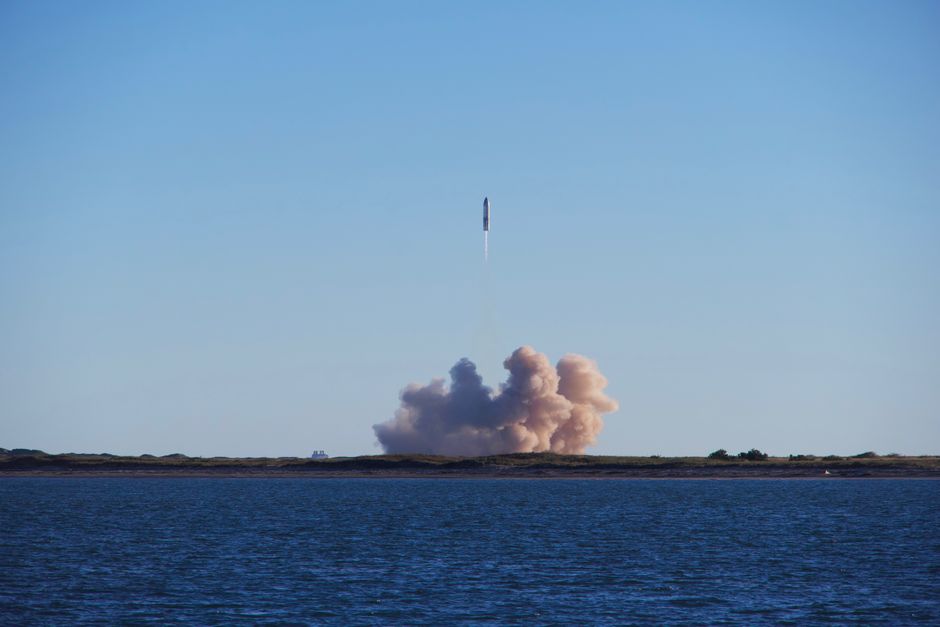
China has confirmed it successfully fired a submarine-launched ballistic missile into the Pacific Ocean, drawing swift condemnation from Australia, New Zealand and Japan, with Canberra declaring the test "destabilising" to the broader region. The launch, carried out around midday on Monday by a People's Liberation Army Navy strategic nuclear submarine, landed in designated international waters, Beijing officials confirmed.
The test comes at a particularly sensitive moment — hours after Australia and Fiji formally signed a landmark mutual defence treaty, the Veitacini Treaty, in Suva. Foreign Minister Penny Wong was in Fiji when the launch was confirmed, and used the occasion to call on Pacific nations to stand united.
What China Said About the Missile Test
Chinese state media reported that a PLA Navy strategic nuclear submarine successfully conducted a test launch of a strategic missile carrying a dummy warhead, which "landed precisely within the designated waters" of the Pacific Ocean. Beijing described the exercise as a routine element of its annual military training program, insisting it was not directed at any specific country or target, and said relevant nations had been alerted in advance in accordance with international law.
Despite that notification, both Australia and New Zealand indicated they received only hours' warning before the launch went ahead — a detail that drew pointed criticism from Wellington.
Australia and New Zealand Push Back Hard
Foreign Minister Penny Wong did not mince words. Speaking to reporters, she said Australia had made its position plain to Beijing ahead of the test.
"Australia has been clear with China that we regard this as destabilising to the region," Wong said. "This proposed test is in the context of a rapid military buildup by China, which is lacking in the transparency and reassurance as to intent that the region expects."
Wong added that the test was "inconsistent" with Pacific leaders' longstanding calls for the ocean to be a zone of peace — and underscored the need for regional cooperation. "This underscores the need for countries of the region to work together, to ensure it is Pacific countries who determine our futures," she said.
Defence Minister Richard Marles also weighed in, describing Beijing's update as "concerning."
New Zealand Foreign Minister Winston Peters echoed the alarm in a formal statement, noting that despite his country's long-standing objections to this type of activity, China had proceeded with only hours of notice.
"The Pacific is an Ocean of Peace and we are deeply concerned by China's testing of nuclear-capable weapons into the South Pacific," Peters said.
For a closer look at the broader military context surrounding this test, see our earlier coverage on China's Pacific missile test and the biggest regional military build-up in generations.
Japan Also Raises 'Grave Concern'
Tokyo joined the chorus of regional criticism, stating that its government had been notified of the launch and had urged China to reconsider. Japan's coast guard was separately advised by Chinese authorities on Sunday about the potential for falling space debris within Japan's exclusive economic zone. A Japanese government source later indicated the missile had landed outside Japan's EEZ. Tokyo described its response as expressing "grave concern over the Chinese military's increased activity."
A Tense Day for Pacific Security
Monday's missile test did not occur in a vacuum. It unfolded on the same day that Prime Minister Anthony Albanese and Fijian Prime Minister Sitiveni Rabuka signed two new bilateral agreements in Suva, including the Ocean of Peace Alliance — formally known as the Veitacini Treaty — which commits each country to come to the other's defence if attacked by an outside force.
The agreement mirrors a similar pact Australia recently concluded with Papua New Guinea, the PukPuk Treaty, which comes into effect on Wednesday. Australia also holds mutual defence arrangements with the United States and New Zealand.
China's missile test on Monday was not its first such exercise in recent memory. In September 2024, China's elite Rocket Force fired a dummy warhead into waters near French Polynesia — the country's first long-range missile launch over international waters in more than four decades. The latest test represents a continuation of that pattern, and deepens concerns about escalating Australia-China tensions in the Indo-Pacific.
With regional nations watching closely and new defence alliances taking shape, the trajectory of Chinese military activity in the Pacific is fast becoming one of the defining security challenges for Australia and its partners. Wong's message from Suva was clear: the region's future must be shaped by Pacific nations themselves — not dictated by the military posture of outside powers.


