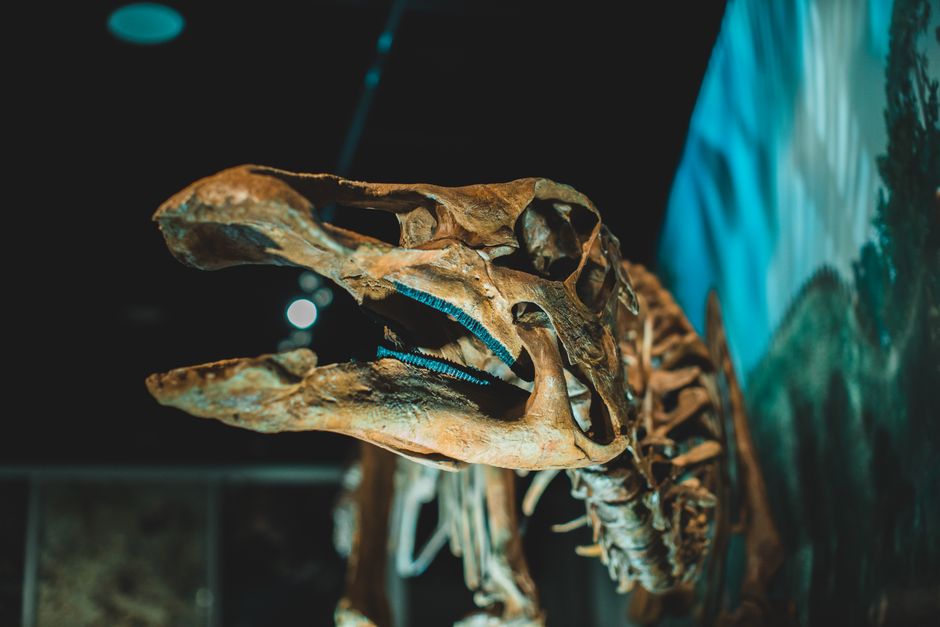
A remarkably preserved skeleton of Nanotyrannus, a smaller relative of Tyrannosaurus rex, has sold at auction in New York for $US47.3 million (approximately $A67.9 million), making it the second most valuable fossil ever sold at auction. The sale followed a 12-minute bidding war among six competing buyers, with the final price dramatically exceeding pre-sale estimates of between $US6 million and $US9 million.
The specimen, affectionately named Jodi, is one of only three relatively complete Nanotyrannus skeletons known to science, a scarcity that paleontologists believe contributed significantly to the extraordinary result.
Just short of the all-time fossil auction record
Jodi's sale price narrowly fell short of the current auction record for a fossil, set earlier this year when a remarkable T. rex skeleton known as Gus went under the hammer for $US50.1 million. While Jodi measures 9.6 feet tall (2.9 metres) and 19.6 feet long (5.9 metres), making it just over half the length of Gus, its extreme rarity as a Nanotyrannus specimen clearly captured the imagination and chequebooks of serious collectors.
The skeleton is made up of 191 bone elements and features a virtually complete skull, according to the auction house. Any missing bones have been replaced with custom 3D-printed and sculpted elements. Importantly, the fossil was offered with full rights, meaning it contains no copyrighted elements from other dinosaur specimens. This allows the new owner, whose identity has not been disclosed, to produce and sell replicas to museums or collectors.
Discovered by a Montana rancher, excavated by the 'Dinosaur Cowboy'
Jodi's story began in 2019 when Montana rancher Jodi Pierson, whose name the specimen now bears, discovered the skeleton. It was subsequently excavated by Clayton Phipps, a commercial paleontologist widely known in fossil-hunting circles as the "Dinosaur Cowboy."
The find comes from the Hell Creek Formation, a geological treasure trove spanning Montana, Wyoming and the Dakotas that has yielded some of the most significant dinosaur discoveries in history. One of the first T. rex skeletons ever found was unearthed there in 1902, and the species name Tyrannosaurus rex itself was established based on fossils from the region.
Phipps has a notable history with the same area. In 2006, not far from Jodi's excavation site, he uncovered the "Dueling Dinosaurs," a celebrated fossil now housed at the North Carolina Museum of Natural Sciences in Raleigh. That specimen features two skeletons apparently locked in mortal combat: a Triceratops and a smaller tyrannosaur now identified as a Nanotyrannus.
The third known relatively complete Nanotyrannus skeleton, named Jane, is held at the Burpee Museum of Natural History in Rockford, Illinois, also originating from Hell Creek.
A species still debated by scientists
The sale has reignited discussion about the scientific status of Nanotyrannus itself. Whether the creature represents a genuine, distinct dinosaur species or is simply a juvenile T. rex has been one of paleontology's more persistent debates. Researchers have only recently leaned toward recognising Nanotyrannus as a separate species, and based on bone development and overall size, Jodi is considered an adult specimen, lending further weight to that view.
Bone structure and skeletal maturity indicators support the adult classification, according to the auction house, which adds particular scientific significance to the specimen.
Scientists alarmed at fossil disappearing into private hands
The sale has drawn sharp criticism from the paleontological community, where high-value private auctions of significant fossils have long been a source of concern. Scientists warn that once a specimen passes into private ownership, it risks becoming inaccessible for research and public education.
Steve Brusatte, a professor of paleontology and evolution at the University of Edinburgh, expressed alarm at the outcome. "We've really just found out that Nanotyrannus is real, and now one of the best skeletons is about to be sold to the highest bidder," he said. "It's harrowing to think it could disappear into the vaults of a collector rather than displayed in a museum where it can wow and inspire kids and families and the public at large."
David Hone, a paleontologist and reader in zoology at Queen Mary University of London, said he was genuinely surprised at how far the bidding exceeded expectations. "It does feel like this is a bubble of prices on dinosaurs which must burst at some point, they can't keep rising forever," he said. Hone also noted that properly assessing the specimen's full scientific value would require thorough, verified study by experts.
The identity of Jodi's new owner remains unknown, leaving open the question of whether the specimen will ever become accessible to researchers or the public. For now, one of the rarest dinosaur skeletons on Earth has passed into private hands, with the scientific community watching and hoping for the best.


