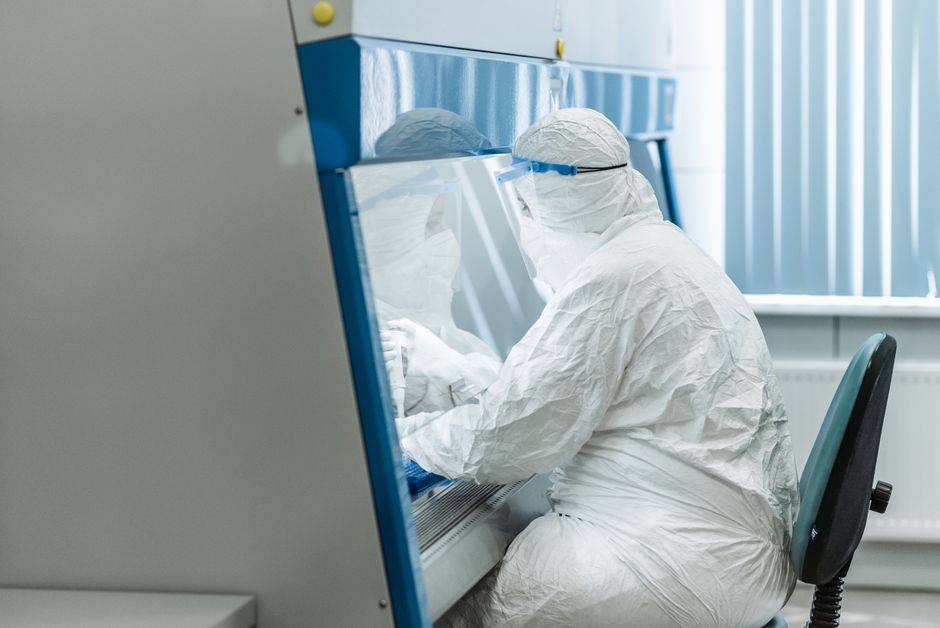
A laboratory technician's death at a plague research facility in Siberia has triggered an escalating international response, with health experts warning that Russia's rapidly shifting official narrative — and the quarantine of hundreds of people — may be telltale signs of a more serious pathogenic incident than authorities are letting on.
Darya Shipilova, a 28-year-old researcher at the Irkutsk Anti-Plague Research Institute, fell ill in late September, was admitted to hospital in the nearby town of Shelekhov on 29 September with severe respiratory symptoms, and died on 1 or 2 October. Independent local media reported she had accidentally broken a test tube containing the bacterium Yersinia pestis — the pathogen responsible for plague — though Russian authorities have since denied this account.
Russia changes its story — and experts take notice
Russia's federal health watchdog, Rospotrebnadzor, has formally declared that Shipilova died of "pneumonia of undetermined etiology" and that no pathogens linked to her work have been detected in any of the approximately 200 people placed under quarantine or medical observation. The watchdog said testing identified two cases of COVID-19 and two cases of rhinovirus among the contacts, but nothing more dangerous. Around 60 per cent of those quarantined have since been released, according to local officials.
What has raised alarm bells internationally is not just the death itself, but the pattern surrounding it. Local media reports and government statements that had initially referenced plague were subsequently altered or removed altogether — a development that disease experts say fits a familiar and troubling template.
Professor Raina MacIntyre of the Kirby Institute, one of Australia's leading authorities on disease outbreaks, said the response bears the hallmarks of a government attempting to manage a damaging narrative. "There's generally pretty much always cover-up, denial, obfuscation of facts, and long, long delays before anyone finds out what really went on," she said.
MacIntyre said one key indicator will be how long quarantine measures remain in place. "The incubation period of plague is quite short, usually no longer than seven days. So if we see people continuing to be quarantined into next week and the week after, then we know something really serious is going on," she said.
International pressure mounts on Moscow
The incident has drawn an unusually direct response from the United States. President Donald Trump described the situation as a "big problem for Russia" and indicated he would raise the matter personally with President Vladimir Putin. Trump had also previously offered to send medical assistance — an offer Kremlin spokesman Dmitry Peskov described politely but without committing to accept, saying "it's always good when mutual assistance is offered."
The US State Department said it was "watching closely," and it is understood Washington sent Moscow a confidential communication warning that a failure to share details of the incident would be inconsistent with Russia's international public health obligations. Secretary of State Marco Rubio added publicly that it was incumbent on Russia to be more forthcoming.
The World Health Organization has also called for transparency. Director-General Tedros Adhanom Ghebreyesus said clear communication was "essential to clarify conflicting reports and enable an accurate assessment of potential public health risks." The WHO told member states that Russia had confirmed there were no plague cases in the city of Irkutsk, while maintaining that the risk to the broader international community remains "very low."
Four neighbouring countries, including Kazakhstan and Mongolia, have introduced heightened health screening at border crossings as a precautionary measure.
A broader warning about global health governance
Beyond the immediate mystery in Siberia, the episode has reignited serious concerns about the world's capacity to monitor and respond to dangerous pathogen incidents — particularly as major global health institutions face mounting pressure.
Professor MacIntyre was blunt about the structural vulnerabilities now exposed. "The US and a couple of other countries have left the WHO, so the WHO is no longer a global organisation," she said. "It's got limited remit, and it's got no regulatory or legislative power." She added pointedly: "We just have to look at COVID and what happened there."
The Irkutsk facility where Shipilova worked is one of Russia's designated anti-plague research institutes — facilities that handle some of the most dangerous bacterial agents known to science. The broader fragility of Russia's regional infrastructure has been a recurring concern for international observers.
In the town of Shelekhov, where the quarantine measures were most visible, residents described a relatively calm atmosphere. One local woman said people wore face masks for no more than 24 hours, while another said the local hospital had briefly paused diagnostic testing before returning to normal operations. Life, for most, had continued largely undisturbed.
What to watch for next
MacIntyre's warning about the incubation timeline provides the clearest benchmark for the days ahead. If quarantine and medical observation measures persist well beyond the standard seven-day plague incubation window, it would suggest — despite official denials — that authorities are dealing with something they have not fully disclosed.
For now, the world is watching a region with a history of opacity around biosafety incidents, waiting to see whether Russia's assurances hold — or whether the pattern of cover-up that experts describe as almost universal in lab leak scenarios will once again prove accurate.


