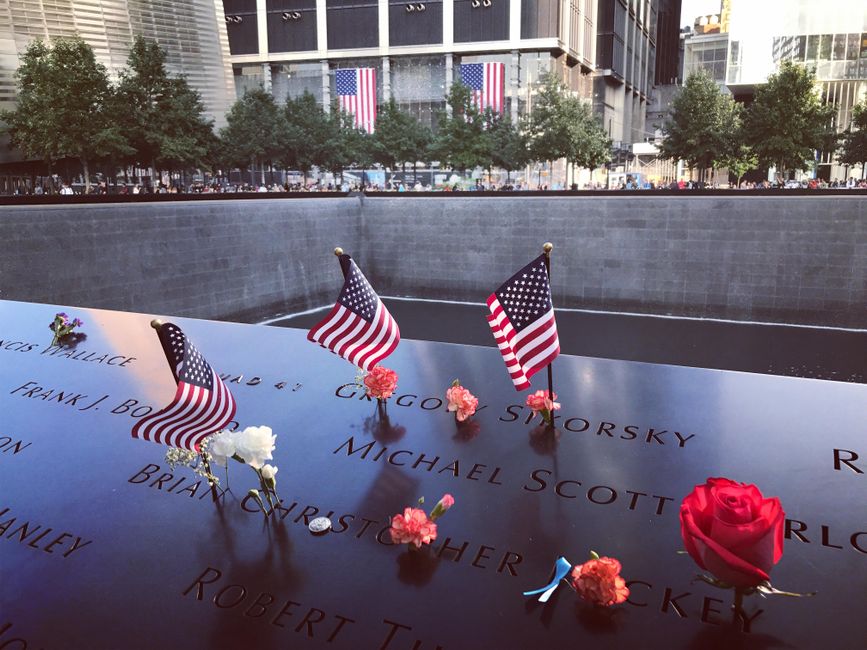
Twenty-five years after the September 11 terror attacks killed nearly 3,000 people and shook the world, the wounds remain raw for Australian families still carrying the weight of that morning — and two men with deeply personal connections to the tragedy are reflecting on how far they have, and haven't, come.
A Mother Lost on the Flight of a Lifetime
Sydney's Simon Kennedy will travel to the United States this week to attend the official memorial service at the Pentagon — the site where his mother, Yvonne Kennedy, perished on September 11, 2001. Yvonne was 62 years old and had just retired after 25 years of service with the Red Cross. She was on what was meant to be the holiday of a lifetime when she boarded American Airlines Flight 77, which was deliberately crashed into the Pentagon.
"You can't help but notice that great Yvonne-shaped hole that's missing in our family," Simon said.
In the years since, he has quietly marked the anniversary at Sydney's discreet September 11 memorial plaque, which honours Yvonne and the nine other Australian victims of the attacks. But the grief has never fully lifted. Simon described the agonising hours after the attacks — the frantic phone calls, the desperate search for information, the hope rising and falling with each update.
"The hope goes up and then it's down again," he recalled. "Logic came in and told me it was time to start calling the family."
In an effort to find some form of closure, Simon made the extraordinary decision to visit Guantanamo Bay, the detention facility where those responsible for the attacks were held. He admitted he wasn't sure what he was searching for.
"I don't know why I went, and I don't know what I was looking for or what I thought I would find," he said. "But it ended up being quite a healing process for me."
He continues to wrestle with the concept of forgiveness, though he has found a way to frame it that helps him move forward. "Holding on to hate is like drinking poison and expecting the other person to die," he said.
From the Top of the World Trade Centre to a New Life in Australia
Tony Milne's connection to September 11 is equally haunting — and his escape from it even more remarkable. As manager of Windows on the World, the celebrated restaurant perched atop the Twin Towers, Milne had finished his shift just hours before the hijacked aircraft struck. In the days that followed, his name appeared on television scrolls listing the missing and potentially dead.
What came next was devastating. He attended funerals. He witnessed the grim reality of incomplete remains being recovered and buried. "We started burying thumbs and limbs," he said. "And then that just became really too difficult."
Milne was later diagnosed with post-traumatic stress disorder. Unable to cope with life in New York, he made the decision to put as much distance between himself and Ground Zero as possible — eventually settling in Australia. In 25 years, he has not returned.
The treatment that ultimately helped him was not what anyone might have predicted: the Sydney Swans and Australian Rules football. A devoted superfan who has missed only five home games in 21 years, Milne credits the club and its community with giving him purpose and belonging.
"It's 100 per cent helped me because it gives me a focus," he said. "It's all one massive family."
Scars That Time Has Not Erased
Both men acknowledge that after a quarter of a century, they are still processing what happened — and likely always will be. The New York skyline has been rebuilt, but the human cost of the world's deadliest terror attack has proven far harder to restore.
As the 25th anniversary is observed this week, Simon Kennedy will stand at the Pentagon memorial while Tony Milne remains in Australia — two men, two journeys, one wound that time alone has not been able to heal.


