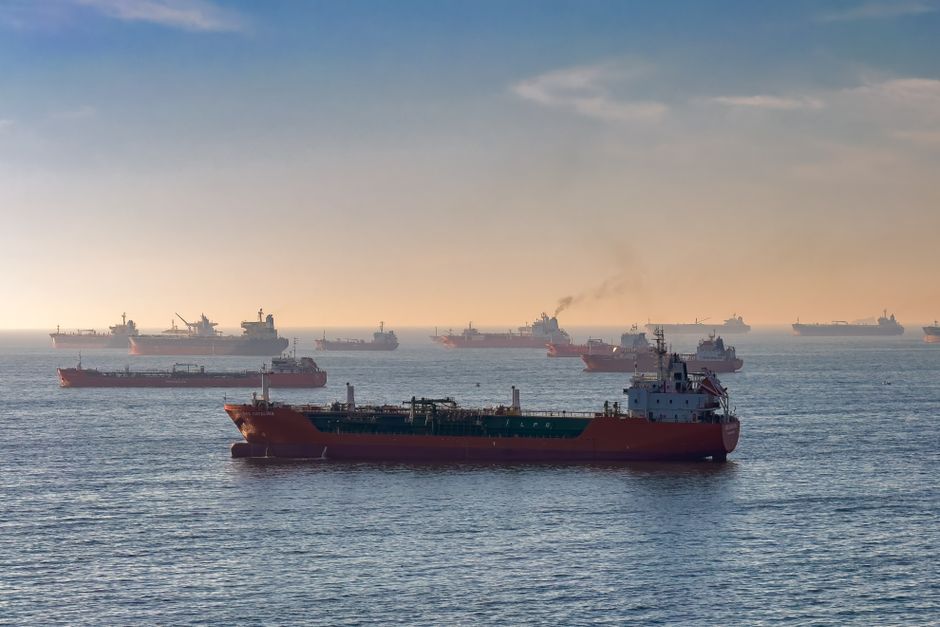
The battle for control of the Strait of Hormuz has emerged as the defining front of the Middle East conflict, with Iran maintaining its effective closure of the waterway, the United States reinstating a naval blockade, and experts warning that the outcome could permanently alter how the world's critical shipping routes are contested in future conflicts.
The crisis escalated sharply over the past week after a tentative memorandum of understanding between Washington and Tehran collapsed. The US resumed strikes on Iranian targets, and on Wednesday its naval blockade of Iranian ports and the strait — which had been lifted in June — was reinstated. Over the same period, Iran struck seven commercial vessels attempting to pass through the waterway along routes it had not authorised, with US Central Command confirming that nearly a dozen sailors were killed, injured, or reported missing as a result.
Iran's Islamic Revolutionary Guard Corps declared two supertankers had been hit and disabled after ignoring repeated warnings, and warned the United States on Wednesday that reimposing the blockade would not force Iran back to the negotiating table — calling the assumption a "mistake".
Trump floats a toll — then drops it
Adding another volatile element to the standoff, US President Donald Trump proposed charging vessels a 20 per cent fee to transit the strait under American protection, framing the US as what he called the "guardian angel" of the waterway. "We'll become the guardian of the strait," Trump said in a phone interview, adding that the US should be reimbursed because other nations were "very wealthy" and "on our side."
He subsequently posted on Truth Social: "The Hormuz Strait is OPEN, and will remain OPEN, with or without Iran. We are reinstating THE IRANIAN BLOCKADE." He said the reimbursement process would begin immediately, though he provided no further detail on how it would operate.
The proposal drew fierce pushback from the United Nations' shipping agency and others, and Trump has since scrapped the fee idea. The episode nonetheless underscored the extent to which Trump's declaration of US guardianship over the strait has injected an unprecedented dimension into an already volatile confrontation.
A conflict transformed — nuclear issue now 'remote'
Analysts say the war's fundamental character has shifted dramatically from its origins. When hostilities began, Washington's stated objectives included permanently ending Iran's nuclear weapons ambitions, dismantling its military capacity, and severing Tehran's support for regional proxy groups such as Hezbollah in Lebanon. Iran consistently maintained its nuclear program was for civilian energy purposes only.
Those original aims now feel distant. David Smith, an associate professor of American politics and foreign policy at the University of Sydney's United States Studies Centre, said the developments of recent days had made that transformation impossible to ignore.
"The original issue about Iran's nuclear program now just seems completely remote," he said. "The next stage of conflict is going to be all about the Strait of Hormuz."
Trump threatened on Tuesday to strike a suspected Iranian nuclear facility known as Pickaxe Mountain, in north-central Iran, but the memorandum of understanding he signed in June had already effectively sidelined the nuclear question — deferring any resolution while prioritising the immediate reopening of the strait. That deal has now collapsed. The US launched a fresh wave of strikes on Iran after Tehran declared the waterway closed following what it described as an unauthorised transit last Saturday.
Why the strait matters — and who pays the price
Roughly a fifth of the world's oil supply flows through the Strait of Hormuz, making it one of the most consequential chokepoints on the planet. But the disruption extends well beyond petroleum. Since the conflict intensified five months ago, restricted shipping has throttled supplies of fertiliser, helium, and a range of industrial and medical essentials, driving up food and fuel prices across the globe.
The economic pain is acutely felt in the United States itself. Higher fuel costs have proved deeply unpopular with American voters — a politically sensitive reality heading into the 2026 midterm elections in November. Smith noted that while some adaptation had occurred through reduced fuel usage, a prolonged strangling of the waterway would ultimately make "everything" more expensive.
Iran's Revolutionary Guard reinforced that leverage on Monday, warning that "continued interference could lead to greater incidents in the global oil and gas sector." The statement came as US and Iranian forces exchanged heavy missile and drone attacks over the weekend and into Monday, with Iran claiming strikes on American military facilities across the Gulf.
A precedent that could outlast this conflict
Beyond the immediate human and economic toll, experts say the broader significance of this standoff lies in what it could normalise. How the international community responds to the weaponisation of a critical global waterway — whether through military force, economic pressure, or diplomatic concession — could shape the rules governing strategic chokepoints for decades to come.
With the interim agreement now in tatters, no clear diplomatic pathway in view, and both sides trading strikes and warnings with increasing intensity, the world is watching to see whether the Strait of Hormuz becomes a bargaining chip that forces a settlement — or the flashpoint for a far wider confrontation.


