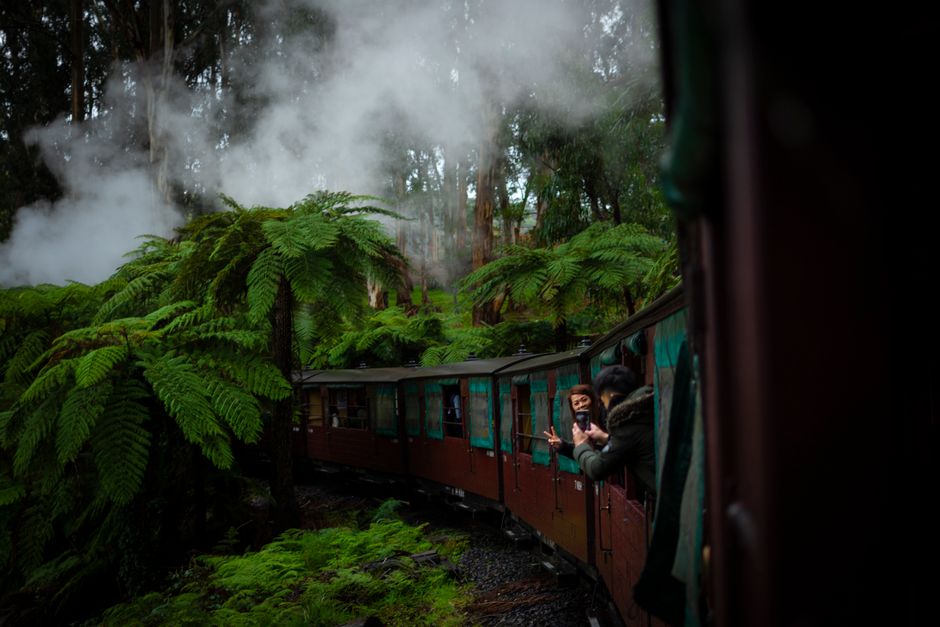
In an era of high-speed rail and seamless connectivity, Tasmania's West Coast Wilderness Railway is proudly, defiantly different — a 130-year-old steam-powered line where the maximum speed is just 20 kilometres per hour and the surrounding wilderness feels as untamed as the day the tracks were first laid.
The journey runs between Queenstown and the coastal port of Strahan, cutting through one of Australia's most remote and rain-saturated landscapes. With an annual rainfall averaging around three metres, the cold-climate rainforest clings to the route in every direction, and passengers travelling in the railway's heated premium carriages are treated to a front-row seat to its brooding grandeur.
A Railway Born From Copper and Determination
The line's origins lie in the colonial-era mining boom of western Tasmania. After relatively fruitless gold prospecting, the Mount Lyell Mining & Railway Company began copper operations in 1893, quickly establishing the region as a vital industrial hub. The challenge, however, was connecting that output to the outside world.
The solution was a railway linking Queenstown to Strahan, from where ships could sail out of Macquarie Harbour. Five hundred men built the line in just 18 months, battling relentless rain, steep slippery terrain and overpriced provisions — with no shelters to retreat to. Photographs from the period, some on display at Queenstown's Eric Thomas Galley Museum, show workers in three-piece suits and pocket watches alongside their tools, a remarkable snapshot of the era.
The rallying cry that sustained them — "find a way or make it" — proved more than motivational. The steep outcrops demanded an engineering solution, found in the Abt rack-and-pinion system, designed by Swiss clock maker-turned-engineer Carl Roman Abt and acquired by Bowes Kelly, the mining company's leader, to conquer the challenging gradients.
Riding the West Coast Wilderness Railway Today
The three-hour journey from Queenstown departs from a station that now houses the railway's ticket centre, café, museum and workshop, servicing a fleet of eight locomotives. Those locomotives are originals, having remained operational — with periodic repairs — since the 1890s. The carriages, by contrast, are careful replicas, fitted with timber panelling, soft sconce lighting and generous windows that frame the landscape as the train moves through moss-draped myrtle beech canopies.
At its slowest, the train travels at just five kilometres per hour; at its fastest, it reaches 20. That's by design. As the driver explains, these routes were built for heavy haulage, not speed.
Driving one of the locomotives is Ken Fairbairn, who spent more than a decade as officer-in-charge of Queensland's remote Gulflander railway route. He describes the experience of piloting a steam locomotive as intensely hands-on — entirely manual, demanding constant attention from both driver and fireman.
"Steam locos are totally manual," Fairbairn says. "As a driver or fireman, you've got to be on the ball with everything. It's very hands-on."
He occasionally leans out of the engine space to monitor conditions as rain streams sideways across the windows — a reminder that while passengers stay warm inside, operating this machinery is a thoroughly physical endeavour.
"It's fun. I'm driving this thing, it's 130 years old, and there's 80 people behind me enjoying themselves," he says. "You can't do that in many other places."
Why This Slow Journey Is the Point
The West Coast Wilderness Railway is not trying to compete with modern transport — and that is precisely its appeal. The landscape it traverses was once considered impenetrable, so dense with foliage and fern that early colonial travellers deemed the western coast unreachable. The pioneers who pressed on anyway — prospectors, engineers and labourers — left behind a working monument to that stubbornness.
For today's travellers, the reward is a rare kind of journey: paprika-crusted walnuts, steamed-up windows, ancient forest pressing in from all sides, and the satisfying churn of machinery that has been doing this job for more than a century. In a world obsessed with getting there faster, the West Coast Wilderness Railway makes a compelling case for the opposite.


