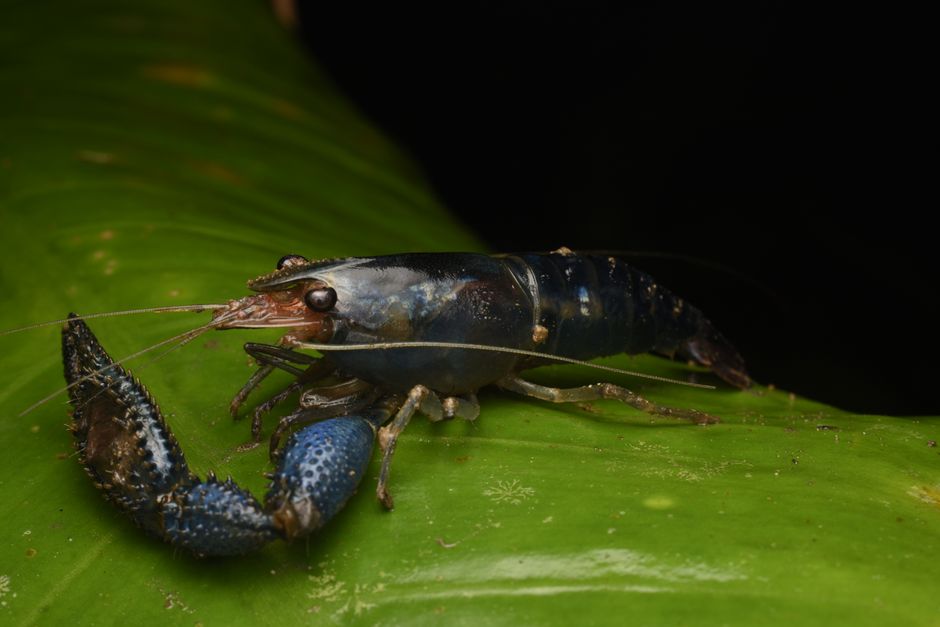
An Australian freshwater crayfish, familiar to many as a "yabby," has become a serious invasive threat in waterways across Africa, Europe, Asia and South America, with scientists warning its hardiness and rapid reproduction make it extraordinarily difficult to contain. The species at the centre of the alarm is the redclaw crayfish (Cherax quadricarinatus), native to the tropical north of Australia and Papua New Guinea, and it is now reshaping ecosystems far from home.
From Australian billabongs to the Zambesi River
Every year, the upper Zambesi River floods across Zambia's vast Barotse floodplains, creating seasonal wetlands celebrated for their extraordinary biodiversity, including rare birds and unique cichlid fish. In recent decades, however, something has gone badly wrong. Native fish and invertebrate populations have declined, aquatic plants are being consumed, and riverbanks are being hollowed out from within.
The cause, it is now understood, is the redclaw crayfish. Spotted in the Zambesi during the 1990s, their numbers surged rapidly. As floodwaters recede each dry season, the shallow muddy pools left behind teem with the species. Redclaw populations are now pressing against pristine and highly sensitive ecosystems nearby, raising fears of further ecological damage.
The irony is not lost on researchers. Australia is typically on the receiving end of invasive species catastrophes, from feral cats to rabbits. Yet the redclaw represents a striking reversal: a tough Australian native causing havoc abroad.
Why the redclaw is so hard to stop
The redclaw's invasive success is rooted in its evolutionary history. Cherax crayfish evolved in Australian billabongs, which are ephemeral lakes prone to drying out and refilling unpredictably. This brutal wet-dry cycle produced a creature built for extremes.
- Redclaws can survive in water with virtually no dissolved oxygen.
- They can burrow deeply and enter a dormant state lasting months or even years.
- A single female can produce several broods per year, with up to 1,000 eggs in each brood.
- They are aggressive generalists, eating aquatic plants, detritus, fish, invertebrates and even other redclaws.
Australia is home to more than 100 freshwater crayfish species, including remarkable examples such as the giant Tasmanian crayfish (Astacopsis gouldi), which is the largest crayfish species on Earth in both fresh and saltwater. Among Australia's ten freshwater crayfish genera, Cherax species are considered the most resilient. As climate change drives more extreme weather events globally, species like the redclaw are increasingly well-placed to outcompete local animals that evolved in more stable conditions.
How redclaws spread around the world
The global spread of the redclaw crayfish has two main causes: the aquaculture industry and the aquarium trade.
Throughout the 1980s and 1990s, redclaws were exported to fish farms across Africa, Europe, Asia and South America. Farmers valued them for their hardiness, fast growth rates and adaptability to varying conditions. At the same time, their vivid blue and red colouring made them a popular choice in the global aquarium trade, creating a second major pathway for their release into the wild.
Escape from containment proved all but inevitable. Some crayfish broke free from aquaculture ponds during hurricanes or through accidental release. Others were former pets tipped into local waterways by their owners. Once in the wild, redclaw populations multiplied with alarming speed, and signs of ecological damage in local waterways soon followed.
The threat to sensitive ecosystems
The consequences already visible in the Zambesi catchment, including the collapse of native plant, fish and invertebrate communities, are a warning of what could follow elsewhere. Redclaws are now on the doorstep of some of the world's most pristine and ecologically sensitive freshwater systems, and scientists fear that once they establish themselves, dislodging them may be next to impossible.
The redclaw's story is a pointed reminder that the qualities that make a species a survivor in one environment can make it a devastating force in another. Forged in the harsh crucible of the Australian landscape, the humble yabby has found the rest of the world surprisingly easy to conquer.


