Prime Minister Anthony Albanese has confirmed 34 Australians are among more than 1,300 people still missing after catastrophic flash floods and landslides tore through the Nepal-Tibet border region on Wednesday, killing at least 165 people and wiping entire settlements from the landscape. Among those unaccounted for are 15 Australians who were on a guided trekking pilgrimage through the Himalayas when the disaster struck without warning.
The death toll is expected to climb sharply in the coming days as rescue teams — including international contingents — push into areas where roads, bridges and buildings have been completely destroyed. Dozens of Australians remain among the hundreds missing as the Himalayan flash floods continue to claim lives.
What happened — and who is missing
The disaster, triggered by an avalanche of ice and rock in the steep valleys north of Kathmandu, sent a torrent of water, mud and debris crashing through communities on both sides of the Nepal-Tibet border. In Nepal, at least 95 deaths were recorded by the prime minister's office, while Chinese state media reported three killed and 558 people missing — including 260 foreigners — near Gyirong Port in Tibet's Gyirong County.
Nepal's national disaster agency said 823 people remained out of contact within the country alone, among them 579 Nepali nationals and foreign tourists. Combined with the figures from the Chinese side of the border, the total number of missing persons exceeded 1,300.
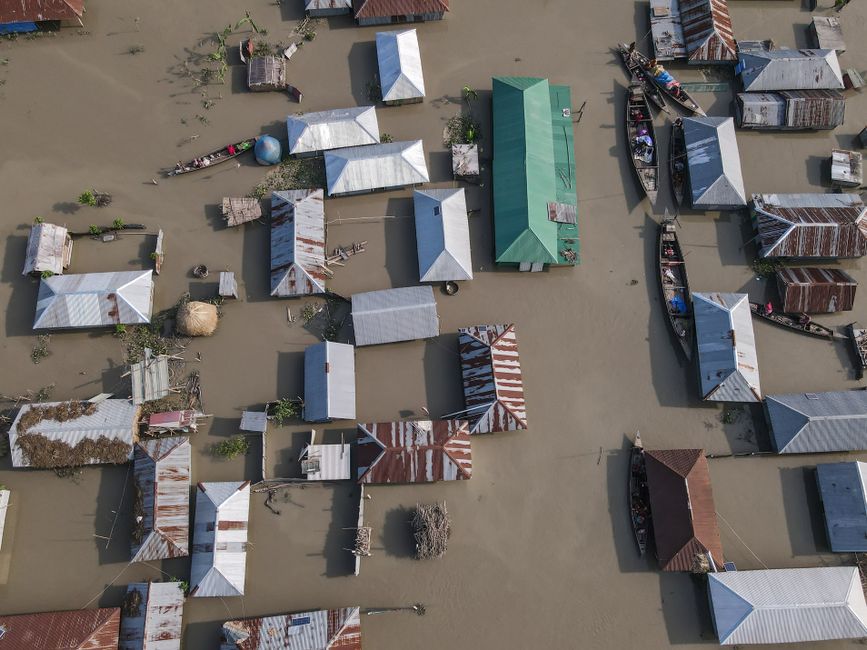
Drone footage and on-the-ground images painted a grim picture: roads obliterated, buildings buried under mud, vehicles swallowed by debris, and entire communities on both the Nepali and Chinese sides of the border swept away. It is understood the scale of destruction is consistent with some of the worst flood events of the 2020s.
Australian tour group's final moments before radio silence
Of the 34 Australians confirmed missing, 15 were part of a 47-person tour group operated by the Himalayan Glacier Adventure and Travel Company, undertaking a 14-day pilgrimage to Mount Kailash in Tibet — a sacred site in Hinduism. The group included nine men and six women, among them two boys aged 11 and 14, and a woman aged 64.
The company's founder and chief executive said two Australian families had travelled from Sydney to join the tour. As practising Hindus, completing the pilgrimage to Mount Kailash held deep spiritual significance for them. He described the group as excited and in good spirits right up until the disaster struck.
The CEO revealed the group had been staying in a five-storey building and were due to sit down for breakfast at 8.30am local time. He had spoken with members of the group as late as 8am — and then heard nothing more. When he flew to the area by helicopter with a rescue team that afternoon, what he found was devastating.
"Everyone is missing since then," he said. "All the buildings, all the hotels, all the civilizations, both in the Chinese and Nepal sides have been swept away." He said that despite having travelled the route many times, there was simply nothing left.
Government response: DFAT deploying crisis personnel
Speaking at a press conference on Thursday morning, Prime Minister Albanese acknowledged the extreme difficulty of gathering information from the affected area.
"At this point, there are 34 Australians who are missing," Albanese said. "People would have seen some of the footage, which is a truly horrific event."
He noted that Nepal's status as a developing nation meant its disaster-response resources were limited compared to those available in Australia, and appealed to anyone with relevant information to come forward. "Our thoughts are with all those who will be concerned about their loved ones today," he said.
Foreign Affairs Minister Penny Wong said the Department of Foreign Affairs and Trade was working urgently to determine the whereabouts and welfare of the missing Australians, and that additional DFAT staff — including crisis response experts — were being deployed to the region, with particular focus on the Australian mission in Nepal.
"At this stage, access and information are very limited given the scale of disaster," Wong said. "We will do our best to ascertain whatever information we can."
Melbourne's Nepali community in anguish
Back in Australia, the disaster has sent shockwaves through Melbourne's Nepali community. The president of the Australian Nepalese Multicultural Centre said there were many people in Melbourne waiting anxiously for news of loved ones still in the affected region.
He described conversations with contacts in Nepal who had lost their homes and all their possessions, with some now sheltering in emergency accommodation with their children. One Melbourne woman reportedly broke down in tears on Wednesday night after learning her family had lost everything.
Despite the heartbreak, he said the community had been comparatively fortunate in one respect. "Thankfully, none of them have lost relatives," he said.
A community vigil and prayer gathering was scheduled for Thursday evening, where members planned to discuss how best to support those affected back home. The timing adds particular sorrow to the disaster — Nepal was on the eve of a major festive period, with celebrations and festivals planned for the coming weekend.
Rescue operations were continuing, with footage emerging of Nepali army personnel winching survivors to safety by helicopter and using construction equipment to lift people above floodwaters. Authorities warned the confirmed death toll remained likely to rise significantly as teams reached more remote, devastated areas.


