President Donald Trump has declared the United States will act as "Guardian of the Strait of Hormuz", announcing a 20 per cent toll on all cargo passing through the strategically critical waterway and reimposing a naval blockade on Iranian ports — a dramatic escalation that marks a sharp reversal of Washington's long-held position that the strait must remain free and open to all nations.
The announcement, made on Monday morning Washington time via Truth Social, came as the 2026 Iran war continued to intensify, with both the United States and Iran trading military strikes and competing claims over who controls one of the world's most important maritime chokepoints.
What Trump announced — and why it contradicts his own Secretary of State
"The Hormuz Strait is OPEN, and will remain OPEN, with or without Iran," Trump wrote, declaring the US would be "reimbursed, at the rate of 20% on all cargo shipped, for any and all costs necessary to do the job of providing safety and security to this very volatile section of the World."
Trump also said Washington would reinstate what he called "THE IRANIAN BLOCKADE" — restricting vessels entering or leaving Iranian ports — while assuring all other nations of "fair and open use" of the strait.
The announcement stands in stark contrast to statements made by Secretary of State Marco Rubio as recently as June 24, when he flatly ruled out any tolling mechanism. "The whole world will be against any mechanism that charges money to use an international waterway. It's that simple," Rubio said at the time, adding that he knew of no country on the planet that supported such a fee. "That's not going to happen, the president has been abundantly clear," he said then.
Speaking on Fox News earlier on Monday, Trump justified the move by claiming the US had been providing security in the region for decades without compensation. "We guarded the strait for 50 years — more — and we never got paid for it," he said, adding: "We guarded it for nothing, and now we're going to guard it, and we're going to get paid for guarding it — a lot of money."
How the crisis escalated: strikes, retaliation and a collapsing ceasefire
The current crisis was triggered after Iran's Islamic Revolutionary Guard Corps attacked three vessels in the Strait of Hormuz, prompting Trump to declare the earlier ceasefire "over." Trump's ceasefire declaration was followed by four successive waves of US strikes on Iranian radar and surveillance infrastructure, air defence systems, drone launch sites and other military installations.
Iran retaliated by launching missile and drone attacks against US military assets in the Gulf and striking targets in countries hosting American forces, including Bahrain, Kuwait, Qatar, Jordan and Oman. The IRGC Navy also struck a Cyprus-flagged vessel with an anti-ship cruise missile and declared the strait "closed".
A fresh wave of US strikes followed, targeting dozens of Iranian military sites. Officials indicated that an even larger operation the previous day had hit around 140 targets across Iran.
Behind the scenes, however, senior US officials described a more complicated picture. They said Iran had privately admitted the attacks on merchant vessels were a mistake, with one official characterising Tehran's communication as: "We screwed up." The White House reportedly interpreted the attacks as the work of hardline elements within Iran's security apparatus seeking to undermine the June memorandum of understanding — part of what officials described as a power struggle in Tehran between moderates and hardliners.
Even so, that admission did not prevent the US from retaliating. "President Trump didn't care. He basically said, you know, if you hit us, we're going to respond 20 times," one official said.
Shipping traffic has collapsed — but CENTCOM insists the strait is open
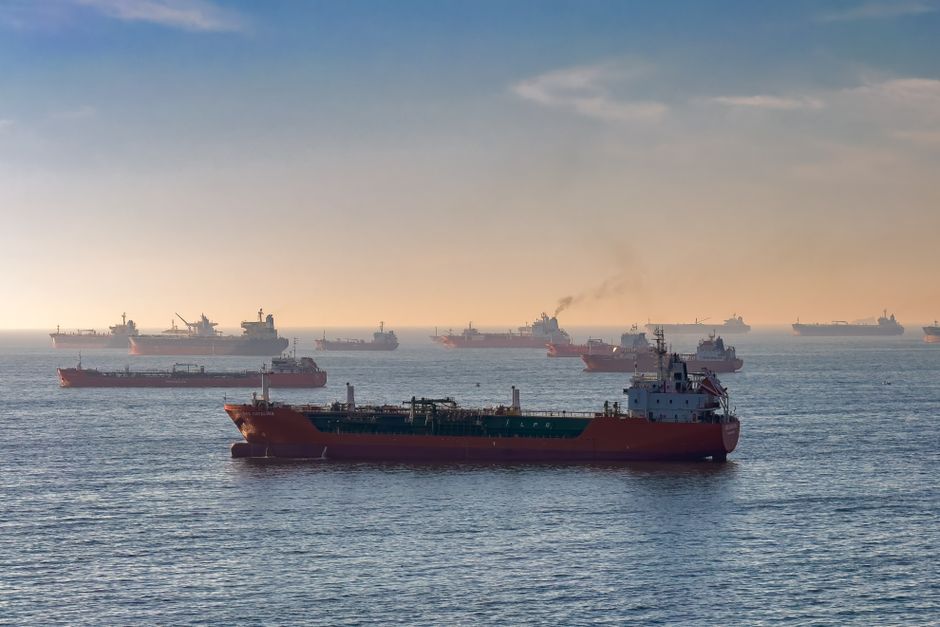
The practical impact on global trade has been severe. Before the conflict, roughly 110 vessels passed through the Strait of Hormuz each day on average. That figure has fallen dramatically, with open-source vessel-tracking data showing just 15 commercial ships transiting the strait in a recent 24-hour period — down from more than 20 on the previous Thursday. Of those 15 vessels, 11 entered the Persian Gulf and four crossed into the Gulf of Oman.
Despite those figures, US Central Command maintained publicly that the strait remains "open" to vessel traffic. The region has also been affected by months of GPS spoofing — navigational interference that causes ships' positions to appear in incorrect locations — though recent crossings did not appear to have been affected by this tactic.
The United States is now pressing Iran to issue a public statement confirming that the strait is open and that commercial vessels will not be targeted. Senior officials declined to specify the consequences if Iran refuses, though one warned it "would not be a great day for them." Washington is watching closely for any statement following a weekend meeting between Iranian Foreign Minister Abbas Araghchi and his Omani counterpart.
Markets react as international alarm grows
Trump's announcement had an immediate but moderate effect on global oil markets, with Brent crude approaching $US80 a barrel in late morning trade. The strait is one of the world's most critical energy chokepoints, carrying a significant share of global petroleum exports.
United Nations Secretary-General António Guterres has warned that a return to full-scale hostilities would carry "catastrophic consequences," as international mediators continue to press for renewed diplomatic engagement. The June memorandum of understanding — under which Iran and Oman were to take long-term responsibility for managing the strait — now appears to be in serious jeopardy.


