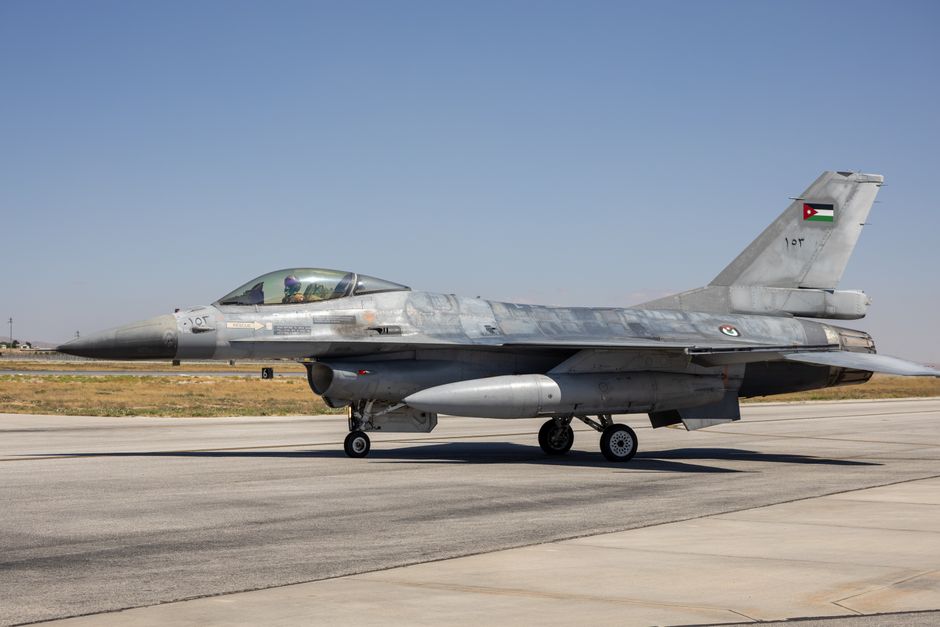
The United States has launched a new wave of retaliatory strikes against Iran after two American service members were killed and one went missing during an Iranian ballistic missile and drone attack on a base in Jordan, marking a sharp new escalation in a conflict that has already claimed 16 American lives since fighting broke out at the end of February.
US Central Command (Centcom) confirmed the strikes began at 8am Sunday (AEST) on President Donald Trump's orders, and were designed to "swiftly punish" Iran's Islamic Revolutionary Guard Corps (IRGC) while continuing to degrade Tehran's capacity to threaten shipping through the Strait of Hormuz. The State Department simultaneously issued a worldwide caution, warning Americans — particularly those in the Middle East — of potential flight disruptions, airspace closures and targeted attacks on US interests.
What happened in Jordan
The two US troops killed in the Iranian strikes on Jordan died on Friday as Centcom and partner forces defended against a combined Iranian ballistic missile and drone assault, according to official statements. The identities of the dead have not been publicly released. A third service member remains missing, while four others were medically evacuated to Jordanian hospitals before subsequently being discharged.
The deaths represent the first American military fatalities from Iranian fire since March and bring the total US service member death toll since the war began to 16 killed and more than 430 wounded. President Trump described the losses as "very sad" but said the troops had fallen in service to their country. Defence Secretary Pete Hegseth wrote on social media: "Godspeed, heroes. Their sacrifice only stiffens our resolve."
For background on the broader pattern of Iranian strikes on Jordanian-based US forces, see the 2026 Iranian strikes on Jordan reference entry.
Iran's supreme leader issues stark warning
In a statement released through Iranian state television and posted in English on his official social media account — coming just minutes before the US strike announcement — Iran's supreme leader Mojtaba Khamenei, who has not been seen publicly since the war began, condemned Washington in unambiguous terms.
"The repeated breaches of the agreement by the Great Satan regarding the MOU signed by the Presidents of Iran and the US have once again laid bare a fundamental truth: the signature of the US President is utterly worthless and devoid of credibility," the statement read.
Khamenei warned that Iran and what he called "the Resistance Front" had "unforgettable lessons in store" for the United States if it continued to escalate the conflict.
Hours earlier, Iran's deputy foreign minister Kazem Gharibabadi told state television that Tehran was no longer implementing its commitments under the interim deal signed approximately one month ago, accusing the US of having violated the agreement first.
Ceasefire collapses, strikes intensify
A ceasefire had been declared in mid-June after the two countries signed a memorandum of understanding beginning a 60-day negotiation process. That fragile peace collapsed after the IRGC fired on vessels in the Strait of Hormuz nearly a fortnight ago, reigniting hostilities and ending diplomatic talks.
Since fighting resumed, the US has launched fresh waves of strikes on Iran on seven consecutive nights, targeting surveillance infrastructure, military logistics sites, underground weapons storage facilities and Iran's maritime capabilities. A naval blockade on ships accessing Iranian ports has also been reinstated.
US drones struck Bandar Abbas Naval Base earlier in the week. Centcom confirmed that 50,000 American troops are currently deployed in the region and described them as "vigilant, lethal, and ready."
The conflict has also spread beyond Iran's borders. Kuwait's national petroleum company confirmed that one of its facilities in Mangaf was struck by repeated Iranian attacks, with images showing heavy smoke rising from the site. The United Arab Emirates called for an immediate end to hostilities, urging "utmost restraint to avoid dangerous repercussions" and stressing the importance of uninterrupted navigation through the Strait of Hormuz as vital to the global economy.
Escalation options and diplomatic impasse
Trump has publicly floated further escalatory options, including potential strikes on Pickaxe Mountain — described as a key Iranian nuclear site — and a possible US takeover of Kharg Island, a major Iranian oil terminal.
Foreign policy analysts have warned the situation is deteriorating without a viable off-ramp. One US foreign policy expert was quoted as saying the administration was now engaged in "a war of choice" that had "failed to accomplish any of the goals" it set out and currently had "no exit plan." The same analyst described the prospects for de-escalation as "slim to none," warning that an "escalatory cycle" was now firmly under way.
Iran, for its part, has shown no sign of returning to the negotiating table, with Tehran's position apparently hardening following what it characterises as repeated American breaches of the interim agreement. With diplomatic channels closed and military operations intensifying on both sides, the path to any new ceasefire remains deeply uncertain.


