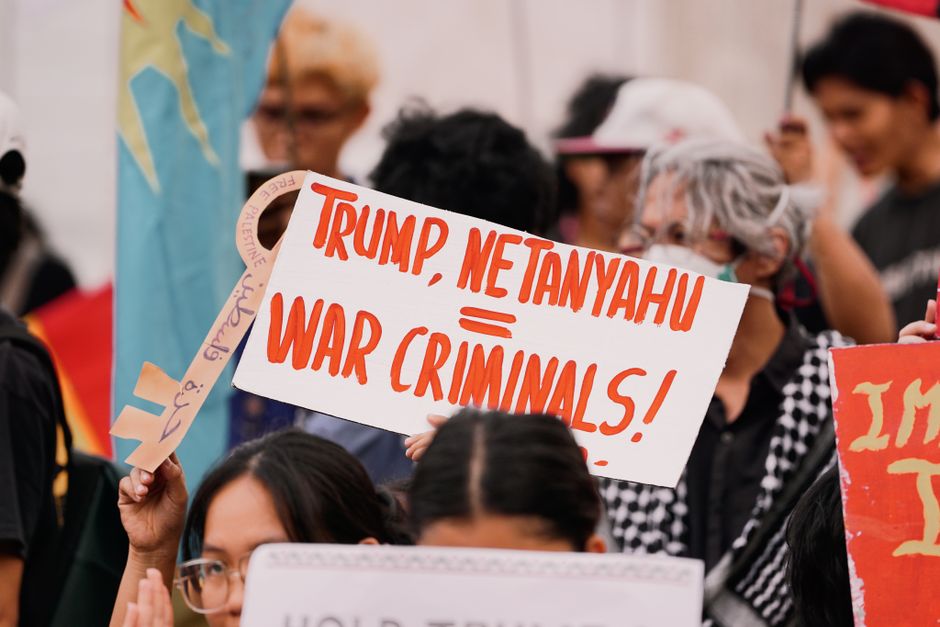
US President Donald Trump publicly rebuked Israeli Prime Minister Benjamin Netanyahu over reports that the Israeli leader planned to present him with intelligence about Iranian nuclear activity, as the two men held their first face-to-face White House meeting since the conflict between the US and Iran began five months ago.
The meeting, which lasted just over an hour and was closed to the media, came amid a fragile three-day pause in hostilities following 13 consecutive nights of US strikes on Iran — a lull that both sides have so far held, though diplomatic resolution remains uncertain.
Trump's pointed rebuke before the meeting even began
Hours before Netanyahu arrived at the White House — through a side entrance of the West Wing in a notably understated arrival — Trump made clear he was unimpressed by reports that the Israeli prime minister intended to raise concerns about Pickaxe Mountain, an underground nuclear site near Iran's Natanz uranium enrichment facility.
"I don't need Bibi to tell me that," Trump said, using his familiar nickname for the Israeli leader. "Bibi's telling me that because he wants me to stay involved … We have the greatest cameras in the world focused on [Pickaxe Mountain], we know exactly what's going on."
It is understood that reports had indicated Netanyahu would use the visit to present evidence of ongoing Iranian nuclear activity and argue that Tehran was not negotiating in good faith — claims Trump appeared to interpret as a public statement directed at him rather than a private briefing.
"I heard Bibi announce that," Trump said. "I said, 'Why don't you just tell it to me, why do you have to announce it to the world?' I know exactly what's going on at Pickaxe, it's not a big problem."
Trump also renewed his threat to destroy the facility if a diplomatic resolution with Iran was not reached, while acknowledging competing pressures within the Republican Party — some members pushing for escalated military strikes, others urging a negotiated settlement.
What the meeting revealed about the two leaders' relationship
Photographs released by the Israeli government showed both leaders appearing relaxed, and there is no suggestion the encounter descended into open confrontation. White House press secretary Karoline Leavitt described the meeting as "positive and productive."
Nevertheless, Trump's willingness to call out Netanyahu in public — and his candid observation that the Israeli leader "wants me to stay involved" in the conflict — points to a relationship that is more strained than it was before the war began.
It was not immediately clear whether Netanyahu ultimately presented Trump with intelligence about Pickaxe Mountain or any other Iranian nuclear site during the meeting itself.
A Washington visit shaped by grief — and geopolitics
Netanyahu's primary stated reason for travelling to Washington was to attend the funeral of long-serving Republican Senator Lindsey Graham, who died earlier this month from what preliminary medical reports indicated was an aortic tear. Graham had been a close ally of Israel and a prominent advocate for US military intervention in the region.
On the evening of his arrival, Netanyahu and his wife Sara attended a private memorial dinner with Graham's family and several Trump administration officials at the Four Seasons Hotel in Washington. "America has lost a great patriot. Israel has lost one of its greatest friends and supporters. And I have lost a dear friend," Netanyahu told those gathered, according to his office.
Ukrainian President Volodymyr Zelensky also travelled to Washington for the funeral and held a separate private meeting with Trump just one hour before the Netanyahu session. Zelensky described the talks as positive, noting discussions had included US plans to allow Ukraine to licence production of Patriot missile interceptors, along with "several other ideas that could help" in its war against Russia.
Diplomatic pause holds, but Iran denies direct talks
The Netanyahu meeting unfolded against a backdrop of cautious diplomatic activity. Fighting between the US and Iran has been on pause since Saturday, with Trump expressing measured optimism aboard Air Force One that a deal remained possible. "I have a lot of patience … I think there is a good chance that something could happen," he said.
Iran's foreign ministry, however, pushed back on Trump's characterisation of the situation as involving "very deep talks," with a spokesperson stating: "At present, we are not engaged in any negotiations with the United States." Iran acknowledged that mediating countries may have conveyed messages on Washington's behalf, but insisted no direct dialogue was taking place.
Trump warned that if renewed diplomacy failed, the US would return to what it had been doing before the pause in strikes. He also dismissed suggestions that US ammunition stockpiles were running dangerously low, saying: "We have a lot of ammunition. We have a lot of the mid-level stuff too, more than we could ever use no matter what."
Meanwhile, Saudi Arabia reported intercepting drones fired by Iran-linked groups in Iraq targeting oil facilities, and Yemen's Houthi rebels claimed their own drone strikes on Saudi oil infrastructure. Control of the Strait of Hormuz — where Iran's Revolutionary Guards have continued stopping vessels — remains a central sticking point in any path to a lasting ceasefire.


