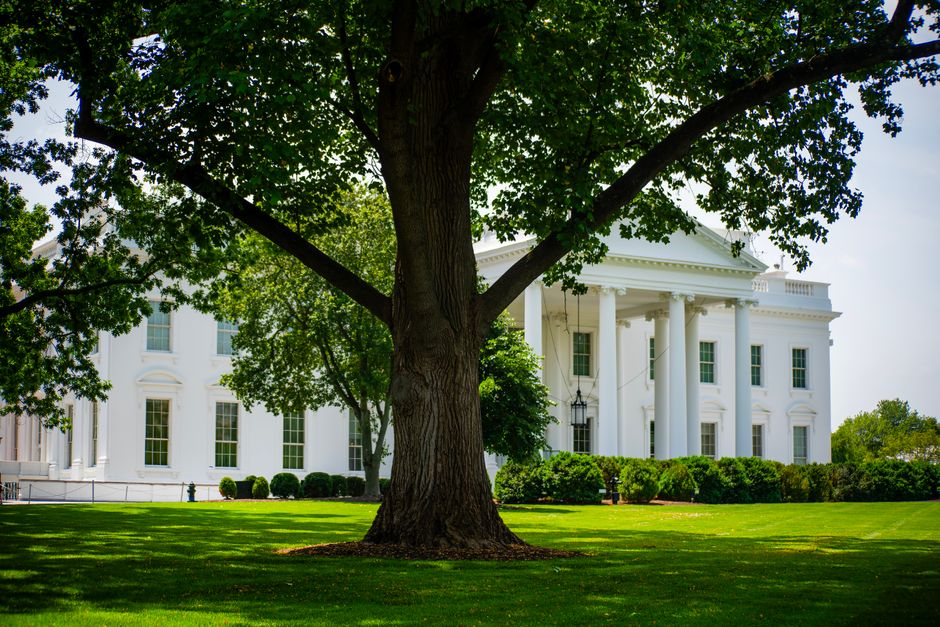
US President Donald Trump delivered a primetime address from the East Room of the White House that was, by almost any measure, a political misfire — a sprawling, unsubstantiated rant revisiting claims about the 2020 presidential election that courts and investigators have repeatedly declined to validate. The speech contained no new evidence of voter fraud, offered little in the way of policy direction, and appeared to leave his own Republican allies on Capitol Hill searching for the exits.
A Speech Long on Grievance, Short on Proof
Trump used the high-profile platform to repeat claims that the 2020 election was stolen — allegations that have never been supported by credible evidence and that have failed in dozens of legal challenges. Rather than presenting anything new, he issued warnings about so-called "vulnerabilities" in the electoral system — vulnerabilities that critics note his own administration has, in various ways, exacerbated rather than addressed.
Perhaps the most glaring inconsistency in his address was his treatment of China. Trump described Beijing as a significant threat to US election integrity, yet has conspicuously avoided any meaningful retaliation against Chinese President Xi Jinping, whom he has publicly described as a "friend" and a "great leader." The contradiction went unaddressed.
The speech drew a muted response from Republicans in Washington. There was no organised effort to amplify or defend what Trump had said — an unusual silence from a party that has typically rallied around the president. The quiet on Capitol Hill spoke volumes.
Six Years of Fixation That Shows No Sign of Letting Go
Trump's preoccupation with the 2020 result is now entering its sixth year. It was reported five years ago that Trump privately told associates he expected to be reinstated as president by August 2021 — a claim that, like so many others, never materialised. Yet the grievance lives on, apparently undiminished by time, legal defeat, or political reality.
Analysts and critics have suggested Trump appears intent on establishing a narrative that could, at minimum, explain away any future electoral loss — and, at maximum, provide justification for direct interference in future election outcomes. Adding to those concerns, his newly appointed homeland security secretary moved quickly the following day to threaten local election officials with jail time if they failed to comply with the administration's directives.
It is a pattern that observers of Trump's relationship with verifiable fact will recognise: sweeping claims delivered with confidence, unsupported by evidence, and designed to energise a base rather than persuade the broader public.
Even Trump's Usual Allies Kept Their Distance
What made Thursday's address particularly notable was not just what Trump said, but how it landed — or rather, didn't. Normally a reliable amplifier of presidential messaging, Fox News was notably restrained, apparently wary of wading too deeply into territory that carries significant legal and financial risk following a high-profile defamation settlement worth $US787.5 million (approximately $1.17 billion AUD).
Trump also reportedly threatened to punish the ABC and NBC television networks for declining to carry his address live — a move that underscored the increasingly erratic tone of an administration that appears more focused on settling old scores than governing.
The Lincoln Memorial Reflecting Pool also featured in his remarks, with Trump claiming vandals had caused damage with a boxcutter. Critics have pointed to evidence suggesting the damage resulted from a contractor connected to the administration applying the liner incorrectly — yet another episode in which the president's version of events sits at odds with the available facts.
What Comes Next
There is little indication Trump intends to move on. His six-year obsession with relitigating 2020 shows every sign of intensifying as the next election cycle draws closer. For a president who built his political identity on projecting dominance, the inability to let go of a past defeat — and the conspicuous failure to land any meaningful blows with Thursday's speech — represents a striking and increasingly visible vulnerability.


