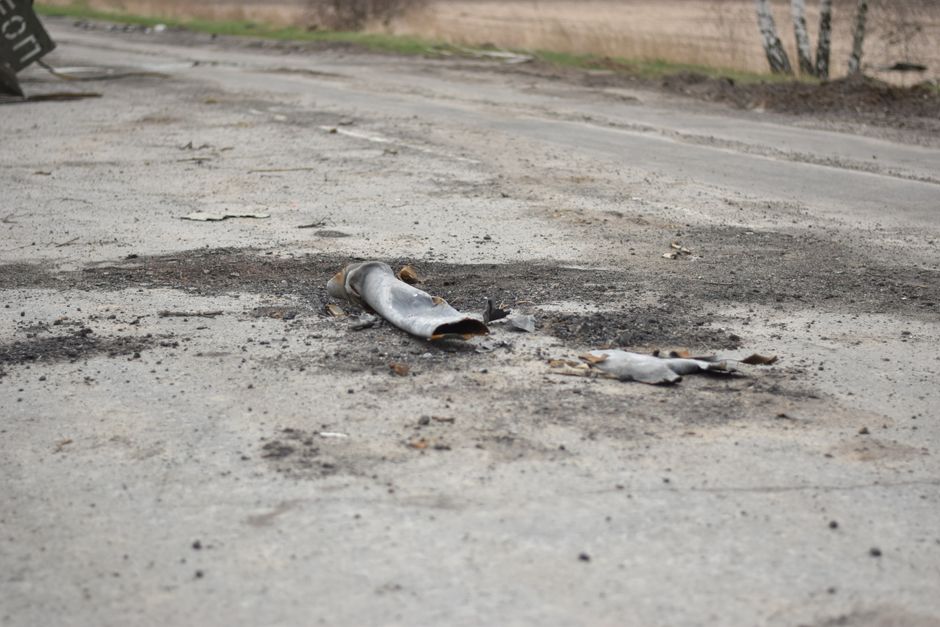
The United States has launched a fresh wave of airstrikes against Iran, with President Donald Trump warning that the country "will be defeated soon" as the two nations slide back toward all-out war — less than a month after signing an interim ceasefire agreement intended to end the conflict.
The renewed offensive, which included both overnight and daytime strikes on Wednesday, hit dozens of targets over a seven-hour period, according to the US military's Central Command. Among the sites struck was a barracks housing Iran's 388th Mechanized Infantry Brigade in Sistan and Baluchestan province, where at least seven military personnel — including conscripts and career soldiers — were killed and a significant number wounded.
Iranian government spokesperson Fatemeh Mohajerani confirmed that more than 30 people have been killed in recent days as a result of the renewed US campaign. Iran's Health Ministry separately reported that more than 260 people were wounded in overnight strikes alone — the highest casualty figure from any single round of recent violence between the two countries.
Blockade Reimposed, Interim Deal in Tatters
The escalation comes after the US reimposed a naval blockade on Iranian ports — a move that diplomats and officials on both sides say has effectively destroyed the fragile peace framework established just weeks ago. The 2026 Iran war began on February 28, when the US and Israel launched strikes on Iran, prompting Tehran to close the Strait of Hormuz — a move that sent global oil, fertiliser and commodity prices soaring.
The strait was briefly reopened after the two nations reached a memorandum of understanding last month, which also set a 60-day window for negotiations on key issues including Iran's nuclear programme. But Tehran vowed to close the waterway again "until the US ends its aggression," and maritime data indicated only 21 transits through the strait on Tuesday — a fraction of normal traffic.
On Thursday, US Central Command confirmed that its forces disabled an unladen oil tanker that had attempted to sail toward an Iranian port, firing Hellfire missiles into the ship's smokestack after the vessel ignored repeated warnings. "The ship is no longer transiting to Iran," Central Command said.
Iran's Deputy Foreign Minister Kazem Gharibabadi said the renewed blockade had "in a way, dismantled the Islamabad memorandum," referring to the interim agreement. Iran's chief negotiator Mohammad Bagher Ghalibaf told state television that the memorandum "only has meaning when its clauses are valid and being implemented," adding that Iran had "no reason to adhere" if it derived no benefit from the deal.
Iran Strikes Back, Threatens Regional Energy Shutdown
Iran's paramilitary Revolutionary Guards struck back on multiple fronts, claiming they had targeted the US Fifth Fleet in Bahrain and had intercepted attacks aimed at civilian targets. Missile alert warnings sounded in Bahrain and Kuwait as both nations faced incoming Iranian fire — part of what has become a near-daily pattern of regional strikes.
Jordan, a close US defence partner, said it had shot down three incoming Iranian missiles. Several explosions were also heard near the US consulate in Erbil, the capital of Iraq's northern Kurdistan region, on Wednesday evening.
In an escalating threat, Iran's Revolutionary Guards warned they would halt all energy exports from the Middle East if the US blockade continued. "The export of oil and gas from the region will be either for everyone or for no one," the Guards declared — a warning with significant implications for global energy markets. Iran has described the conflict as an "existential war" with America.
For the latest coverage on the renewed hostilities, see our earlier reporting on US strikes on Iran and the closure of the Strait of Hormuz.
Trump Threatens Power Plants and Bridges, Demands Iran Return to Talks
President Trump, speaking publicly on Tuesday night, said further US strikes would follow over the coming days and warned that bridges and power plants could be added to the target list as early as next week unless Iran returns to the negotiating table.
"You better make a deal, or you're not going to have anything left," Trump said.
On Wednesday, Trump reiterated his confidence that the US would prevail, declaring: "They will be defeated soon." He also suggested that Iran was seeking a settlement but that Washington would determine whether any such agreement would proceed.
Despite the renewed fighting, mediated negotiations between the two countries have not formally broken down. However, the combination of the reimposed US blockade, fresh military strikes, and Iran's hardening rhetoric has left the diplomatic framework badly damaged and the prospect of a lasting ceasefire increasingly uncertain.
US Navy Admiral Brad Cooper, who leads Central Command, said Iran had launched dozens of missiles and drones at neighbouring Gulf Arab nations in recent days. The Iranian army, for its part, vowed to make "a decisive response to this aggressive action by the American enemy."
As both sides escalate, the region faces the prospect of a return to the full-scale war that the now-crumbling Islamabad memorandum had briefly seemed to forestall. Trump's threat to widen the target set — and Tehran's counter-threat to choke off Middle Eastern energy exports — suggests the coming days will be critical in determining whether diplomacy can be revived or conflict deepens further.


