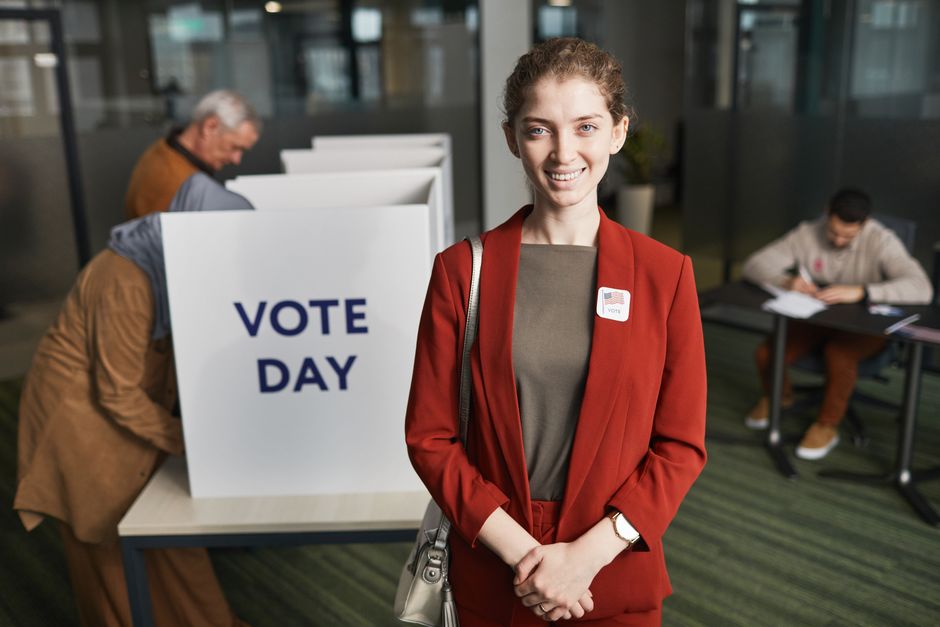
Americans are casting their votes in the 2026 US midterm elections, with polls open across 27 states as of election morning and forecasts pointing to significant Democratic gains that could reshape the second half of Donald Trump's presidency. Polling results for Australian readers will begin flowing through from around 10am Wednesday (Sydney time), continuing as polling places close progressively from the US East Coast to the West Coast until approximately 4pm.
The 2026 United States elections place all 435 seats in the House of Representatives and 35 Senate seats on the line. Republicans currently hold majorities in both chambers. If Democrats can flip at least four Republican-held Senate seats without losing any of their own, they will take back control of the upper house. In the House, they need to gain just four seats to win a majority. For a full breakdown of what is at stake for the White House, see our earlier coverage on what Trump stands to lose in the 2026 midterm elections.
Polling Paints a Difficult Picture for Republicans
Multiple polls heading into election day predict a crushing result for Democrats in the House, while even the Senate, which analysts had previously considered a long shot for the opposition party, is now genuinely in play. Analysts describe Democrats as competitive in traditionally Republican-leaning states including Texas, Kansas, Alaska, Iowa and Ohio. North Carolina is widely considered likely to flip Democratic, and Michigan, a state Trump carried in the 2024 presidential race, is polling as an extremely tight contest.
However, analysts are urging caution. Jessica Taylor from the Cook Political Report characterised the mood among voters as less a "blue wave" and more a "red undertow", noting that the anti-incumbent sentiment driving voters is not necessarily a ringing endorsement of the Democratic Party.
"It's Republicans that are in power and voters have a strong anti-incumbent sentiment right now. It's more like a pox on both their houses," Taylor said.
Republican pollster and strategist Patrick Ruffini described the environment as "genuinely bad" for his party. "They look weaker this late in a cycle than I can remember," he said.
Trump's War on Iran Cited as Central Factor in Sliding Popularity
Analysts point to Trump's decision to launch a war on Iran as a pivotal moment in his declining approval ratings. The conflict has driven up fuel prices, adding to cost-of-living pressures that have eroded support for the administration among key voter groups.
"Typically the president's party loses seats and certainly President Trump's approval ratings were not great before March, but pursuing an unpopular war that drove prices, especially on gasoline and diesel, further up has only put his party in more peril," Taylor said. For background on the ongoing Iran conflict, read our earlier reporting on US strikes on Iran and Trump's warnings.
Voter unhappiness over Washington's ties to Israel has also emerged as a notable tension point. Dissatisfaction with continued US military funding to Israel has featured as a talking point from both left-wing critics and some within the Democratic Party.
Trump Announces End to Israel Military Aid on Election Morning
In a notable pre-poll announcement, President Trump called in to the Fox News breakfast program Fox and Friends on election morning, delivering what appeared to be a last-minute attempt to neutralise voter discontent over US policy in the Middle East.
Trump revealed that he and Israeli Prime Minister Benjamin Netanyahu had already reached an agreement to wind down US military assistance to Israel by the end of 2026, saying the country "no longer needs it".
"Now, as far as paying Israel, Bibi Netanyahu and I have made a deal that we give Israel $4 billion a year, and we made a deal months ago that we're stopping," Trump said during the interview.
The announcement came as Trump also urged voters to support Republicans to "keep America great", claiming the US is now the "hottest country in the world" and that "everyone respects us again".
Can the Polls Actually Be Trusted?
Polling analysts are sounding familiar notes of caution. Charles Franklin, director of the Marquette Law School Poll, flagged concerns that Republicans may be underrepresented in survey samples, a problem that dogged polling ahead of the 2024 presidential election.
"We've done a lot over this past decade to try to improve the control we have over those kinds of errors, but ultimately we can't force people to do polls, and so this remains always a background fear factor," Franklin said.
The Republican National Committee pushed back on the polling picture, with press secretary Natalie Baldassarre saying national polls "always under count support for Republicans" and that the party was "ready to fight, defy history, and protect our majorities".
With races across multiple states too close to call within polling margins of error, the final result remains genuinely uncertain. Counting is expected to continue well into Wednesday evening Australian time, with the shape of Congress likely to become clearer as East Coast results filter through first.


