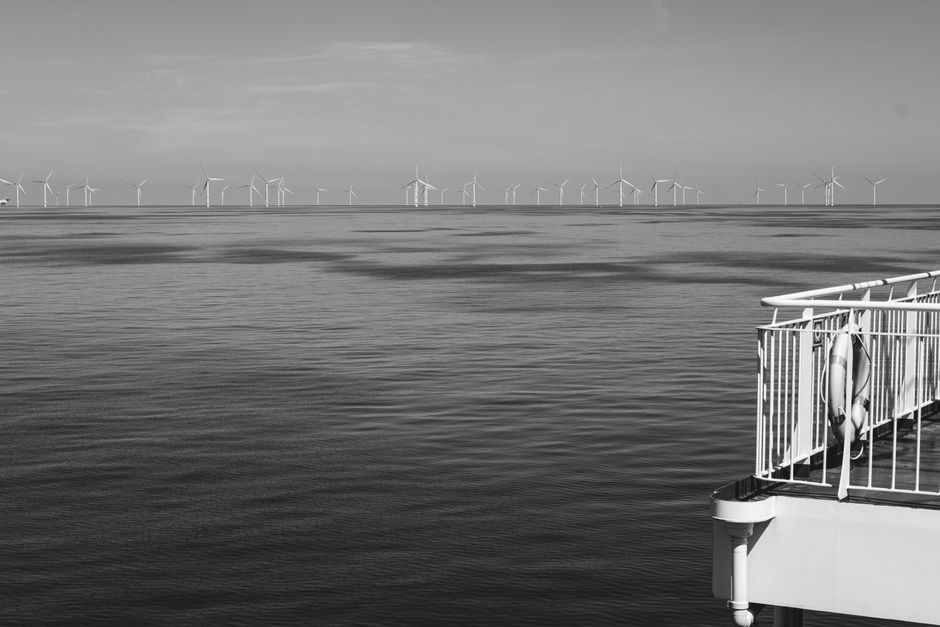
Victoria has officially launched Australia's first offshore wind auction, marking a landmark moment in the nation's transition away from coal-fired power. Energy Minister Jaclyn Symes has opened the Request for Proposal process for the state's first two gigawatts (GW) of offshore wind capacity — enough electricity to power approximately 1.5 million homes every year.
"This auction is a giant leap towards getting Australia's first offshore wind projects built, attracting billions in investment, creating thousands of jobs and delivering the reliable power we need as coal retires," Ms Symes said at the announcement.
How does an offshore wind auction actually work?
The process may not resemble a Saturday morning property auction, but the underlying principle is similar: competing proponents bid against one another for government support to develop their projects. The Victorian government will assess each bidder on two key criteria — their capacity to deliver on power output, and value for money.
Successful bidders will be awarded contracts through a mechanism known as the Energy Services Entry Mechanism (ESEM), a framework recommended by the federal Energy Department to attract new investment into the energy sector.
The ESEM addresses a fundamental challenge for large-scale renewables projects: the need to demonstrate long-term financial viability. Because offshore wind farms can operate for decades, developers need assurance that there will be a buyer for their electricity well into the future — but energy buyers are typically unwilling to commit to contracts that stretch that far ahead. The ESEM bridges this gap by providing long-term contracts that give investors confidence a market will exist for the power their projects generate across their full lifespan.
There is, however, an important caveat: the ESEM is not yet in place. While almost all Australian energy ministers agreed in principle last year to introduce the mechanism, Queensland remains opposed, leaving its full implementation uncertain.
The auction is scheduled to close in August 2027, with contracts to be awarded in 2028.
Why Gippsland — and why now?
The auction centres on the Gippsland offshore wind zone, which the Commonwealth government declared Australia's first such zone in 2022. The region was selected for a combination of practical advantages: consistently strong winds, relatively shallow coastal waters, and its proximity to existing electricity grid infrastructure in the Latrobe Valley.
There are currently nine proponents holding feasibility licences for wind farms off the Gippsland coast, though it is not expected that all nine will participate in this first auction round. Those that bid successfully will proceed toward investment, construction and ultimately operation of their projects.
The timing of the auction is directly tied to an urgent national challenge. A substantial volume of coal-fired generation is set to leave the electricity grid over the coming years, and Australia is in a race to replace it with clean energy sources.
Locally, Gippsland's Yallourn power station is scheduled to close in July 2028 — the same year auction contracts will be awarded. New South Wales' Eraring power station is slated to follow in April 2029. More broadly, the Australian Energy Market Operator's latest Integrated System Plan projects that two-thirds of Australia's remaining coal-fired plants could be retired by 2035, with some already operating only during periods of peak demand. AEMO has also warned that closures could happen faster than current forecasts suggest.
The pressure is further amplified by surging electricity demand from data centres, which AEMO projects will place significant additional load on the grid by 2036.
What's at stake for Australia's energy future?
The Gippsland region, situated along Victoria's south-east coastline, sits at the centre of this energy shift. The area has long been synonymous with fossil fuel generation — the Latrobe Valley was built on brown coal — making the pivot to offshore wind both symbolically and practically significant.
For the offshore wind industry, the auction represents years of anticipation finally translating into a concrete commercial pathway. Proponents who have held feasibility licences have been waiting for a mechanism that would allow them to move beyond planning and into the financing and construction phases that only long-term revenue certainty can unlock.
For Victorian households and businesses, the promise is reliable, clean electricity to fill the gap left as ageing coal generators retire — without the supply shocks that an unplanned or poorly managed transition could trigger.
The broader national significance is equally clear. As the first offshore wind auction held anywhere in Australia, Victoria's process will set a template — and a test — for how the country manages the complex, capital-intensive work of building an entirely new class of energy infrastructure from scratch.
Whether the ESEM framework can be fully resolved across all states, and whether the auction attracts sufficient competitive bids of genuine quality, will determine how much of that promise is ultimately delivered.


