Victoria's regional rail network has entered a second day of disruption, with V/Line morning peak services remaining suspended following a nationwide Telstra telecommunications outage that struck on Wednesday and left commuters stranded across the state. The operator has warned passengers to avoid travelling on its services if at all possible, with only very limited replacement bus coaches available.
The crisis began when a software defect caused time synchronisation failures across Telstra's national network, triggering widespread mobile and data outages. While Telstra said it had identified and resolved that primary fault by 4pm on Wednesday, the knock-on effects for rail operations persisted well into Thursday morning. The outage affected millions of Australians and disrupted services far beyond the transport sector.
Why V/Line Trains Are Still Not Running
The core issue is the way V/Line's trains communicate with the broader rail network. V/Line chief executive William Tieppo explained that the Telstra outage interfered with SIM cards installed in each train, which are used to communicate with network infrastructure. The service arrangement flows through the Australian Rail Track Corporation (ARTC), which has a direct contract with Telstra, and V/Line accesses those communications services via ARTC.
The ARTC advised V/Line that Telstra's telecommunications reliability had not yet been sufficiently restored to allow train operations to safely resume — meaning even after Telstra declared its own network back online, the rail regulator was not satisfied it was safe to put trains back into service.
Critically, V/Line migrated its essential train communication systems to Telstra's 4G network in 2024, following the shutdown of the 3G network nationally. That transition left the regional rail operator entirely dependent on Telstra's mobile infrastructure, with no fallback when the network went down. By contrast, Melbourne's Metro Trains system operates on a different radio communications platform and was unaffected by the outage.
"As the world moves to a new technology, we have to move to it; otherwise we've got assets that won't be able to function anymore," Tieppo said, acknowledging the network is still mid-transition from analogue systems, copper wire and legacy infrastructure toward fibre and cloud-based platforms.
Commuters Left Waiting, Replacement Buses Also Hit
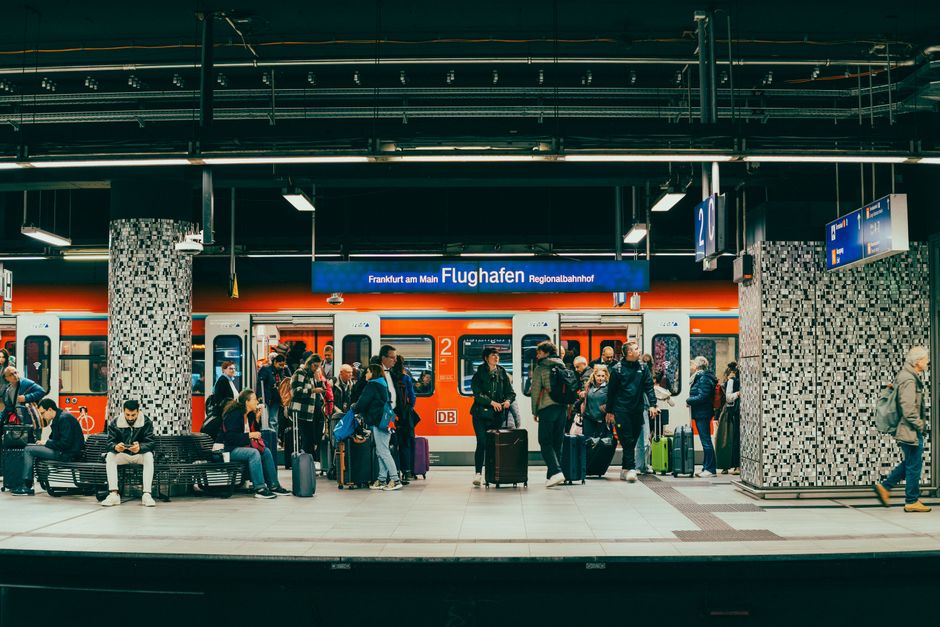
The human cost was immediate on Wednesday evening, when passengers were left waiting hours at train stations for replacement coaches — buses that were themselves also impacted by the telecommunications outage. V/Line has confirmed that only very limited replacement coach services are operating on Thursday, and is urging passengers to seek alternative transport where possible.
"We acknowledge this has been inconvenient to many people and thank passengers for their patience as work continues to safely restore services," a V/Line spokesperson said.
Passengers have now been stranded for a second consecutive day as the operator works to confirm network reliability before resuming operations.
Backup Systems and Long-Term Resilience Under Scrutiny
The outage has thrown a sharp light on the fragility of Australia's regional transport infrastructure and its dependence on a single telecommunications provider. Tieppo confirmed V/Line is in discussions with ARTC about establishing a longer-term backup system, noting the issue extends beyond Victoria.
"The backup system is obviously one that will be looked at at a national level, not only just for Victoria," he said.
Transport engineering experts say the episode reflects a broader vulnerability in infrastructure that has been upgraded incrementally rather than redesigned with resilience in mind. Professor Hai Vu, a transport engineering academic at Monash University, said problems like this were predictable when systems evolved through piecemeal updates rather than from a whole-of-system design perspective.
"Over time, the system has been built on a certain technology, and then, after that, it's been incrementally updated rather than thinking from the system and design perspective to make it more resilient," Professor Vu said.
He also noted that regional rail networks face inherent challenges that urban metro systems do not — their vast geographic footprint makes it far harder to provide redundant communications infrastructure, such as cabling, that could bridge gaps when wireless networks fail. The Melbourne Metro network's newer design and more compact coverage area gives it options that V/Line simply does not have at this stage.
Despite those challenges, Professor Vu was clear that a retreat from digital technology was not the answer. The priority, he said, needed to be designing systems that were resilient enough to withstand the failure of any single provider or platform.
Wider Fallout From the Telstra Outage
The rail disruption was one of several serious consequences flowing from Wednesday's nationwide Telstra network failure. The outage also impacted triple-zero emergency calls, EFTPOS transactions, and mobile services for customers across the country. Police across multiple states were called on to conduct welfare checks on customers who had been unable to connect to emergency services during the outage.
Telstra's chief financial officer publicly acknowledged the telco had "let customers down" and that the scale of the triple-zero impact was more significant than initially understood. The company said it had conducted hundreds of welfare checks and, in cases where customers could not be reached, police attended homes in person.
V/Line has not yet confirmed when full services will resume, and is asking passengers to monitor its website and service alerts for the latest updates before travelling.


