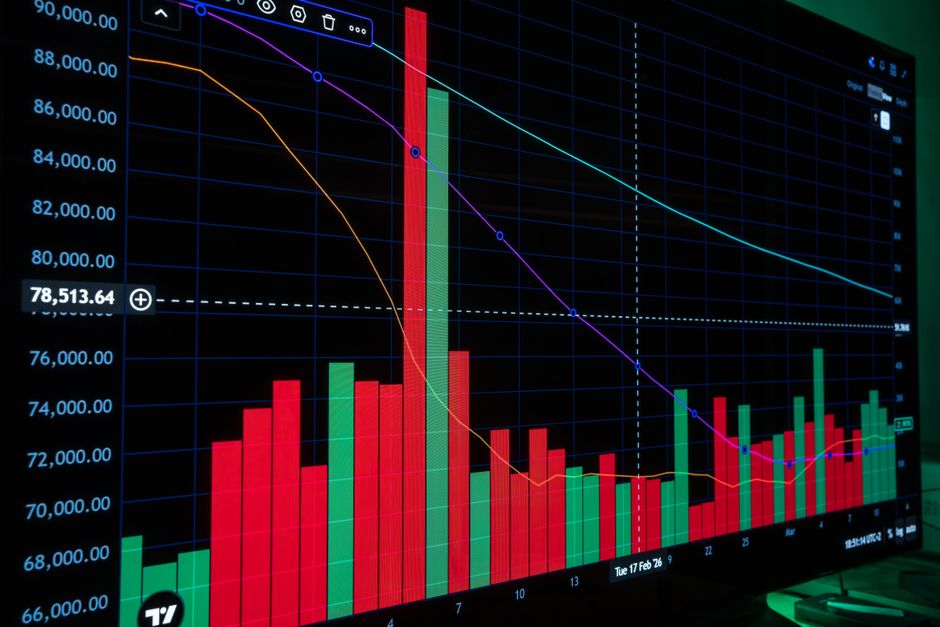
Wall Street is in the grip of its most punishing stretch of daily swings since the tariff upheaval of April 2025, with chipmakers, bonds and oil all lurching in conflicting directions, and the sudden departure of Nvidia's longtime chief executive adding fresh uncertainty to one of the bull market's most crowded trades. Despite the turbulence, investors keep pouring billions of dollars into the fray, splitting between the safety of broad index funds and high-risk leveraged bets that have produced both spectacular fortunes and crushing losses.
Daily Swings Not Seen Since April 2025
The scale of the volatility gripping markets is striking. The S&P 500 has moved an average of 1.6 per cent per day so far in November, while the Nasdaq 100 has averaged a bruising 2.4 per cent daily move, the largest average daily swings for both indices since the tariff-driven chaos of April last year. Despite those lurches, the S&P 500 managed a 2.5 per cent weekly gain to record its first weekly advance since early October, with the Nasdaq 100 adding 3.5 per cent over the same five-day stretch.
Another sell-off in chipmakers dragged stocks lower on Friday (US time), even as fresh inflation data eased fears of more aggressive Federal Reserve rate rises. Oil prices surged and then retreated, bond yields lurched in both directions, and the AI trade wobbled after Nvidia's chief executive departed the role.
Bonds have offered little shelter. The two-year Treasury yield climbed nearly 28 basis points in November before Friday's pullback, following similarly dramatic moves in opposite directions during the two prior months. A popular long-term Treasury exchange-traded fund endured its own reversals, while volatility in an iShares fund tracking the classic 60/40 stock-and-bond portfolio surged. Professional trend-followers have been caught badly off-guard, suffering their biggest drawdown of the year.
Three forces are driving the disorder: persistent inflation fears unsettling bets on the Federal Reserve's next move, ongoing tensions with Iran jolting oil markets, and fragile confidence in the artificial intelligence boom. For related coverage of how oil price swings and rate fears have been buffeting markets, see our earlier report on Wall Street's mixed close amid rate fears and soaring oil.
Billions Flow In Despite the Chaos
What is perhaps most striking is that retail and institutional investors alike are not pulling back. Two distinct approaches are playing out side by side. On one hand, Vanguard's flagship S&P 500 fund attracted nearly $US24 billion ($35.5 billion) in October alone, a sign that many investors are sticking with broad, passive strategies. On the other, a triple-leveraged semiconductor ETF drew in $US9 billion despite losing half its value over the period.
Even Nvidia's upheaval has not dampened enthusiasm for the broader AI trade. Demand for Anthropic's planned initial public offering has reportedly exceeded the available shares several times over. Meanwhile, a group of double-leveraged Nvidia ETFs attracted roughly $US900 million in a single week, even as the chipmaker's shares fell 13 per cent following the CEO's departure. Retail buyers have poured tens of billions of dollars into equity funds over the past two weeks, with many snapping up leveraged positions after sharp early-November declines, raising hopes that dip-buying could help stabilise the battered technology sector.
Complacency Concerns Among Professionals
Not everyone is comfortable with the mood. Chris Davis, chairman of Davis Advisors, said the level of investor calm is unsettling given the conditions. "The uncertainty is enormous, the fragility, the things that can go wrong very suddenly, enormous, combined with a tremendous amount of complacency in the market," he said.
Skyler Weinand, chief investment officer at Regan Capital, a Dallas-based firm managing $US4.5 billion, is among those urging caution. He believes 10-year Treasury yields could remain above 5 per cent for the foreseeable future and that the Federal Reserve will continue raising rates. His firm is concentrating on higher-quality, defensive holdings with strong cash flows and minimal leverage, waiting for clearer evidence that AI investment is producing meaningful downstream returns.
With inflation pressures, geopolitical risk and the AI trade all in flux, the gap between a windfall and a painful loss on Wall Street continues to come down to timing, and very few participants are getting that right consistently. As our earlier coverage noted, surging oil prices have already been pressuring Wall Street, adding another layer of complexity for investors trying to navigate the turbulence.


