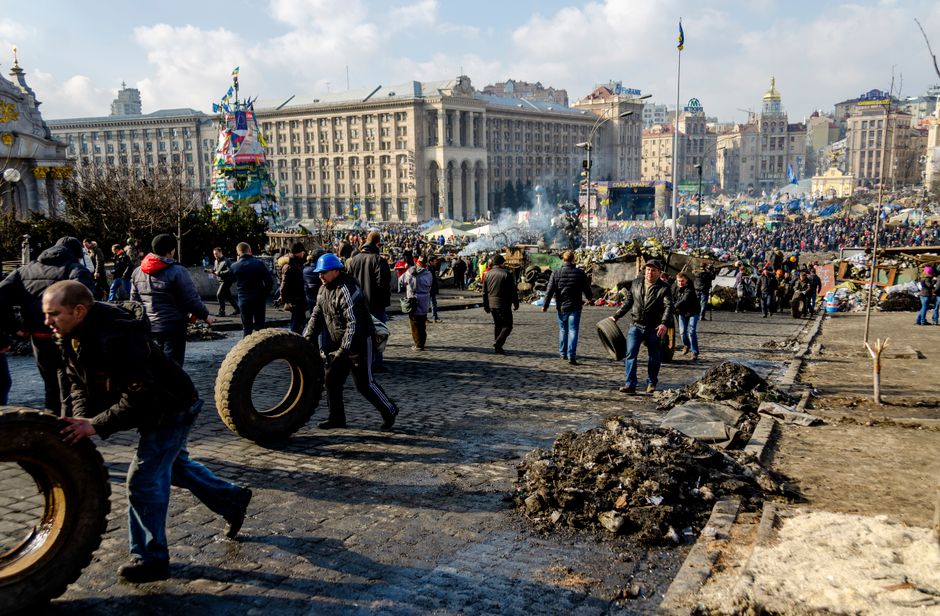
Volodymyr Zelenskyy, nearly four and a half years into Russia's full-scale war against Ukraine, is now confronting what analysts describe as one of the most serious domestic political challenges of his presidency — a wave of mass street protests in Kyiv driven by anger over military recruitment tactics, alleged corruption and a high-profile leadership shake-up that has divided public opinion.
Protests and the reshuffle that sparked them
The demonstrations, described as the largest of Zelenskyy's time in office, brought thousands of young Ukrainians into the streets of the capital. The immediate flashpoint was the removal of Mykhailo Fedorov, a 35-year-old defence minister known for his technology-focused approach to the war effort, just six months after he was appointed. Protesters have called for his reinstatement.
In response to the unrest, Zelenskyy moved swiftly, replacing army chief Oleksandr Syrsky — a 60-year-old veteran commander who had been a central focus of public frustration. It is understood Syrsky may have played a role in encouraging Fedorov's earlier removal. Syrsky has now been succeeded as military chief by Mykhailo Drapatyi.
Despite the pressure from demonstrators, Zelenskyy has ruled out restoring Fedorov to the defence ministry, saying he has offered the former minister a range of alternative roles. Fedorov has declined each of them, arguing that no other position carries the same capacity to influence the direction of the war. The standoff means further protests are expected, even as dialogue between the two men is said to be ongoing.
A generational divide over how to fight the war
At the heart of the crisis lies a fundamental disagreement about military strategy. A former Australian ambassador to Russia, Peter Tesch, characterised the rift between Syrsky and Fedorov as a conflict between the old guard and a new generation of thinking — one that prioritises drones and technological warfare over committing more troops to the front lines.
"It's a very significant and potentially high-risk political situation for President Zelenskyy," Tesch said, though he suggested that removing both figures had "probably cauterised some of the political risk." He also warned that Russia, which he described as banking on outlasting Ukraine in a war of attrition, would seek to exploit any sign of internal division. "It's a dangerous inflection point," he added, cautioning that visible political instability could embolden Russian President Vladimir Putin to persist with his grinding strategy.
Democracy in action — or a leadership in trouble?
The political turbulence comes on top of broader reshuffles within Zelenskyy's inner circle, including the recent replacement of former prime minister Yulia Svyrydenko. Ukrainian opposition MP Oleksiy Goncharenko said Zelenskyy's position is "very weakened" amid ongoing corruption allegations, and suggested the rotation of senior appointments reflects an effort by the president to shore up his political standing.
However, not all observers view the situation as a crisis of governance. Iryna Skubii, a senior researcher in Ukrainian studies at the University of Melbourne, offered a different reading, arguing that what looks like instability from the outside is in fact evidence of a functioning civil society.
"It's how civil society illustrates what they want from political leadership at this time, and political leadership listened to them and made this decision accordingly," she said.
War continues as political tensions simmer
The domestic unrest is unfolding against a backdrop of intensifying conflict. Russia has escalated its aerial bombardment in recent months, and the United Nations has recorded a surge in civilian casualties inside Ukraine. The country has been subject to Russian aggression since the illegal annexation of Crimea in 2014, with the conflict dramatically escalating when Moscow launched its full-scale invasion in February 2022.
Skubii noted that while Ukrainians are understandably war-weary after years of conflict, they remain firmly opposed to Russian domination — a resolve that continues to define both the public mood and the political stakes surrounding Zelenskyy's leadership.


